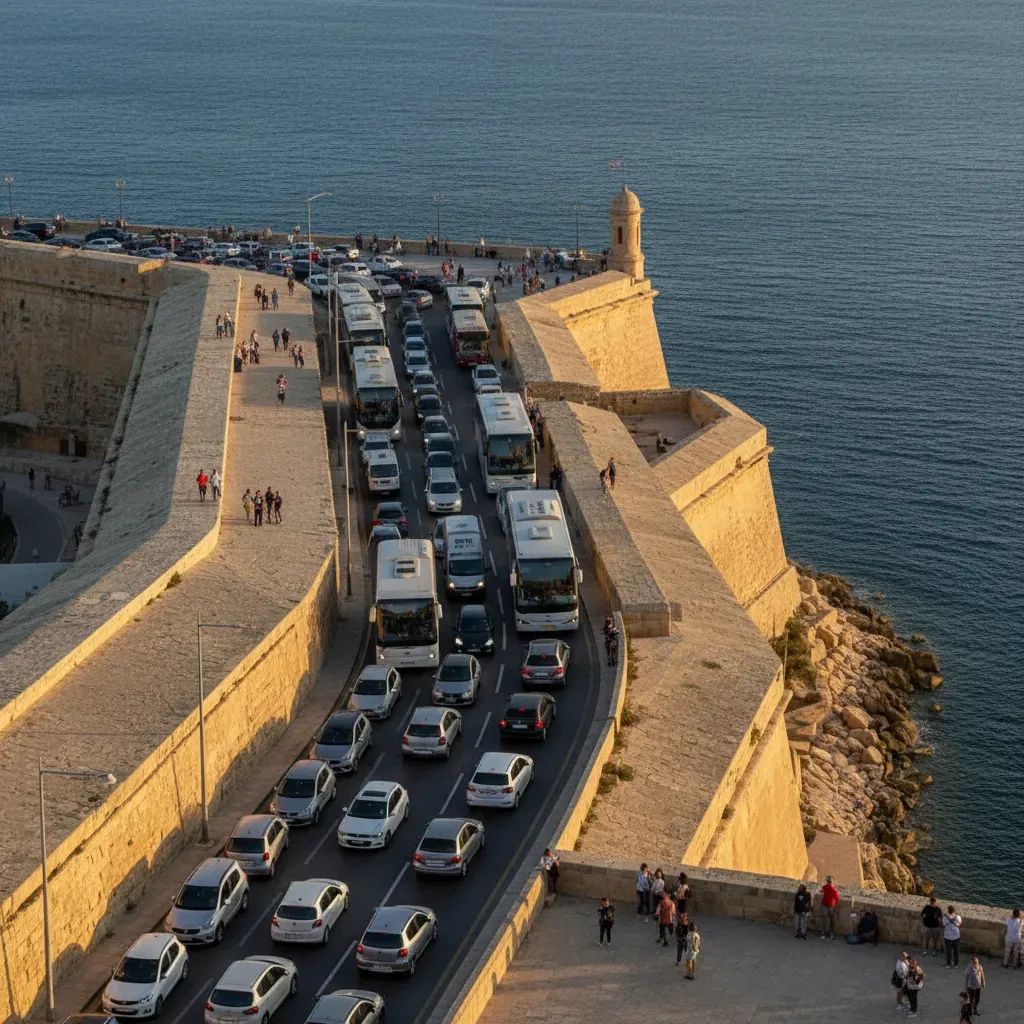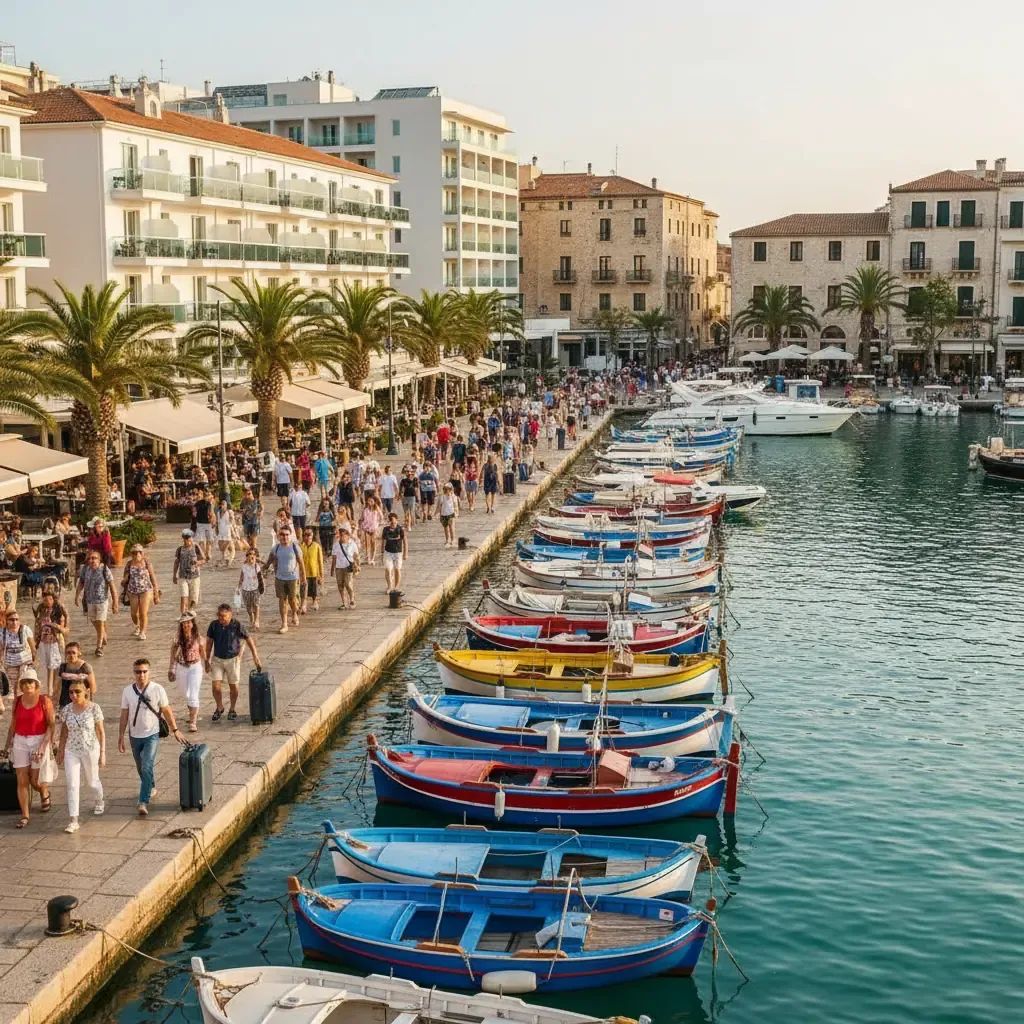
Starting June 2026, Malta International Airport will receive direct flights from the United States for the first time as a scheduled service—a development that could fundamentally alter the island's tourism landscape and inject millions into the local economy through a demographic known for spending heavily on culture and extended stays.
Delta Air Lines will operate the transatlantic route beginning in June, connecting New York's John F. Kennedy International Airport to Malta three times weekly through October 2026. The Boeing 767-300 service will be the only nonstop option from North America to the Mediterranean archipelago, eliminating the multi-leg journeys that have historically deterred American visitors.
Why This Matters
• Higher-value tourists: US visitors spent an average of €1,227 per trip in 2023, the highest per-capita rate of any nationality visiting Malta.
• Growing market: American arrivals surged 47% year-on-year in 2023, and industry groups expect the direct link to accelerate that trajectory.
• Seasonal schedule: Flights will operate Mondays, Thursdays, and Saturdays from Malta to JFK; Sundays, Wednesdays, and Fridays in the opposite direction.
• Seasonal service window: The service runs June through October 2026, a summer-focused schedule that Delta will evaluate for year-round viability based on demand.
Practical Details for Travelers
The flight will take approximately 9 to 10 hours eastbound and 10 to 11 hours westbound, depending on winds and routing. While specific pricing has not yet been announced, Delta's transatlantic fares typically range from €600–€1,200 for economy round-trip tickets during peak season, with business class options available. Maltese residents and dual nationals can book through Delta's website, travel agencies, or corporate travel programs. For those currently flying connecting routes through Frankfurt, Istanbul, or London, the direct service is expected to save 4–6 hours of travel time per trip and reduce overall itinerary complexity.
What This Route Changes for Residents
For those working in Malta's hospitality, retail, cultural sectors, and independent businesses, the direct JFK connection represents a measurable shift in customer profile. Restaurant owners in Valletta, boutique hotel operators, and tour guides are already anticipating higher foot traffic from American visitors, who historically favor heritage sites, locally owned eateries, and authentic experiences over package-resort models.
American tourists tend to spend more per day than visitors from closer European origins, channeling revenue directly into independent businesses rather than all-inclusive chains. Taxi operators expect increased demand, particularly during peak arrival and departure windows. The Malta Hotels and Restaurants Association has publicly stated it expects the route to strengthen the island's positioning in North America, a market segment that tends to book longer itineraries and spend more time exploring local attractions.
Aviation-supported tourism contributed roughly €2 billion to Malta's GDP in 2023 and accounted for 42,900 jobs, according to Malta's tourism and aviation sector analysis. The Delta service aims to expand both figures by tapping a demographic that spent €165.80 per day on average during the first two months of 2023, well above the island-wide mean. That spending flows through restaurants, taxi services, museums, and independent tour operators, creating ripple effects across the economy.
The route also simplifies logistics for Maltese professionals and dual nationals with ties to the US East Coast. Previously, reaching New York required connections through Frankfurt, Istanbul, London, or other hubs, adding hours and complexity. The nonstop option now makes same-day transatlantic departures feasible, a practical advantage for business travel, family visits, and medical appointments—particularly valuable for Maltese healthcare professionals seeking US training or Maltese expats maintaining family connections.
How the Service Stacks Up Operationally
Delta's choice of the 767-300 aircraft reflects moderate expectations rather than mass-market ambition. The twin-aisle jet carries fewer passengers than larger wide-body alternatives, balancing capacity with operational cost on a route that remains unproven beyond the summer season. The airline offers both Business Class and Economy cabins, targeting a mix of leisure travelers and corporate clients in Malta's growing MedTech sector, which maintains research partnerships and supply-chain links with US firms.
The three-times-weekly frequency allows Delta to test demand without committing to daily service. Industry observers note that other carriers—Lufthansa, Turkish Airlines, United Airlines, and British Airways—continue to serve Malta exclusively through connecting itineraries, underscoring the commercial risk Delta assumes by pioneering the nonstop model. A 2021 collaboration between Lufthansa and Viking Cruises offered a direct Newark–Malta service, but it catered narrowly to cruise passengers and did not continue beyond that season.
Delta's entry may also pressure competing airlines to reconsider their Malta routing strategy. If the direct service successfully attracts American passengers currently flying indirect routes, carriers offering connections through European hubs may face pressure to adjust frequencies, pricing, or service quality on competing routes. This competitive dynamic could ultimately benefit Malta residents through improved options and potentially more competitive pricing on connecting services.
Tourist Reactions and Market Positioning
Early industry surveys and Delta's pre-launch feedback indicate strong enthusiasm from American travelers, who cited the convenience of avoiding layovers and the ability to reach Malta fresh and well-rested. Travel professionals note the service makes planning more straightforward, while first-time visitor research highlights Malta's UNESCO World Heritage sites, fortified cities, and Neolithic temples as primary draws.
The Malta Tourism Authority is coordinating marketing campaigns across US media to capitalize on the launch, emphasizing the island's English-language environment, Mediterranean climate, and compact geography that allows visitors to explore multiple historic sites within short distances. The pitch targets culturally curious travelers who prioritize authenticity over beach-resort anonymity, a demographic that aligns with Malta's strengths but requires sustained messaging to build awareness in a crowded transatlantic market.
Broader Implications for Malta's Connectivity
Beyond leisure travel, the Delta link is expected to facilitate bilateral business engagement and deepen US–Malta relations in trade and technology. Malta has positioned itself as a hub for MedTech startups and clinical research, attracting American venture capital and pharmaceutical partnerships. The direct flight reduces friction for site visits, investor meetings, and conference attendance, factors that influence where companies choose to establish European operations.
Global connectivity has long been a constraint for Malta, given its small size and distance from mainland Europe's major population centers. The JFK service places the island on the route maps of a carrier that operates one of the world's most extensive domestic US networks, opening the possibility of connecting itineraries from cities beyond New York. If demand justifies it, Delta could extend the service into shoulder seasons or add frequencies, though no such announcements have been made.
What Happens After October 2026
The seasonal nature of the route leaves uncertainty for autumn and winter months, when Malta's tourism traditionally shifts toward European short-haul markets and retirees seeking mild weather. Whether Delta extends service beyond October 2026 will depend on load factors, yield performance, and competition from indirect routings that may offer lower fares through European hubs.
For now, the summer window—June through October 2026—provides a test case. If American arrivals continue climbing at the pace seen in recent years, and if per-capita spending justifies the operational cost of a transatlantic route with limited frequency, Malta could secure year-round nonstop access to the US market. Failure to sustain demand, however, would likely return the island to its prior reliance on connecting flights, reinforcing the perception that Malta remains a niche destination rather than a mainstream transatlantic gateway.
The broader question is whether three weekly flights can fundamentally reshape Malta's tourism mix or simply redistribute existing American visitors from indirect to direct routings. Early enthusiasm is palpable, but long-term viability depends on sustained marketing, competitive pricing, and the ability to convert curiosity into repeat visitation. For residents whose livelihoods depend on tourism, the Delta route represents both opportunity and uncertainty, hinging on factors both local and beyond immediate control.