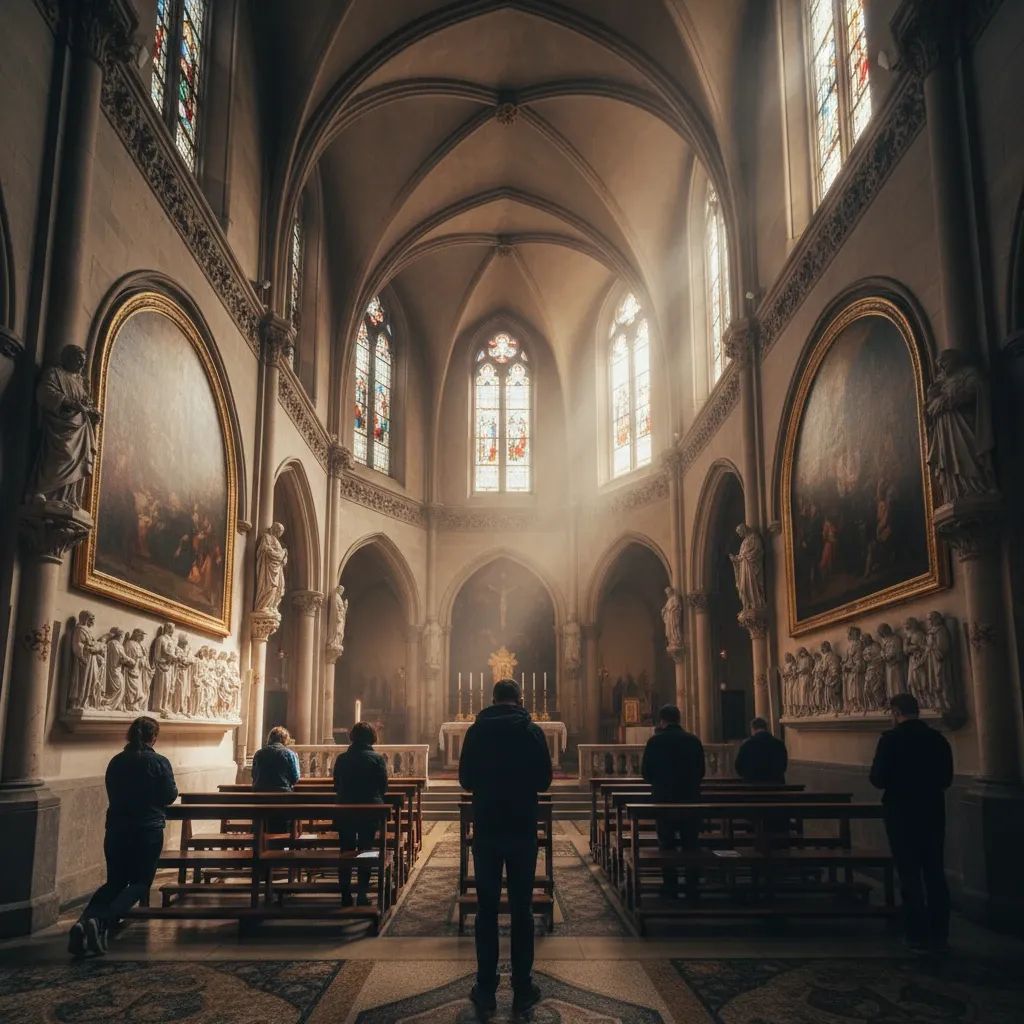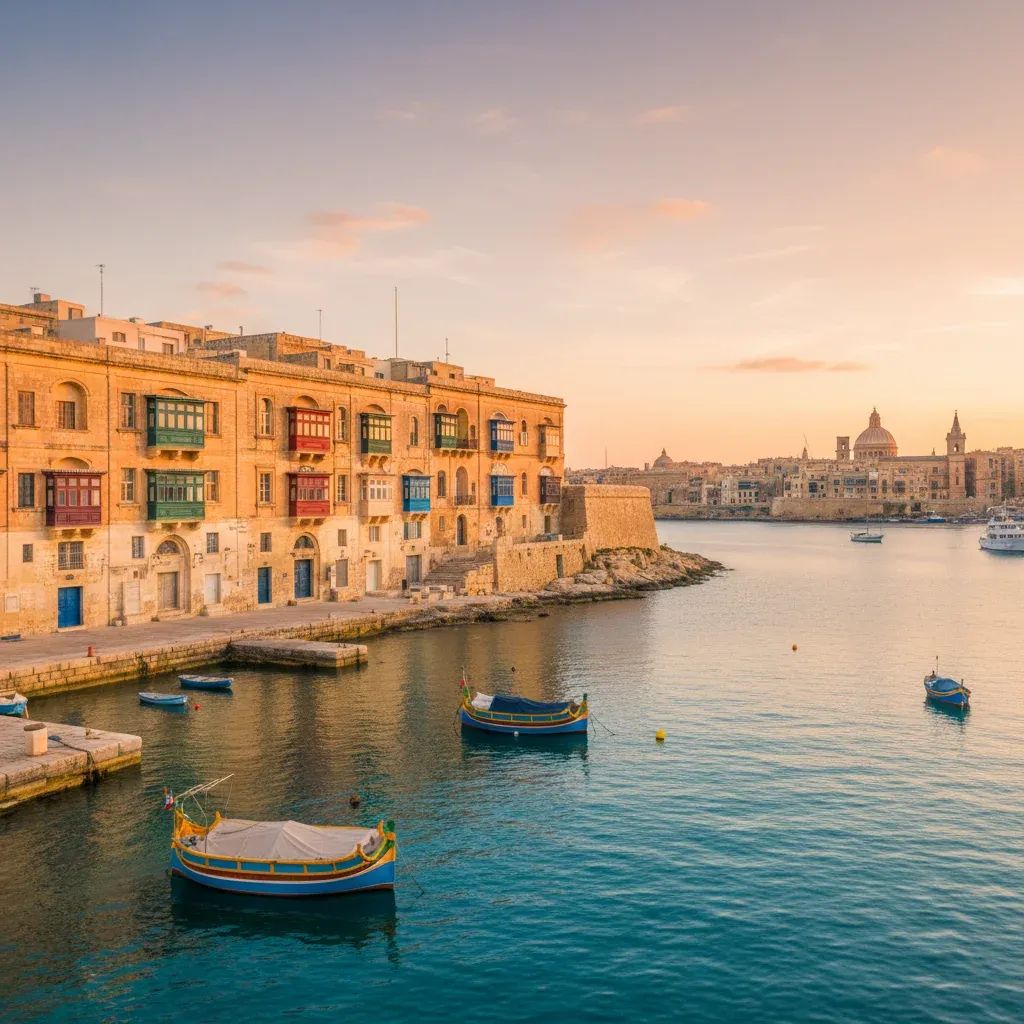
Malta's Gozo has successfully preserved its 300-year-old religious landmarks, and the Victoria Local Council has just proven its commitment to the cause. By early summer 2026, the council completed restoration work on two weathered limestone statues adorning the Church of Our Lady of Divine Grace—commonly known as the Capuchin Friars church—signaling a broader shift toward proactive heritage conservation across the island rather than emergency repair.
Why This Mattered
• Five outdoor statues across Victoria received €30,000 in coordinated restoration, representing a strategic intervention against the salt air and UV damage that degrades Gozo's religious statuary annually.
• Specialist Rudy Cauchi returned the Saint Peter and Paul statues to the façade by late June 2026, preventing the irreversible fragmentation that had already claimed the nearby St. Francis sculpture, which had "practically broken in two" due to earlier botched repairs.
• Gozo's 2026 European Capital of Culture designation unlocked €30M in national funding plus multiple local restoration schemes, directly accelerating heritage work that might otherwise have waited years.
The Mediterranean Assault on Stone
Gozitan religious architecture occupies an unusual position: visually prominent but physically fragile. The outdoor statues adorning church façades faced a relentless combination of forces—salt-laden winds off the Mediterranean, intense UV exposure, and fresh water infiltration that freezes in winter months. Unlike the interiors of churches, which remain climate-controlled and stable, these sculptures endured constant environmental stress that accelerated the decay of Maltese limestone, the primary material.
The Capuchins church statues exemplified this problem. The original sculptures of Saint Peter and Saint Paul, crafted by Wistin Camilleri in the 18th century, had deteriorated to the point where restoration was essential. But they were not alone: two companion statues—one of Christ the Saviour and another of St. Francis by Gozitan sculptor Ġużeppi Agius—had suffered severe erosion. The St. Francis piece presented a cautionary tale: previous repair attempts using corroded materials had actually worsened the damage, causing the stone to split further and rusting to spread internally.
This is where Victoria mayor Brian Azzopardi and the council's decision to allocate €30,000 for a coordinated five-statue restoration became significant. Rather than treat each degraded monument as an isolated crisis, the council adopted a preventive approach—addressing deterioration systematically before individual pieces reached the point of irreversible fracturing.
A Church Built on Restraint, Not Excess
The history of the Church of Our Lady of Divine Grace reveals why it deserved preservation. The Capuchin order arrived in Malta during the late 16th century and established themselves in Gozo roughly 150 years later, building friaries in Kalkara and Rabat (Victoria). The church itself was constructed in the 18th century atop the remains of an earlier medieval chapel, using solid limestone and adhering to the Capuchin aesthetic: sobriety, balance, and functionality. This philosophy directly opposed the ornate, visually explosive Baroque design that defines so much of Malta's ecclesiastical landscape.
The church's central religious artwork—a painting titled "The Virgin of Divine Grace," attributed to Stefano Erardi—was commissioned following the devastating 1693 earthquake. The fact that Gozo experienced no fatalities in that disaster became embedded in the island's historical consciousness, and the painting commemorates this survival. Over three centuries, however, the work accumulated structural damage: punctures from stolen and replaced crowns, expansion damage from resizing to fit its stone frame, and general surface degradation. By 2026, restoration work on the painting itself was underway through Prevarti Art Restoration and Conservation, addressing what centuries of exposure had compromised.
The broader friary complex—approximately 300 years old—had similarly aged. In January 2026, Prevarti completed a substantial interior conservation project on the Capuchins Chapel, restabilizing fragile paint, recovering lost decorative details, and reviving areas where original artistic character had faded. The Bank of Valletta Foundation funded this intervention, demonstrating how private philanthropic support complements public restoration schemes.
What This Meant for Residents and Visitors
For Gozitans, outdoor religious statuary functioned as more than decoration. These sculptures marked procession routes, village boundaries, and spiritual landmarks, anchoring community identity to physical space. Their deterioration was not merely aesthetic loss—it represented the erosion of cultural continuity.
For the broader population concerned with Gozo's tourism and economic future, the restoration carried practical weight. The 2026 European Capital of Culture designation was expected to surge visitor numbers, making heritage presentation a matter of economic competitiveness. Dilapidated statues and crumbling façades communicate neglect; maintained, restored monuments communicate stewardship and cultural pride. The Victoria Local Council's restoration work performed economic work alongside cultural work.
The €30,000 investment also demonstrated fiscal efficiency. Early intervention on statues cost a fraction of what full reconstruction demands. Once limestone fractures catastrophically or internal corrosion becomes entrenched, replacement becomes the only option. The council's decision to act before that point reflected pragmatic long-term thinking.
2026: A Heritage Inflection Point
The Capuchin Friars church statues were not an isolated case but rather part of a coordinated heritage surge across Gozo that took shape during 2025-2026.
The "Restoration Works Scheme for Gozitan Local Councils" awarded grants throughout 2024-2026 specifically for historic and artistic structures, including churches. Simultaneously, the national "Irrestawra Darek u l-Villaġġ" scheme—backed by a €30M investment—was extended to include ecclesiastical properties for the first time. This scheme covered both façade and interior restoration for Grade 1 and Grade 2 scheduled buildings, whether located inside or outside Urban Conservation Areas.
Recent completed projects exemplified this momentum. The Parish Church of Żebbuġ unveiled a restored 16th-century painting of the Immaculate Conception in September 2025 after extensive conservation work. The Parish Church of Our Lady of Loreto in Għajnsielem received approval for steeple reinforcement and masonry repairs in October 2025. The statue of the Immaculate Conception—a 19th-century work by Salvatore Psaila belonging to the Franciscan community in Victoria—also underwent restoration in 2026 by Prevarti, with support from the Good Causes Fund.
Beyond ecclesiastical buildings, the Citadella in Victoria (the island's historic walled city) received major conservation investment covering its fortifications, cathedral, and four on-site museums. The Ġgantija Temples, a UNESCO World Heritage Site, became part of an expanded heritage interpretation program in 2026, including improved visitor infrastructure and contextual displays.
Public gardens across Gozo underwent simultaneous beautification: the Worker's Garden in Xewkija, the Ċensu Xiberras Garden in Ta' Kerċem, and the Magistrate's Garden in Salvu Attard, Qala were all planned or underway.
Two new cultural institutions opened their doors in 2026. The Gozo Museum in Rabat served as a central repository for the island's historical and cultural identity, while the Viticulture Museum in Qala documented and celebrated Gozo's winemaking traditions—effectively transforming heritage from static preservation into active cultural engagement.
The Specialists Behind the Stone
The technical work of restoration demanded expertise that could not be improvised. Rudy Cauchi, the specialist who handled the Saint Peter and Paul statues, performed the delicate balancing act that defines stone conservation: stabilizing fragile surfaces, addressing structural cracks, removing accumulated biological growth and dirt, and treating limestone to resist future degradation. The original stone color was preserved; modern reinforcement materials were deployed only where structurally necessary.
The companion statues received similarly specialized attention. The Christ the Saviour statue, badly eroded, was repaired and treated for durability while retaining its original white pigmentation. The cross received brown repainting. The severely compromised St. Francis statue had all corroded previous repairs removed and replaced with modern materials compatible with the original stone, ensuring future stability without aesthetic compromise.
This level of expertise—understanding the chemistry of stone degradation, the physics of structural failure, the history of the original sculpture—could not be rushed or outsourced to generalists. Gozo's investment in specialists like Cauchi and firms like Prevarti represented a recognition that cultural preservation requires skilled labor and adequate funding.
The Legacy of 2026
The convergence of the European Capital of Culture designation, multiple funding schemes, and demonstrated political will made 2026 a significant inflection point for Gozo's built heritage. For decades, monument preservation occurred in patches—a church repaired here, a statue stabilized there. During 2025-2026, coordinated restoration efforts were underway across ecclesiastical, archaeological, and civic heritage simultaneously.
The practical result for residents was direct: public funds flowed toward visible, tangible improvements to the island's physical landscape. Whether walking through Victoria's streets or visiting the Citadella, the evidence of conservation investment was evident. For a small island dependent on tourism and cultural identity, this visibility carried economic and psychological weight.
For those concerned with long-term heritage sustainability, the restoration activity of 2025-2026 offered both encouragement and questions about future investment. The funding surge appeared concentrated in these years; whether restoration investment would continue at this intensity in subsequent years remained to be seen. But during 2026, Gozo's limestone monuments received the attention and resources they had lacked for generations.