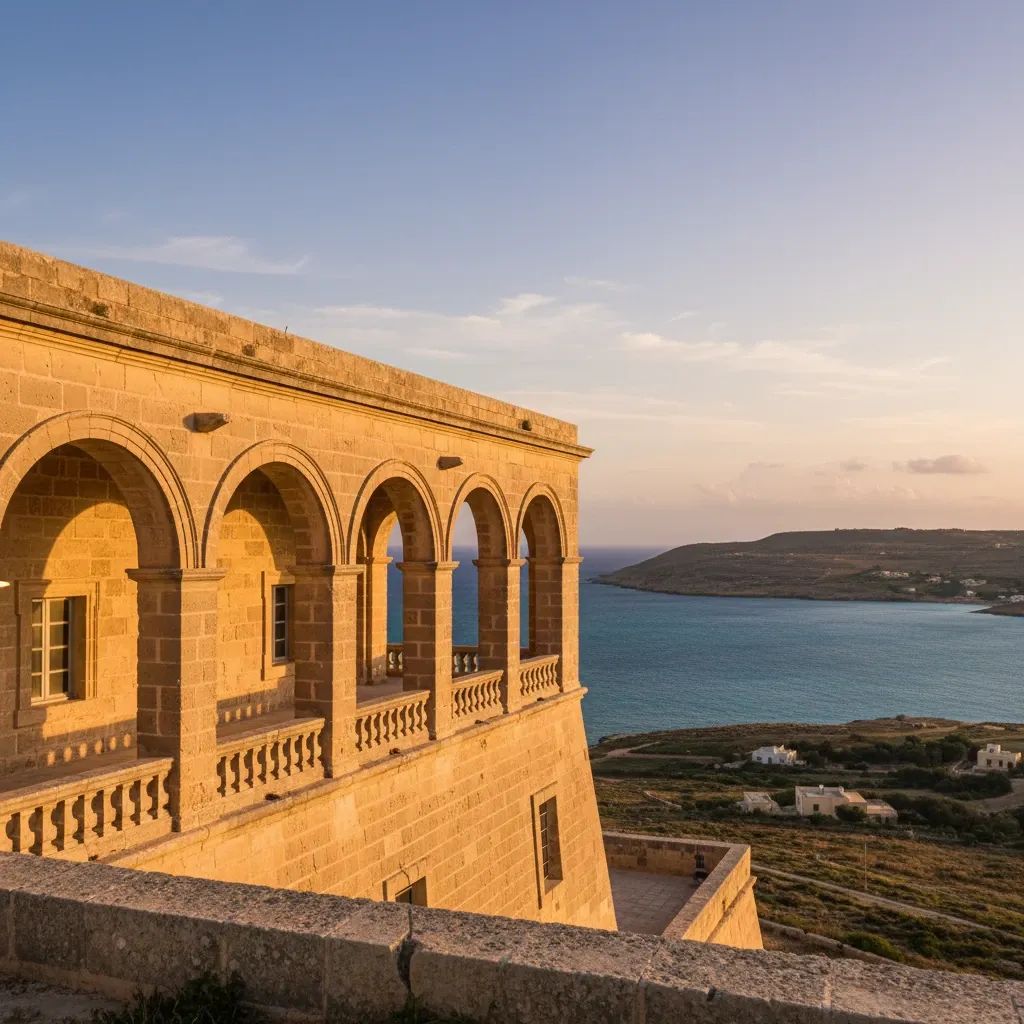
Malta's Gozo Fort Chambray barracks have landed on Europa Nostra's roster of Europe's most endangered heritage sites for 2026, a designation that escalates what began as a local planning dispute into a continental alarm over the potential loss of 19th-century British military architecture earmarked for residential development.
Why This Matters
• Demolition threat: A development permit authorizes the removal of substantial portions of the historic barracks to make room for residential units and hospitality spaces.
• Facade relocation: The arcaded facade will be relocated, a technique heritage advocates label "facadism"—treating historic structures as theater props rather than preserving them in their original context.
• Appeal pending: Din l-Art Ħelwa, Moviment Graffitti, and Wirt Għawdex are challenging the permit at the Environment and Planning Review Tribunal, with no decision timeline yet announced.
• Rare surviving British military infrastructure: The barracks represent one of Gozo's few remaining British military structures and hold significance for understanding the island's modern history.
How a Fortress Became a Flashpoint
Fort Chambray itself—a Grade 1 scheduled Knights-era bastion—has been involved in a public-private concession, with successive developers proposing various plans for the site. The 19th-century barracks attached during the British period were never formally scheduled, creating a regulatory gap that enabled the recent development permit. Critics, including Din l-Art Ħelwa, Malta's national heritage trust, argue the permit contradicts protections that should apply to historic fabric within the fort's perimeter.
What distinguishes this case from routine planning battles is the scale and finality of the approved intervention. The development would involve substantial new construction and the relocation of the facade to alter the site's character. Europa Nostra's listing describes the threat as stemming not from decay or natural disaster but from "commercial interests and private speculation", a rare instance in which the continent's premier heritage watchdog singles out profit motive as the primary endangerment factor.
What This Means for Residents
For Gozitans and Malta residents more broadly, the Fort Chambray case crystallizes a recurring tension: whether heritage stewardship can coexist with private real-estate returns under the island's current planning regime. The barracks represent a tangible link to Malta's multi-layered military past—first as Knights' fortifications, then as British imperial infrastructure. Their loss would erase an important physical reminder of the British garrison presence on Gozo, a chapter that shaped the island's modern development.
Beyond symbolism, the controversy underscores gaps in Malta's scheduling system. While the Cultural Heritage Act theoretically protects structures of historical or architectural merit, the absence of formal scheduling for later-period additions creates ambiguity that developers can exploit. Advocacy groups have called for emergency scheduling orders, but the Superintendence of Cultural Heritage has yet to intervene, citing the ongoing tribunal appeal as the appropriate forum.
Continental Context: Europe's Approach to Military Heritage
Europa Nostra's designation places Fort Chambray among sites across Europe facing "imminent and irreversible damage" from various causes. The inclusion of a Malta site imperiled by approved development rather than external crisis signals international concern about how heritage policies are being applied locally.
Across Europe, military heritage sites have been managed through diverse approaches, from adaptive reuse for community purposes to museum and tourism functions. The common thread in successful models is that heritage outcomes are prioritized through comprehensive planning that balances public access, cultural value, and sustainable use—principles articulated in Malta's own heritage guidelines but seldom enforced when private capital drives development decisions.
The Legal and Regulatory Maze
The appeal filed by Din l-Art Ħelwa and allied NGOs challenges whether the permit properly considers the site's heritage value and complies with applicable development briefs and regulations.
The tribunal has not yet scheduled oral hearings, and legal observers caution that appeals in Malta's planning system can extend across several years. Meanwhile, the permit remains valid. The case has galvanized calls for an interim protection order from the Superintendence of Cultural Heritage or the Ministry for National Heritage.
Public sentiment has coalesced around demands for stronger heritage protections and greater scrutiny of large-scale demolition and redevelopment projects affecting historic sites.
What Happens Next
Europa Nostra's listing does not confer legal protection, but it mobilizes international advocacy networks and positions the barracks as a test case for Malta's compliance with Council of Europe heritage conventions.
The tribunal appeal remains the decisive arena. If the NGOs prevail, the permit will be annulled, forcing developers to submit revised plans that better accommodate the site's heritage significance. If the tribunal upholds the permit, the only remaining recourse would be further legal challenge.
For residents tracking the case, the broader lesson is procedural: heritage protection in Malta depends on formal scheduling and regulatory oversight, and gaps in these systems leave even significant structures vulnerable. Advocacy groups are now working to strengthen protections for British-era military buildings across the archipelago, hoping to preempt similar disputes elsewhere.
The Fort Chambray barracks stand as a proxy for a larger question: whether Malta's planning apparatus can reconcile residential development ambitions with the irreplaceable value of layered historical fabric. The tribunal's eventual ruling will signal how much weight the system assigns to heritage preservation.