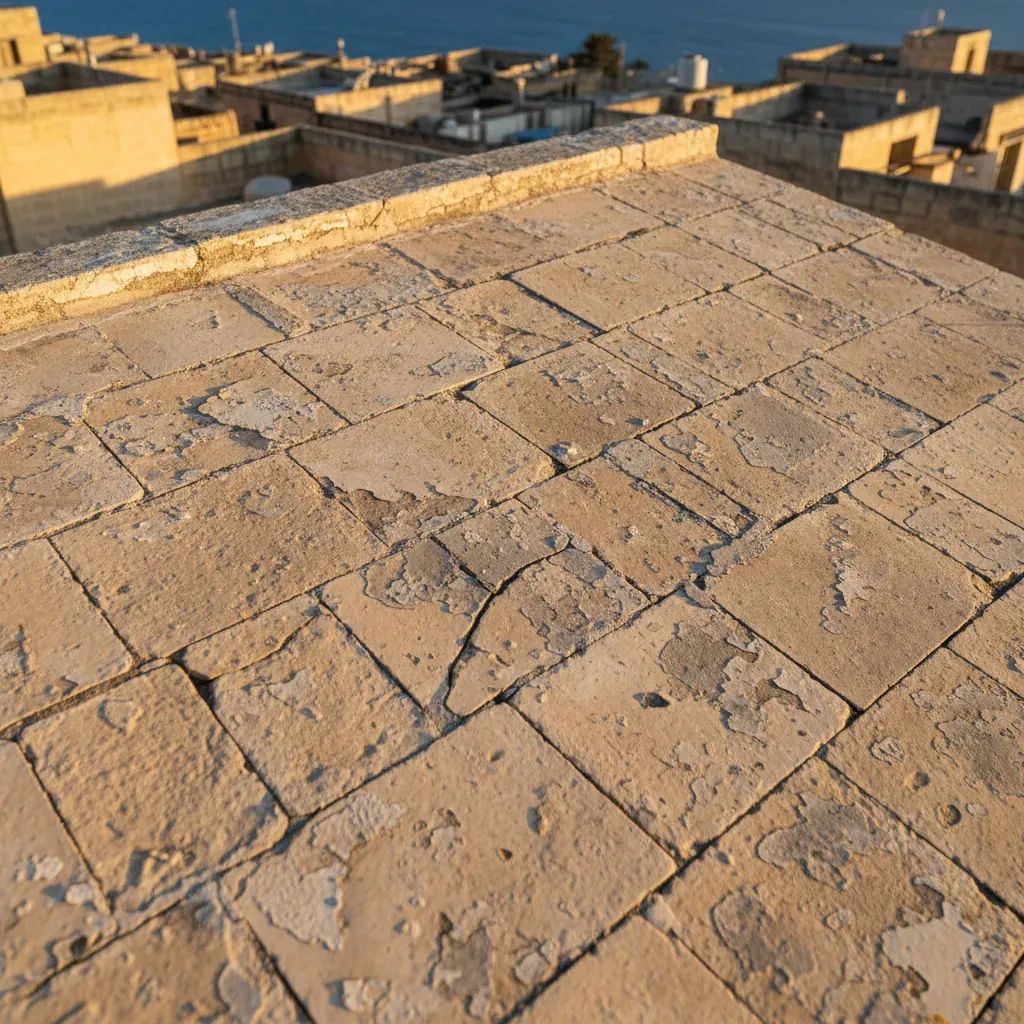
Malta's Din l-Art Ħelwa Foundation has officially taken charge of restoring Qolla l-Bajda Battery in Gozo. This move will reverse decades of damage inflicted when the 18th-century military fortification was illegally converted into a nightclub. The restoration will rescue one of Gozo's oldest artillery defenses from complete collapse.
Why This Matters
• Gozo regains a landmark: The battery, abandoned since 2000 and partially collapsed, will reopen for public visits after restoration removes unauthorized structures and graffiti.
• 20-year legal saga concludes: Din l-Art Ħelwa pursued guardianship since 2007; a 10-year deed signed in May 2026 transfers full restoration authority to the NGO at its own expense.
• Cultural restitution: The site will be returned to its 1716 configuration, reinstating cannon embrasures, blockhouses, and the original gun platform hidden beneath decades of concrete.
From Corsair Defense to Disco Floor
Qolla l-Bajda Battery—also known by its local names tal-Qbajjar or tax-Xwejni—was erected between 1715 and 1716 by military engineers Jacques de Camus d'Arginy and Bernard de Fontet under the Order of Saint John. Its mission was straightforward: protect the northern Gozo coastline, particularly Marsalforn Bay, from raids by Barbary corsairs and Ottoman fleets prowling the Mediterranean.
The battery's design was tactically elegant. Built into the rocky headland to blend with the natural terrain, it featured a semi-circular gun platform armed with six cannons, a protective parapet with embrasures, and two flanking blockhouses that doubled as ammunition stores and infantry positions. A drawbridge spanned a shallow moat, adding a final layer of defense against land-based assault. By 1770, as the corsair threat receded, the armament was downgraded to four 6-pounder guns. The British largely abandoned the site in the early 19th century, and by World War II it served briefly as Observation Post No. 5 before falling into disuse.
The battery's darkest chapter began in the late 1970s, when it was leased and converted into a discotheque and snack bar called "The Rook." Operators cut wide apertures through historic stonework, tiled the parapet wall, roofed over the gun platform with concrete supported by limestone columns, and installed modern plumbing by trenching through the original floors. The cannon embrasures were sealed. When the nightclub closed around 2000, the site was left to decay, succumbing to vandalism, graffiti, and coastal erosion. In recent years, a section of the roof collapsed, underscoring the urgency of intervention.
What the Restoration Entails
Under the guardianship deed approved by the Malta Cabinet in March 2026 and formalized in May 2026, Din l-Art Ħelwa will fund and execute all restoration work. The NGO's mandate is threefold: remove infringements, reinstate the battery's 18th-century character, and reopen public access.
Demolition will target the concrete roof added during the nightclub era, the tiled parapet, unauthorized extensions, and modern fixtures including a tiled toilet. The original six embrasures for cannons will be exposed and restored, along with musketry loopholes in the blockhouses designed to repel land attacks. The semi-circular gun platform will be reconstructed, and the connecting wall between the two blockhouses—which housed the main gate—will be rebuilt. Engineers will also address the ramp and the mechanism for the wooden drawbridge that once provided the sole landward entrance.
All work will use local Maltese limestone to match the original construction. While the battery will not be rearmed with functioning artillery, interpretive elements may reference its historic armament, which evolved from six guns to eight-pounder cannons in its final operational phase.
Why Gozo Needs This
Qolla l-Bajda is one of only two surviving batteries on Gozo, making it an irreplaceable piece of the island's military heritage. Its restoration follows a broader Maltese pattern: Din l-Art Ħelwa has previously revived St Anthony Battery in Qala and St Mary's Battery on Comino, both now open to the public. Other organizations have restored landmarks including Wignacourt Tower (1975–76 and 2003), Rinella Battery (by Fondazzjoni Wirt Artna), and Fort St Elmo (Heritage Malta, starting 2012).
The transfer of Qolla l-Bajda to Din l-Art Ħelwa ends a 19-year pursuit by the NGO, which first applied for guardianship in 2007. Culture Minister Owen Bonnici and Gozo Minister Clint Camilleri announced the Cabinet decision in March 2026, emphasizing the government's commitment to preserving Malta's fortified coastline.
For residents and visitors, the restoration offers more than aesthetic renewal. It reclaims a promontory site with commanding views over Marsalforn and the northern coast, reconnecting Gozo's communities with a landmark that has stood—albeit barely—for over 300 years. Once reopened, the battery will join a network of restored fortifications that anchor heritage tourism on the island, providing educational opportunities for schools and a tangible link to the era when Malta was the Mediterranean's front line against Ottoman expansion.
What Comes Next
Din l-Art Ħelwa has not announced a specific completion timeline, but the NGO's track record suggests a phased approach: stabilization of the collapsed roof section, removal of unauthorized structures, then meticulous reconstruction of original features. Public access will likely resume in stages, with interpretive signage and possibly guided tours to contextualize the battery's role in the Knights' coastal defense network.
The battery's location near Xwejni Bay makes it accessible for day-trippers, though the site's exposed position and historical sensitivity mean visitor facilities will be minimal. No visitor center or modern amenities are planned in the initial phase; the focus remains on authenticity and preservation.
For now, the transfer of guardianship marks a turning point. A structure that once defended Gozo from raiders, then hosted dance floors, and finally crumbled into ruin, will be returned to its original purpose: standing watch over the northern coast, open to anyone who wants to walk its ramparts and imagine the corsair sails that once justified its existence.