
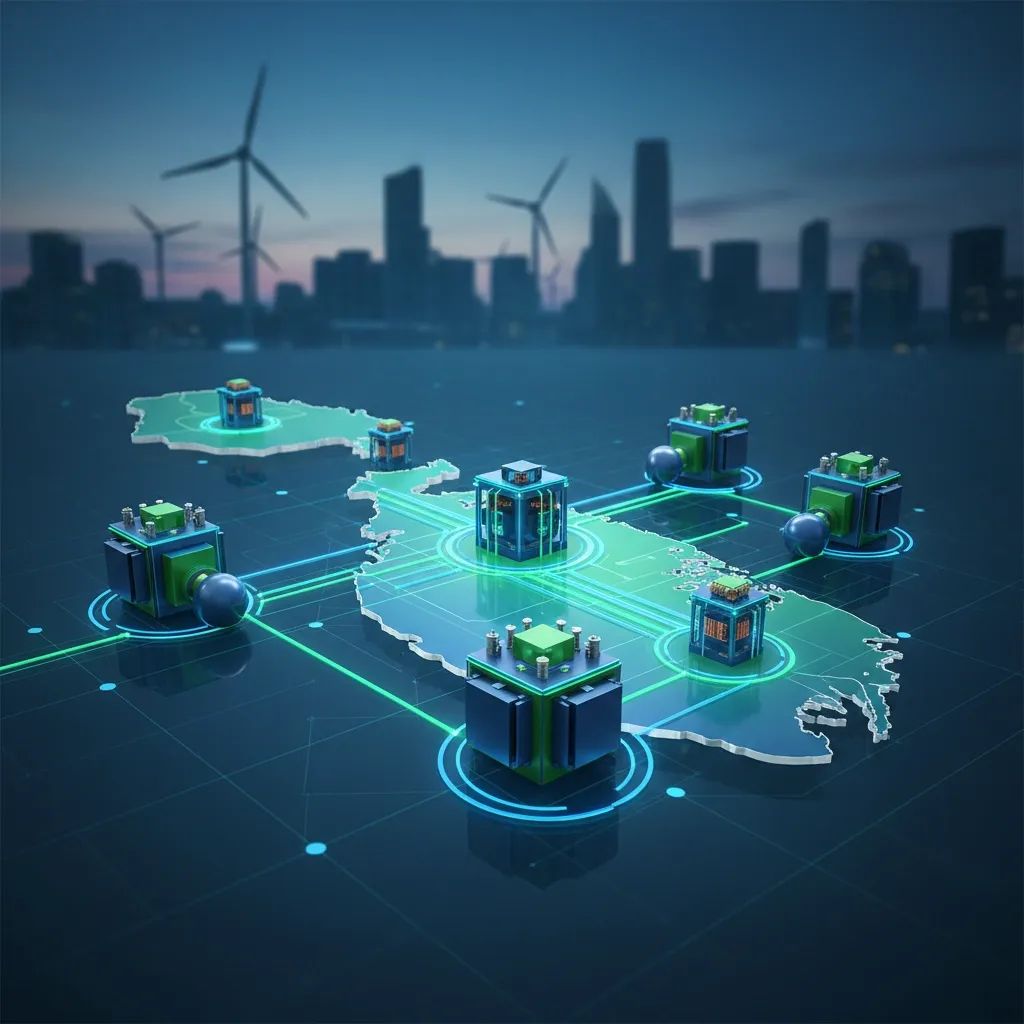
The Momentum Party has issued a set of detailed proposals to prevent a repeat of the crippling August 2026 blackout that left Gozo without electricity for up to 26 hours, arguing that Malta's energy infrastructure requires not just more cables and transformers but also sophisticated digital systems capable of automatically detecting and isolating faults before they cascade into island-wide outages.
Why This Matters:
• Gozo's electricity supply remains vulnerable: The island's three 33kV feeder cables from Malta lack the capacity to sustain service if two fail simultaneously—exactly what happened on August 28.
• Smart meters are underutilized: Despite 92% coverage by end-2025, Malta has not yet deployed automated outage detection that would instantly flag fault locations.
• Tourism revenue is at stake: The blackout during peak season generated compensation claims and negative publicity, with the Gozo Tourism Association reporting substantial operational disruptions.
• Advanced fault-finding technology exists: Fiber-optic sensing could pinpoint cable failures within minutes rather than hours, but Enemalta has yet to install it on critical routes.
What Went Wrong in August 2026
The outage began at roughly 7:30 PM on Friday, August 28, when two of Gozo's three high-voltage submarine cables developed faults—one in Xewkija, the other near Comino. With only a single feeder operational and electricity demand spiking amid record temperatures, the network buckled. Enemalta crews worked through the night, repairing the Xewkija fault by Saturday afternoon and the Comino fault by 10 PM Saturday. Yet many localities, including Rabat, Fontana, Xagħra, Sannat, Nadur, Marsalforn, Munxar, Kerċem, Xlendi, Għarb, Għajnsielem, and Victoria, endured rolling or total blackouts for more than 24 hours. Some residents reported intermittent restoration followed by fresh cuts; scattered neighborhoods still lacked power Sunday morning.
The timing could hardly have been worse. The heatwave amplified health risks for the elderly, children, pregnant women, and those with chronic conditions. Mobile networks began to fail as battery backups drained, cutting off communication just when residents most needed updates. Tourists posted complaints on social media; hotels and guesthouses scrambled to provide refrigeration, air conditioning, and hot water. The Gozo Tourism Association later documented operational difficulties and a wave of compensation requests that underscored the reputational damage.
Momentum's Technology Roadmap
Momentum contends that Malta has poured significant capital into new substations, transformers, and kilometers of cable—Enemalta's €141M investment program delivered 190 new substations on Malta and 18 in Gozo between 2023 and 2026—but comparatively little into the digital layer that would enable operators to see and respond to faults in real time. The party has outlined a three-pillar technology agenda:
1. Smart Meter Outage Management
By late 2025, 92% of Malta's electricity meters were remotely accessible, yet the system remains operator-assisted rather than autonomous. Momentum proposes full integration of Smart Meter Outage Management within six to twelve months. An automated platform would instantly flag which meters have lost signal, cross-reference them with feeder circuits and transformer zones, and confirm restoration once power returns. Instead of waiting for phone calls or manual patrols, dispatchers would see outages on a map within seconds.
2. Fault Location, Isolation and Service Restoration (FLISR)
The party calls for FLISR deployment on the 11kV distribution network (the lower-voltage lines that deliver electricity directly to residential and commercial customers) within twelve to twenty-four months. This technology automatically locates a fault, opens circuit breakers to isolate the damaged section, and restores supply to unaffected branches—often within minutes. FLISR systems also monitor load and cable temperature to prevent overheating, a critical safeguard during summer peaks. While Enemalta already uses SCADA for manual switching, Momentum argues that autonomous restoration would dramatically shorten downtime for customers downstream of a fault.
3. Distributed Fiber-Optic Sensing (DFOS)
Momentum recommends installing DFOS on high-consequence routes: the three 33kV submarine cables (high-voltage lines carrying power between islands) linking Malta, Comino, and Gozo; major 132kV backbone circuits; and cables running through confined tunnels. Fiber-optic strands embedded alongside power conductors detect temperature anomalies, vibration, and strain, pinpointing a cable failure to within a few meters in minutes. During the August blackout, locating the Comino fault required hours of diagnostic work; DFOS would have delivered GPS coordinates almost immediately, accelerating repair mobilization.
Why Software Cannot Replace Hardware
Momentum is careful to note that no amount of sensing and automation can compensate for insufficient physical capacity. Gozo depends on three 33kV feeders; losing two simultaneously left the island in an N-2 failure scenario (a technical term meaning that when two backup systems fail at the same time, the network no longer has enough redundancy to maintain service)—meaning the network lacked the redundancy to maintain service. The party argues that surviving such a scenario requires either N-2-capable transfer capacity or local emergency generation and storage.
Malta is making progress on the hardware front. A second 122km subsea interconnector to Italy, financed in part by a €100M loan from the European Investment Bank, is scheduled to go live in the first quarter of 2027, doubling import capacity and stabilizing the grid. Interconnect Malta is also exploring a third 380kV high-voltage direct current link. On Gozo itself, Enemalta has upgraded transformers and installed additional low-voltage feeders, but the island still relies on the same three submarine cables that failed in August.
European island peers offer instructive models. El Hierro in Spain and Samsø in Denmark have achieved near-complete energy self-sufficiency through hybrid renewable systems. Graciosa in the Azores operates a hybrid plant with a 4.75MW / 2.6MWh battery that allows the grid to run entirely on renewables more than a third of the year. Madeira and Porto Santo in Portugal have deployed over 53MWh of battery capacity, enabling operators to shut down thermal generators when wind and solar output suffice. The Froan Islands in Norway use photovoltaic and wind generators to achieve over 95% renewable penetration, avoiding the need for new submarine cables altogether.
Malta has taken early steps in this direction. The country rolled out smart meters starting in 2009 and exceeded 90% coverage by the end of 2021, ahead of most EU Member States. Siemens and Enemalta are collaborating on a digital transformation using the Gridscale X software platform; the pilot phase launched in November 2024, with a full rollout scheduled over three years. The platform shifts maintenance from reactive to predictive, using data from smart meters to identify grid congestion and optimize operations. Malta has also constructed what is reportedly the world's first liquid air energy storage (LAES) island system, which stores excess renewable electricity and dispatches it on demand.
What This Means for Residents and Visitors
For households in Gozo, the immediate practical implication is that the island remains at risk of extended outages whenever multiple high-voltage feeders fail simultaneously, particularly during summer demand peaks. Enemalta has committed to completing the Xewkija and Comino cable repairs, but the underlying network architecture has not fundamentally changed. Until additional feeder capacity or local storage is installed, the island's resilience hinges on the reliability of three aging submarine cables.
While the August blackout was confined to Gozo, residents on Malta mainland share similar grid architecture challenges, particularly in reliance on aging infrastructure and submarine interconnectors linking the archipelago. Malta mainland depends on critical 132kV backbone circuits and interconnectors that carry power across the islands, systems equally vulnerable to multiple simultaneous faults. The technology solutions proposed—smart meter outage management, automated fault isolation, and fiber-optic sensing—would benefit the entire archipelago's resilience and reduce outage duration across all inhabited islands. Just as Gozo faces summer demand peaks, Malta mainland experiences severe congestion during tourist season and heatwaves, making grid modernization a national priority rather than a regional concern.
For the tourism sector, the August blackout exposed reputational and financial vulnerabilities. The Gozo Tourism Association has called for a formal compensation mechanism and urgent infrastructure reinforcement. Negative reviews and social media posts from stranded tourists can have lasting effects, particularly in a market where Gozo competes with Mediterranean destinations that have invested heavily in grid modernization.
The broader policy debate centers on accountability and investment priorities. Opposition voices have demanded explanations from the Malta Energy Minister regarding how a double-feeder failure could paralyze an entire island despite years of capital spending. Momentum's proposals attempt to bridge the gap between physical and digital infrastructure, arguing that smarter grids can reduce outage duration even when faults are unavoidable.
The Path Forward
Malta's electricity infrastructure is at an inflection point. The €141M program has delivered hundreds of new substations and transformers, yet the August blackout demonstrated that hardware alone cannot guarantee resilience. Automated fault detection, fiber-optic sensing, and autonomous restoration systems—technologies already deployed in Scandinavia, Portugal, and parts of Spain—remain largely absent from Malta's grid. The second Italy interconnector will add capacity, but Gozo's reliance on three submarine cables will persist until local generation or storage is operational.
Momentum's technology roadmap is ambitious but grounded in existing commercial solutions. Smart Meter Outage Management and FLISR have been standard in advanced European grids for years; DFOS is routinely used on critical transmission routes. The challenge for Enemalta and the Malta Cabinet is not technical feasibility but procurement, integration, and budget allocation. With the second interconnector due in early 2027 and the Siemens Gridscale X rollout underway, the next eighteen months will reveal whether Malta can transform its grid from reactive to predictive—and whether Gozo will gain the backup capacity needed to avoid another 26-hour blackout.


