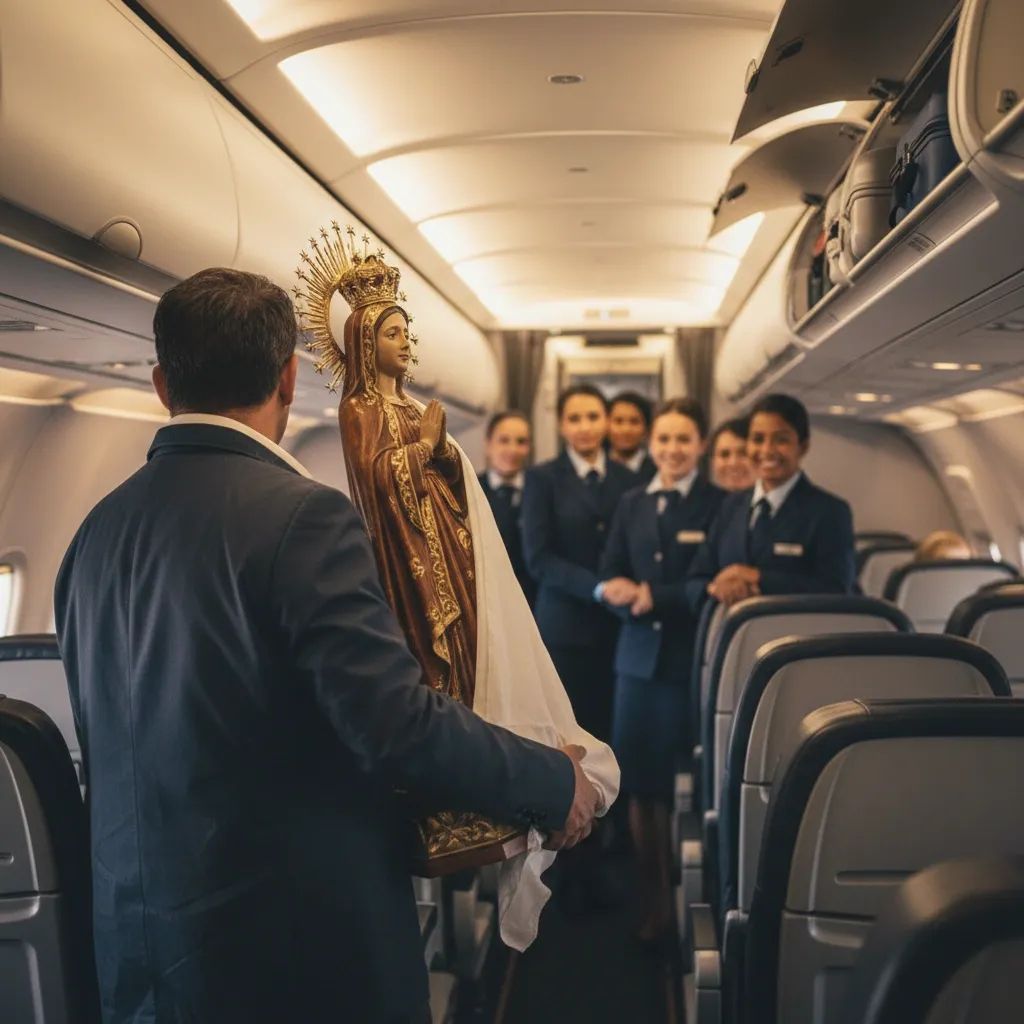
A Luqa man has become a viral sensation across Malta after struggling to bring home a life-size religious statue from Sicily—only to discover that airlines don't issue boarding passes to Baby Jesus.
Neil Zammit's attempt to transport the 110 cm statue he purchased in Catania, Sicily, back to Malta on March 13 turned into a comedic ordeal that highlights the bizarre intersection of faith, bureaucracy, and budget air travel. The statue, destined for display in his home next Christmas, required its own seat on a Ryanair flight—but under Zammit's own name, since the airline's booking system doesn't recognize religious figures as passengers.
Why This Matters to Malta Residents
• Air travel quirk: Airlines allow passengers to buy extra seats for oversized items, but the booking must be under a human name—not "Baby Jesus."
• Security confusion: Airport staff were baffled by two boarding passes issued to the same person, causing delays at the gate.
• Local traditions: The incident underscores how far Maltese residents will go to secure devotional items for their homes—a practice deeply rooted in our culture.
The Flight That Tested Faith and Patience
Zammit purchased seat 33D under his own name for the statue, a workaround that complies with airline policy but creates administrative chaos. When he arrived at Catania Airport with two boarding passes bearing identical names, security personnel and gate agents struggled to understand the situation. The confusion wasn't resolved until Zammit explained—multiple times—that the second ticket was for the religious artifact he was cradling in his arms.
"I eventually boarded the plane holding the statue like a baby in my arms," Zammit recounted. His colleagues, who had been briefed on the plan, cheered and filmed the farcical scene as he made his way down the aisle. The statue, too large to fit in overhead bins or under a seat, occupied its designated space for the short flight back to Malta.
The episode has sparked genuine amusement and debate across Malta's social media, with many praising Zammit's determination. Fellow residents have shared their own stories of transporting unwieldy religious items across the Mediterranean, turning the incident into a broader conversation about faith, commerce, and travel logistics in a deeply Catholic nation.
What Airlines Actually Allow
Ryanair and other budget carriers permit passengers to purchase an additional seat for items that exceed standard baggage dimensions, provided the object can be secured safely and doesn't obstruct emergency exits or aisles. The item must weigh no more than 75 kg, fit within the seat frame, and be secured with a seatbelt. However, the ticket must be issued to a human passenger, not an inanimate object—hence Zammit's double-booking dilemma.
Airlines typically recommend that valuable or fragile items, including artwork and religious statues, travel in the cabin rather than the cargo hold to minimize the risk of damage or loss. For objects that cannot fit in standard carry-on luggage, buying an extra seat is often the safest—and sometimes only—option. But the process is rarely straightforward, especially when the "passenger" is a devotional figure.
Specialized fine art logistics companies offer an alternative for particularly valuable or delicate pieces, providing custom crating, climate-controlled transport, and comprehensive insurance. These services are designed for high-value artworks and religious artifacts, but they come at a premium cost—often prohibitive for individual buyers like Zammit, who simply wanted to bring a cherished statue home.
Practical Tips for Malta Residents
If you're planning to bring a statue or large religious item home from Sicily or elsewhere abroad, here's what Zammit's experience reveals:
Travel options: The Malta-Sicily ferry remains a viable alternative for bulky items, though recent price increases and reduced schedules mean budget flights with an extra seat can sometimes be equally economical. Compare costs before booking.
Local sourcing: Before traveling abroad, check with Valletta's religious goods shops and local parish networks—many can commission or source statues for less than the transport hassle. Word-of-mouth recommendations from fellow parishioners often reveal suppliers or importers already in Malta.
Advance planning: If flying, contact the airline before booking to confirm policies on oversized items. Be prepared to purchase an additional seat and notify ground staff in advance to avoid gate chaos.
Insurance matters: Airlines generally disclaim liability for fragile or valuable items, even when an extra seat is purchased. Secure independent insurance that covers the full replacement value of the statue.
What Happens Next
The statue is now safely installed in Zammit's Luqa home, resting on a plaster pedestal where it will remain until next Christmas. The story has already made the rounds on Maltese social media, with many praising Zammit's determination and others sharing their own tales of transporting unwieldy religious items.
The episode is unlikely to prompt policy changes at Ryanair or other carriers, but it has sparked conversations about how airlines can better accommodate passengers traveling with culturally significant items—a distinctly Maltese concern, given our population's devotion to religious iconography.
For now, Zammit's Baby Jesus holds the distinction of being one of the few religious figures to occupy seat 33D on a commercial flight. And for residents of Malta, the story serves as both entertainment and a practical reminder that faith, like air travel, sometimes requires a leap of trust—and perhaps a second boarding pass.