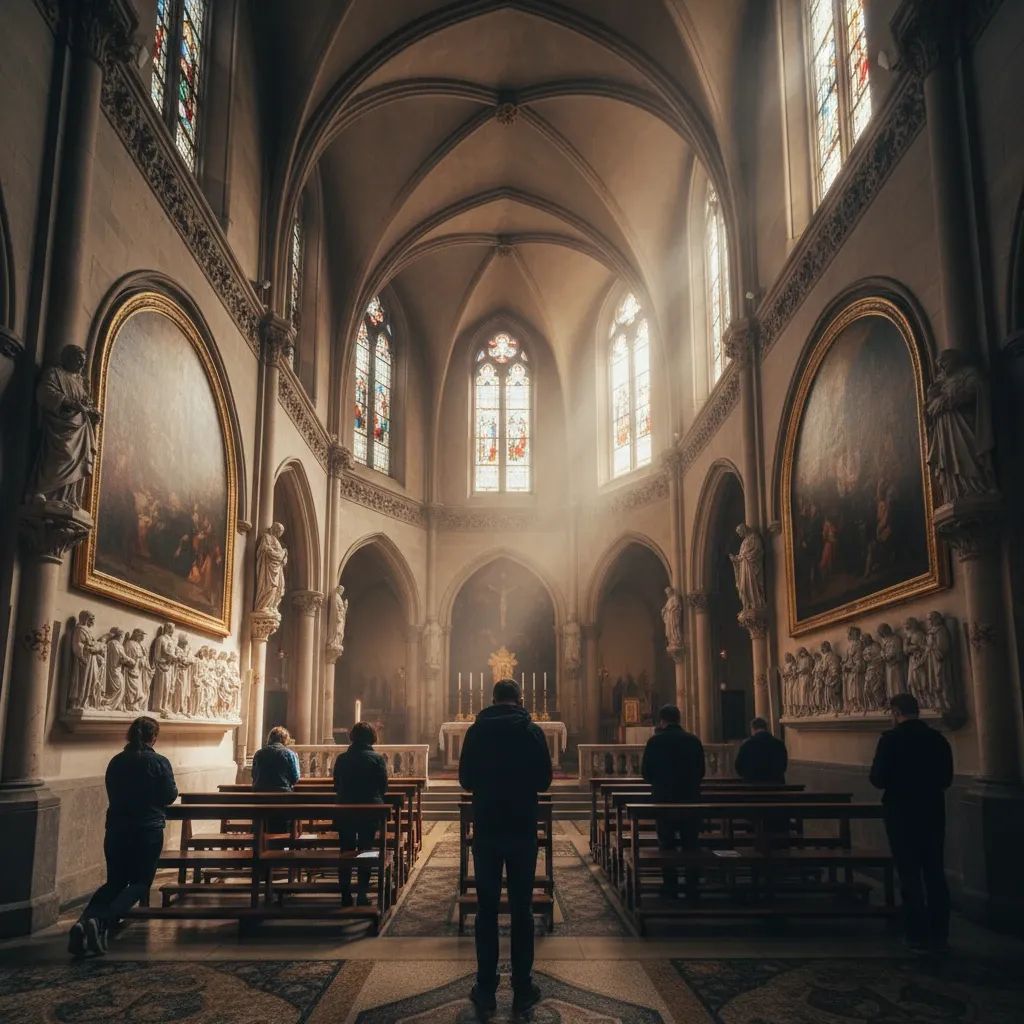
Two centuries of penitential craftsmanship have crossed the Mediterranean, landing in rural Mqabba this Holy Week. Over 200 miniature religious statues—each no taller than a human hand—recreate the baroque spectacle of Spain's most venerated processions. The Santa Marija Mqabba Youth Section has transformed a centuries-old palazzo into an intimate archive of Semana Santa, opening doors to a tradition that shaped Malta's own Easter rhythms but evolved into something unmistakably local.
Why This Matters
• Accessible cultural diplomacy: The exhibition runs free through April 5, with extended evening hours (6:30 PM–9:30 PM weekdays) and special Holy Week schedules allowing working residents easy access to a rare comparative look at Mediterranean Catholic practice.
• Direct link to Malta's devotional roots: Over half of Malta's Good Friday procession traditions trace directly to 16th-century Spanish brotherhoods, making this exhibition a genealogical archive for residents curious about their own island's religious calendar.
• Practical timing: Opening on Palm Sunday and closing on Easter Sunday, the exhibition runs parallel to Malta's own processions—visitors can study Andalusian iconography on Maundy Thursday evening, then witness how Maltese parishes adapted these traditions the following morning.
The Architecture of Spanish Penance
Spanish Holy Week exists on a different emotional scale than Malta's solemn Good Friday observances. In Andalusia, particularly Seville and Málaga, cofradías—medieval brotherhoods that still govern these processions—organize events that pulse with competing rhythms: mournful brass bands underscoring scenes of the Crucifixion, then eruptions of applause as bearers (costaleros) sway beneath platforms weighing several tons. The miniatures on display at Palazz Santa Marija in Church Square, Mqabba capture this tension between grief and spectacle through meticulous detail.
Each figure wears garments constructed using techniques refined over centuries in the Olot school of Catalonia, where 19th-century artisans discovered that wood cardboard paste could be carved as precisely as traditional timber but weighed far less. The volunteers preparing this year's exhibition have adapted these methods, sculpting in resin or wood before applying estofado—a labor-intensive process where gold or silver leaf is layered onto gesso, then partially scratched away to simulate the elaborate brocades worn by full-sized statues. What appears, at first glance, as simple painted fabric is actually a three-dimensional simulation of hand-stitched silk and metalwork.
The embroidery alone represents months of labor. Using counted-thread techniques familiar to any Maltese woman who learned traditional lacework, volunteers stitch gold and silver thread onto velvet robes in patterns that mirror the authentic vestments worn by Spanish nazarenos—the hooded penitents whose pointed caps (capirote) symbolize both mourning and anonymity within the brotherhood. Some miniature figures feature silk shading layered directly over painted facial features, a detail so fine it requires magnification to appreciate. The floats themselves, constructed from wood and duropor foam, are carved with baroque flourishes and occasionally fitted with LED candles that flicker as the real ones would in a Seville street.
Where Malta and Spain Diverge—And Where They Mirror
Stand before Malta's Good Friday procession in Valletta, and the contrast strikes immediately. Church bells fall silent. Participants dress as Roman soldiers or biblical characters, some dragging chains or heavy wooden crosses. The pace is funeral. Brass bands play dirges—slow, mournful compositions that haven't varied in generations. By Easter Sunday, this changes violently: the Risen Christ statue is run through Valletta's streets by young men moving at a sprint, confetti raining down, the city transformed from a crypt into carnival.
Spain's regional variations complicate any simple comparison. In Castile and León, processions are whisper-quiet, meditative, almost ascetic. In Andalusia, they're raucous—crowds applaud, costaleros sway deliberately to throw the pasos into a controlled wobble, drums and trumpets dominate the soundscape. Yet both nations share an underlying architecture: brotherhoods that have stewarded these traditions since the 16th century, penitential clothing that marks the wearer as consecrated to an act of collective mourning, and a theological conviction that physical strain—carrying a multi-ton statue through narrow streets—is an honor and spiritual discipline.
Malta's processions explicitly acknowledge their Spanish ancestry. The Our Lady of Sorrows procession on the Friday before Good Friday, where devotees walk barefoot behind the Virgin's statue, mirrors Andalusian veneration of the Virgen de los Dolores. Maundy Thursday's tradition of visiting seven churches echoes Spanish Vía Crucis practices, though Malta adapted it to local parish geography. Yet the Maltese version stripped away some of Spain's regional exuberance. Our Good Friday remains uniformly solemn across every village. We do not vary by region. We do not applaud. We do not wobble the statues for theatrical effect.
The miniatures illuminate this relationship: they are simultaneously mirrors and divergences. A tiny Virgen de los Dolores wears an embroidered silver robe identical in style to those seen in Málaga, yet Maltese parishes dress their equivalent statues in black velvet without the gilded details. The Spanish figures carry architectural flourishes—baroque flower arrangements, gilded crosses—that seem excessive beside Malta's starker aesthetic. Yet both traditions process through streets, both employ hooded penitents, both transition from darkness to light across the Easter weekend.
Artisanship as Devotion
For the local volunteers creating these miniatures, craft and faith are inseparable. They spend hours stitching gold thread into velvet robes or carving miniature lanterns—labor understood as penitential. Eyes strain on embroidery work too fine for normal vision, hands are pricked by needles. The costaleros who bear actual pasos through Spanish streets experience the same fusion: physical suffering understood as prayer.
This conflation of making and believing has roots in medieval guild systems. The cofradías themselves began as professional associations—stonemasons, silversmiths, weavers—whose members displayed their craft through the floats they constructed and maintained. Over centuries, these evolved into purely devotional organizations, yet the sense of craft-as-worship never fully dissolved. A volunteer embroidering a miniature Spanish saint participates, however distantly, in a tradition where religious beauty was inseparable from labor.
Polychromy—the hand-painting that brings these figures to life—requires understanding not just artistic technique but theological symbolism. The Virgen de los Dolores must communicate suffering through facial expression, posture, and the specific shade of tears painted onto her cheeks. The Cristo del Gran Poder (Christ of Great Power) requires a muscular naturalism that Spanish Baroque sculptors refined over generations. Modern volunteers study photographs of centuries-old originals, learning to read the language of gesture and emotion that medieval Spanish artisans developed to move congregations to tears.
What This Means for Residents
Malta-based expatriates from Spain or Latin America gain a tactile connection to home traditions without traveling. For Maltese residents, particularly the younger generation less familiar with pre-1980s parish life, the exhibition functions as genealogy—tracing how their own Good Friday processions descended from Spanish imports and how local variation developed over centuries of adaptation.
For non-Catholic residents or newcomers to Malta unfamiliar with Holy Week traditions, this exhibition provides essential context for understanding why businesses close and streets fill with processions during this period. You'll see firsthand how deeply Spanish religious culture shaped the island's identity and why these traditions remain central to Maltese life today.
The practical value extends beyond nostalgia. Understanding Spanish cofradía structures illuminates how Malta's own parish brotherhoods maintained their traditions despite centuries of foreign rule. Spanish processions remained largely autonomous, stewarded by local brotherhoods with unbroken institutional memory. Malta's equivalent organizations—often called banda musicali or parish sodalities—survived Ottoman raids, foreign conquest, and religious upheaval partly because they mimicked Spanish organizational models.
The exhibition also arrives as Malta calibrates its relationship with Spain on broader policy fronts. The Spanish Embassy's backing, alongside the Mqabba Local Council and Western Regional Council, signals cultural soft power in an era when Mediterranean stability depends on reinforcing bonds between Catholic nations. For policy observers, the exhibition represents the kind of low-cost, high-impact cultural diplomacy that shapes public perception more effectively than trade negotiations.
How to Plan Your Visit
Location: Palazz Santa Marija, Church Square, MqabbaDuration: March 22–April 5Admission: Free
Hours by Date:Weekdays and Saturdays: 6:30 PM–9:30 PMPalm Sunday (March 22): 9:45 AM–12:30 PM, 5:30 PM–10:00 PMMaundy Thursday (April 2): 10:00 AM–12:00 PM, 5:00 PM–midnightGood Friday (April 3): 9:30 AM–1:00 PMEaster Sunday (April 5): 10:00 AM–12:00 PM
For working parents, weekday evening hours (6:30 PM–9:30 PM) offer convenient access. The Palm Sunday extended hours (9:45 AM–12:30 PM and 5:30 PM–10:00 PM) allow for both morning and evening visits around parish obligations. Maundy Thursday's midnight closing honors the Spanish tradition of all-night vigils, when processions move through darkened streets with only candles and lanterns.
The venue sits centrally in Mqabba, a village renowned for its own devotion to the Assumption of Mary, making it easily accessible from most of Malta.
The Exhibition as Living Theology
Unlike museum displays sealed behind glass, "La Semana Santa de España" breathes with active devotional energy. The miniatures function as visual prayers—objects constructed through penitential labor and designed to move the viewer toward meditation on Christ's Passion. When a volunteer spends eight hours stitching a single embroidered robe, that labor becomes part of the object's theological weight. Visitors sense this without always articulating it—the difference between observing craftsmanship and encountering devotion.
This distinction matters for understanding why the exhibition operates without commercial ambition. No admission fee. No gift shop. No corporate sponsorship beyond government institutions. The Santa Marija Youth Section has organized this annually for years, staffed entirely by volunteers. In a country where 94% of the population identifies as Catholic and religious practice remains embedded in civic life, sacred art functions as a shared cultural commons rather than exotic curiosity.
The timing deepens this effect. By opening on Palm Sunday and closing on Easter Sunday, the exhibition operates as a comparative liturgy. A visitor on Maundy Thursday evening studies Spanish iconography, then attends their parish's Good Friday procession the next morning—experiencing both traditions within 24 hours. The exhibition's extended Maundy Thursday hours (10:00 AM–12:00 PM and 5:00 PM–midnight) deliberately honor the Spanish Madrugada, when brotherhoods process through Seville until dawn. Maltese Catholics familiar with their own parish's evening rituals will recognize the parallel rhythm.
The miniatures also serve as historical archive. Authentic medals from Spanish cofradías, vintage vestments, and period photographs document a tradition stretching back centuries. For researchers or anyone curious about how religious brotherhoods functioned before modern professionalization, the exhibition provides primary documentation. Yet this archival function never feels clinical. The objects radiate the devotional energy they were created to embody.
Why This Exhibition Matters Now
The exhibition offers what most Maltese residents cannot easily access: an intimate study of how another Mediterranean Catholic nation expresses faith through art and procession. For anyone curious about the Spanish DNA embedded in Malta's own Holy Week traditions, or simply seeking a moment of reflective beauty before the island's own Easter frenzy begins, the miniatures at Palazz Santa Marija provide both aesthetic experience and genealogical mirror.