England's St. George's Cross continues to dominate Maltese balconies during major tournaments, but the island's historic England-versus-Italy football divide—once a mirror of colonial-era tensions—is quietly dissolving. As the 2026 World Cup unfolds and England advances deep into the competition, experts say younger Maltese fans are abandoning the rigid tribal loyalties of their parents, gravitating instead toward global clubs, celebrity players, and leagues spanning continents.
Why This Matters to Malta Residents
• 62% of Maltese football fans support a club outside Malta, compared to just 44% who back a local team, according to joint Malta Football Association and UEFA research.
• The England-Italy split that once defined Maltese fandom is fading as younger generations access dozens of leagues via streaming platforms, not just RAI or BBC.
• Local stadium attendance dropped in recent seasons despite an 11% bump in 2023/24, signaling a long-term crisis for domestic clubs like Valletta FC and Floriana FC.
The Colonial Hangover That Shaped Maltese Football
For decades, Malta's football landscape was a binary battlefield. You flew the St. George's Cross or the Italian Tricolore—a reflection of the island's deep colonial and linguistic fissures. Pro-British Anglophones squared off against pro-Italian sympathizers, and football became the arena where these cultural fault lines played out most visibly.
When the World Cup or European Championship rolled around, the choice was stark: England or Italy. Balconies across Valletta, Sliema, and Mosta would bloom with flags, and neighbors who otherwise got along cordially would taunt each other's defeats with intensity. Manchester United and Liverpool fan clubs in Malta swelled to sizes that dwarfed attendance at Premier League matches in Paola or Ħamrun.
Even after independence in 1964 and the withdrawal of British forces in 1979, the Anglophile tradition endured. English-language schools, Commonwealth ties, and the Premier League's dominance on Maltese television cemented the St. George's Cross as a permanent fixture in Maltese sporting life.
What's Changed in the Last Five Years
Italy's consecutive failures to qualify for the 2018 and 2022 World Cups dealt a symbolic blow to the pro-Italian camp. But the more profound shift is technological. In the 1990s and early 2000s, Maltese audiences watched Italian Serie A on RAI or caught English Premier League highlights on Malta's national broadcaster, TVM. The choices were limited, and so were allegiances.
Today, a teenager in Żejtun with a smartphone can stream La Liga, Ligue 1, the Bundesliga, and the Saudi Pro League—all before breakfast. Streaming platforms and social media have obliterated the old gatekeepers. A 2018 survey found that 93% of Maltese football enthusiasts consumed football via television, but by 2026, that figure includes a sprawling universe of digital channels, podcasts, and TikTok highlight reels.
The result? Hybrid fandom. Young Maltese fans might support Ħamrun Spartans locally, Real Madrid in Europe, and Brazil at the World Cup—while also following Kylian Mbappé's Instagram and betting on Bundesliga matches via online platforms. The binary England-Italy model no longer fits.
The Numbers Behind the Shift
While direct longitudinal data on generational loyalty shifts remains scarce, the available evidence is telling:
• A 2018 Malta FA study revealed that 41.7% of Maltese fans backed the Italian national team, while 39.6% supported England. Crucially, English support skewed higher among the 16-to-25 age bracket.
• By 2024, the gap had widened further: a domestic survey showed Valletta FC as the top-supported local club at just 18.3%, followed by Ħamrun Spartans at 13.6% and Hibernians FC at 11.4%.
• Despite an 11% uptick in 2023/24, total stadium attendance for Malta's three divisions reached only 169,523 spectators—well below historical peaks.
The takeaway: international allegiances are outcompeting local clubs for mindshare, especially among younger demographics who have never known a world without on-demand football.
Impact on Local Clubs and the Domestic League
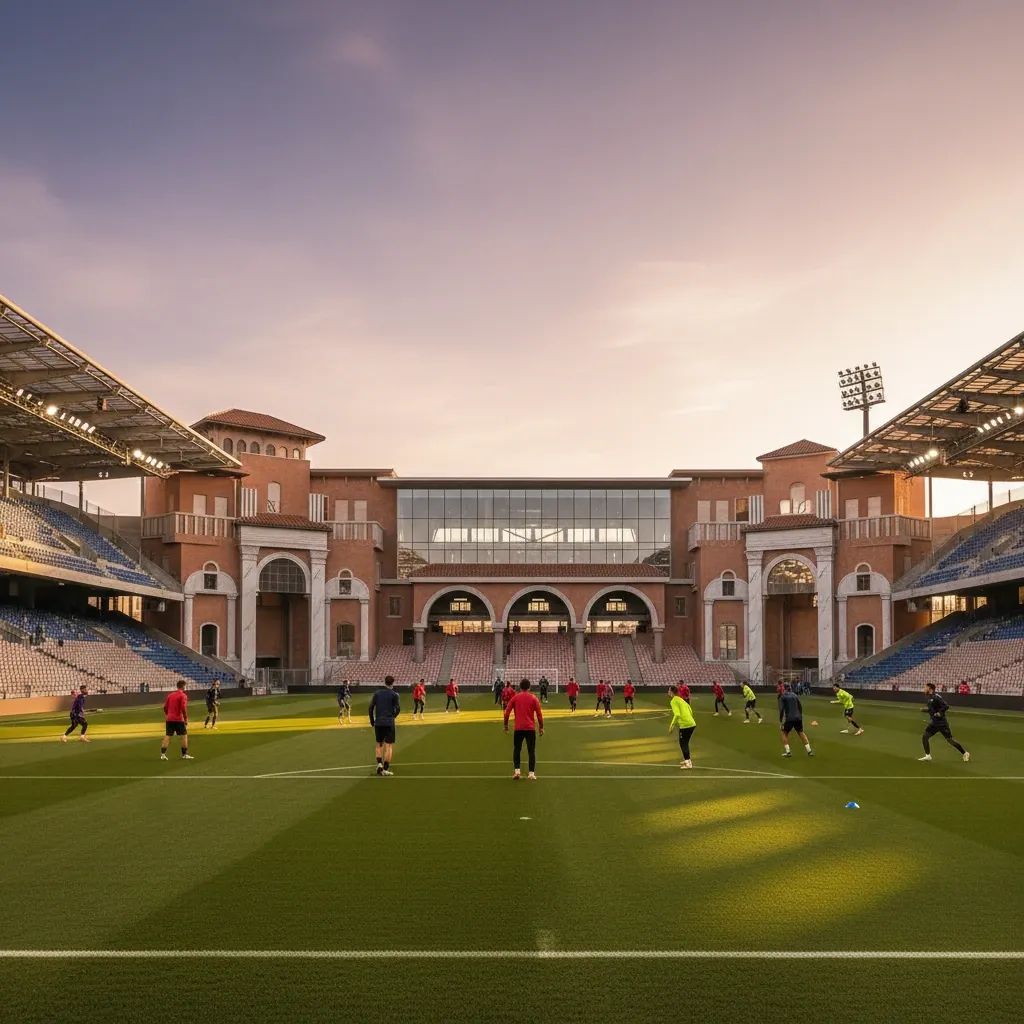
This globalization poses an existential threat to Maltese club football. Attendance at the Malta Premier League has stagnated or declined for years, even as clubs like Valletta and Floriana boast rich histories and fierce rivalries. The "Derby of the Lions" between Valletta and Floriana—considered the island's most intense domestic clash—still draws crowds, but the broader league struggles to compete with the spectacle of Champions League nights or Premier League weekends.
The Malta Football Association has responded with youth engagement initiatives, including free entry for children under 12 starting in 2025. Clubs are investing in academies and pathways to nurture homegrown talent. Yet concerns persist. One coach warned that without systemic change, the Maltese national team could feature minimal players with Maltese surnames within a decade, as foreign imports dominate club rosters and local talent pipelines atrophy.
The league's split-phase format—designed to inject drama into the season—has been criticized for diluting interest rather than enhancing it. When only a handful of clubs compete for the title each year, and when fans can watch Barcelona dismantle Real Madrid in 4K from their living rooms, the domestic product struggles to justify the investment of time and money.
What This Means for Residents
If you're a Maltese football fan, the landscape has never been more diverse—or more fragmented. The communal ritual of flag-waving during major tournaments endures, but the emotional stakes have shifted. Younger fans are less likely to inherit their parents' England-or-Italy allegiance and more likely to forge their own path, shaped by FIFA video games, social media influencers, and the global star power of players like Erling Haaland or Vinícius Júnior.
For local clubs, the challenge is acute: how do you compete with Manchester City's marketing budget or Barcelona's legacy? Free entry for kids and improved youth academies are a start, but without a compelling product on the pitch and a cultural shift that re-centers local pride, the trend toward global fandom will only accelerate.
Malta's status as a European iGaming hub means betting platforms targeting local fans also contribute significantly to the island's economy, even as revenue flows away from domestic clubs. For the broader Maltese sports economy, this means revenue from betting platforms, streaming subscriptions, and licensed merchandise for foreign clubs will continue to dwarf domestic gate receipts. The Malta Premier League risks becoming a niche product for die-hards, rather than the cultural centerpiece it once aspired to be.
The Stubborn Resilience of the England Flag
Even as the binary divide fades, England flags will keep flying from Maltese balconies. The Anglophile tradition runs deep—rooted in language, education, and decades of Premier League saturation. Arsenal, Liverpool, and Manchester United fan clubs in Malta remain among the largest and most fanatical anywhere outside England.
But the context has changed. Today's England flag is less a political statement and more a lifestyle choice—one option among many in a globalized football marketplace. It's no longer about rejecting Italy; it's about embracing Bukayo Saka or reliving the drama of a Harry Kane penalty shootout.
As the 2026 World Cup progresses and England eyes a potential final, expect the St. George's Cross to dominate Maltese streetscapes once more. Just don't assume the person flying it chose England over Italy. They might also be streaming Napoli highlights on their phone and wearing a Paris Saint-Germain shirt—because in 2026, Maltese football fandom is a marketplace of competing loyalties, where tradition and globalization coexist uneasily.