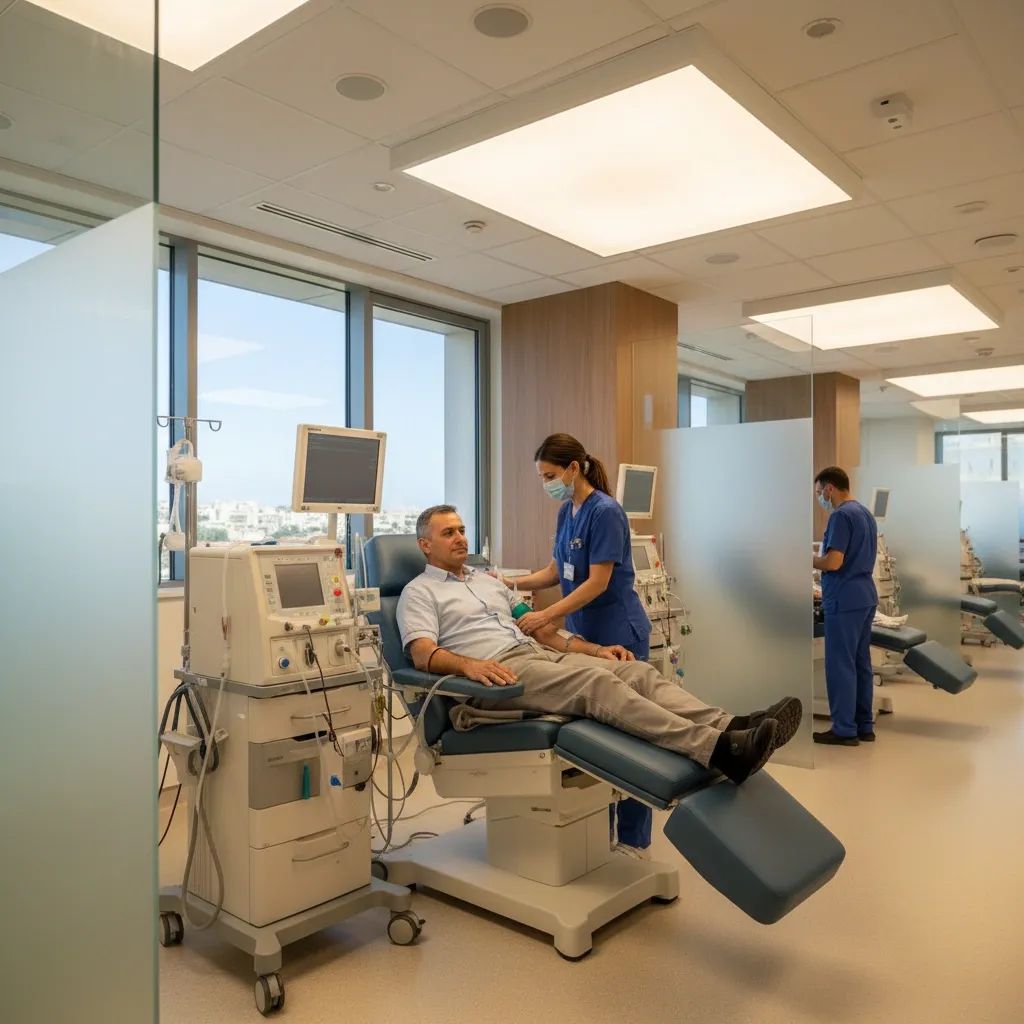
Malta's elderly dialysis patients now have a lifeline much closer to home. St Vincent de Paul residence launched its first-ever hemodialysis unit in January 2026, eliminating the burden of repeated hospital journeys and positioning the island at a turning point in how it delivers renal care to aging populations. The facility, built at a cost of €380,000, signals a deliberate shift away from centralized medicine—and one that promises tangible relief for hundreds of seniors managing kidney disease.
Why This Matters
• On-site dialysis for SVP residents: No more twice-weekly trips to Mater Dei Hospital; treatment now happens within the facility grounds.
• 70 sessions per week immediately available: Six machines (one reserved for emergency backup) serve patients aged 60 and over from SVP and nearby nursing homes.
• Scaled expansion imminent: An 18-bed unit opens in 2027; satellites are planned for Censu Moran Regional Centre and northern Malta.
The Pressure Behind the Solution
Kidney disease is spreading across the island. The prevalence of chronic kidney disease in Malta jumped 9.2% between 2019 and 2023, according to national registry data. That upward curve, combined with an aging society where life expectancy routinely exceeds 82 years, has squeezed Mater Dei Hospital's renal division into an increasingly tight corner. The hospital currently manages roughly 300 patients with end-stage kidney disease—split between hemodialysis and peritoneal dialysis—and maintains a transplant waiting list of 95 people as of late 2025.
The math is straightforward: demand is outpacing a single facility's capacity. Even Mater Dei's "twilight shift" on Mondays, Wednesdays, and Fridays (8 PM to midnight, designed to accommodate work schedules) has not fully resolved congestion. Satellite units represent the practical answer.
A Decentralized Approach Takes Root
The Malta Ministry of Health framed the SVP launch as the first domino in a much larger restructuring. Rather than build a single mega-center, officials opted for a phased rollout: test a five-bed pilot with six machines, gather real-world feedback, then scale. The model mirrors successful strategies across southern Europe, where aging populations have forced countries like Italy, Greece, and Spain to scatter dialysis capacity beyond traditional hospital walls.
The SVP unit caters specifically to patients aged 60 and older—both SVP residents and community members living within geographic proximity. The clinician team rotates from Mater Dei, ensuring continuity of expertise. SVP nursing staff underwent specialized training in the months before the January 19 inauguration, with quarterly competency updates scheduled. This hybrid staffing arrangement—blending resident expertise with hospital-trained personnel—protects against skill erosion while reducing the need to recruit wholesale from abroad, a persistent tension in Malta's healthcare labor market.
What Residents and Families Actually Gain
The immediate benefit is visceral. A seventy-eight-year-old SVP resident who previously spent three hours twice weekly in ambulance transport and hospital waiting areas now walks a corridor within the residence. For family members coordinating caregiving across work and other responsibilities, the shift is transformative: no scheduling conflicts with logistics, no stress about ambulance delays, no emotional drain from watching an elderly relative commute in discomfort.
Beyond SVP's walls, the facility opens dialysis access to patients in nearby private nursing homes and independent elderly residents within the catchment zone. This inclusive-access policy mirrors the assisted peritoneal dialysis programs that have proven successful in Campania and Sicily, where visiting healthcare staff support frail patients at home or in dedicated senior facilities. Caregivers no longer face the burden of coordinating long-distance transport—a factor Italian research links directly to caregiver burnout and treatment adherence problems.
For the broader community, wait times at Mater Dei should theoretically contract as demand redistributes. That relief is particularly urgent: longer waits mean postponed sessions, which carries clinical risk for kidney patients.
The Mediterranean Precedent
Malta's move sits within a broader regional pattern. Greece operates dialysis centers scattered across mainland and islands (Crete, Rhodes, Kalamata, Halkidiki), many equipped with multilingual staff and patient transport services. Italy's National Health System covers hemodialysis and peritoneal dialysis through a network of hospital units, satellite centers, and accredited private facilities. Spain's autonomous health regions coordinate social and renal services to bridge gaps created by sparse public transport and distant hospitals. Turkey has built high-volume nephrology centers and deployed teleconsultation for follow-up care. Croatia offers modern dialysis clinics in both urban and tourist-oriented locations.
Malta's compact geography offers an advantage absent in those larger countries: no patient lives more than an hour's drive from a proposed satellite site. That compression reduces logistical friction but introduces a distinct trade-off—each unit must justify capital spending and staffing overhead on relatively modest patient volumes, not the thousand-person caseloads that justify sprawling centers in Italy or Spain.
Infrastructure and Execution Risk
The roadmap depends on three pillars: construction, staffing, and sustained demand. The 18-bed expansion at SVP, targeted for 2027, will triple on-site capacity and set the template for replication at Censu Moran and northern Malta. As of early March 2026, no public reports of construction delays have surfaced. However, scaling the hybrid staffing model across three satellite facilities will require either a markedly larger pool of cross-trained renal nurses or recruitment from overseas—both outcomes carry uncertainty.
The clinical reality of dialysis for elderly patients adds another layer of complexity. Modern best practice emphasizes individualized treatment plans that weigh cognitive function, social support, and quality-of-life preferences alongside physiological targets. Shared decision-making between clinician, patient, and caregiver becomes critical when trade-offs emerge: Is frequent dialysis with strict diet restriction preferable to less frequent treatment that permits greater independence and social participation? SVP has positioned the pilot to embed that philosophy into daily workflows, though measuring success will ultimately hinge on patient-reported outcomes and caregiver burden surveys not yet in the public domain.
Looking Ahead
The SVP unit represents Malta's first live test of decentralized renal care. Success depends on whether the 18-bed expansion launches on schedule, whether staffing models prove sustainable, and whether demand patterns hold stable. Peritoneal dialysis uptake, for instance, could reduce hemodialysis load and reshape facility utilization. Construction delays, staffing shortfalls, or unexpected clinical needs could force mid-course corrections.
For now, the practical gains are tangible: machines humming, patients receiving treatment within view of their rooms, families breathing easier. The next 12 months will reveal whether Malta's satellite strategy executes as designed or whether ambition outpaces execution capacity. Either way, the concept is no longer theoretical—it is operational, and its success or failure will shape renal care strategy for the next decade.