
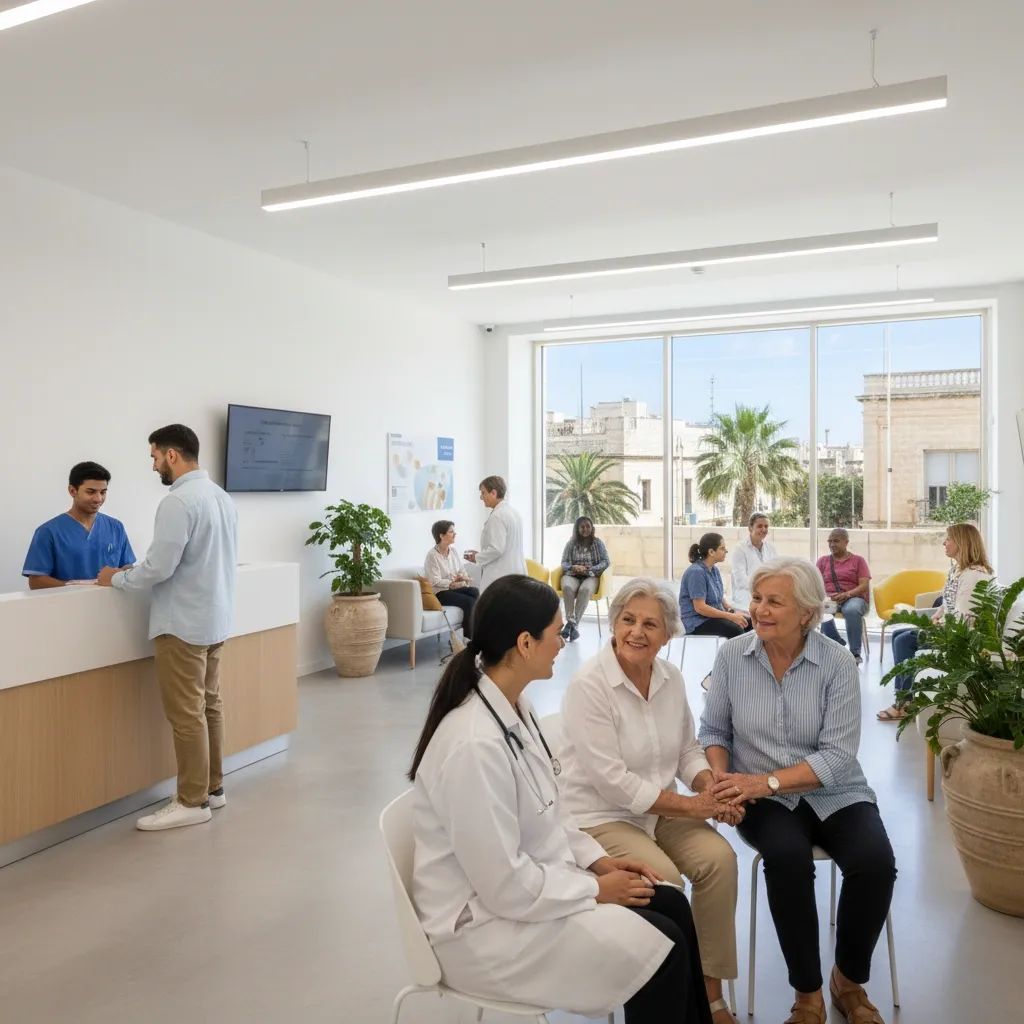
Malta reimburses just 16% of cancer medicines—the lowest rate in the entire EU, where the average sits at 65%. Yet Prime Minister Robert Abela promised free cancer treatment for all patients. More than a year later, that pledge remains only partially realized, leaving patients caught between a promise of universal care and a system still heavily reliant on charitable funding for life-saving therapies.
What This Means for You Right Now
If you're a Maltese cancer patient or caring for someone with cancer, here's what you need to know: treatments listed in the Fifth Schedule of the Social Security Act are free, regardless of income. But innovative or newly approved medications? You'll likely need to apply to the Malta Community Chest Fund (MCCF) for funding.
The good news: from 2026, the MCCF removed means testing for cancer requests. You no longer need to prove financial hardship to qualify for assistance. The bad news: the fundamental system remains unchanged—you're still dependent on charity rather than receiving treatment as a state-funded right.
Practical steps if you need cancer treatment:
• Confirm whether your prescribed medication is on the Fifth Schedule (your oncologist can advise)
• If not, apply to the MCCF immediately—there's no financial screening anymore, but processing takes time
• If you're from Gozo, financial assistance now covers ferry costs and accommodation for mainland appointments
• Ask your hospital about the new robotic pharmacy at Gozo General Hospital, launching soon to prepare chemotherapy on the island
Why the Promise Hasn't Been Fully Delivered
The Malta government's cancer treatment pledge confronts a harsh reality: between 2020 and 2023, Maltese patients accessed just 2 out of 56 EU-approved cancer medicines, while German patients could access 54 of the same treatments. Germany maintains a 96% reimbursement rate. The difference isn't medical expertise—it's funding priority.
A single dose of Daratumumab, a front-line therapy for Multiple Myeloma, costs approximately €7,081 and remains unavailable through the public system for many patients. For families already financially devastated by a cancer diagnosis, this creates an impossible choice.
Patient advocacy organizations describe the current system as a "healthcare lottery," where access to potentially life-saving drugs depends not on medical need but on whether a treatment has been added to the government formulary. Those requiring non-formulary medications must navigate bureaucracy at the most vulnerable moment in their lives.
The Core Problem: Formulary Delays
The European Medicines Agency (EMA) approves cancer medicines across the EU relatively quickly. But reimbursement decisions happen at the national level. In Malta, this creates dangerous delays.
Maltese patients have faced waits of nearly five years after EMA approval before funding became available through the MCCF, compared to the EU average of 19 months. For cancer patients, five years can mean the disease progresses beyond treatment or a patient's window for recovery closes entirely.
In April 2025, Abela announced plans to add the first 10 out of more than 40 cancer medicines to the official free list. That sounds encouraging—until you realize it's an incremental approach when patients need comprehensive coverage. During his electoral campaign, Abela committed that the government would "fully take over that role completely," ensuring patients receive treatment "by right, not out of charity." That hasn't happened.
What Changed in 2026
The MCCF made one significant policy shift this year: complete removal of means testing for cancer requests. Previously, patients had to prove they couldn't afford treatment. Now, the MCCF funds cancer medications on a full funding basis without financial screening. This eliminates one barrier but doesn't address the fundamental issue: reliance on charity rather than state provision.
The government also invested in infrastructure:
• A second PET-CT scanner for the Sir Anthony Mamo Oncology Centre
• A Medical Investigation and Treatment Unit at St Vincent de Paul Residence
• A robotic pharmacy at Gozo General Hospital to prepare chemotherapy directly on the island, eliminating travel for Gozitan patients
• Financial assistance for travel and accommodation between Malta and Gozo for early appointments
These improvements matter for access, but they don't address the medication coverage gap that remains the core issue.
Why This System Is Uniquely Unfair to Maltese Patients
The two-tier reality of Malta's cancer care system becomes stark when you compare it to other EU nations. Germany's robust health technology assessment processes and negotiating power mean near-universal coverage of approved cancer medicines. France maintains comprehensive reimbursement leaving minimal out-of-pocket costs. Nordic countries like Denmark and Sweden ensure core cancer treatments are covered through publicly funded universal systems focused on prevention and rapid treatment.
These nations demonstrate that high reimbursement rates and rapid inclusion of innovative therapies are achievable. Malta could strengthen its position by participating more actively in collaborative procurement at the EU level, potentially securing better pricing.
Some European countries have established dedicated national cancer drug funds—allowing managed entry for high-cost medications while collecting real-world evidence. This bridges the gap between immediate need and formal inclusion. Malta could adopt this model.
The Path Forward for Residents
Here's the reality: until the government formulary includes all clinically beneficial, EMA-approved cancer medicines, you'll continue navigating a hybrid system. The promise of free treatment confronts the reality of charitable dependence.
Patient organizations are pushing for:
• Faster formulary updates—not incremental, but comprehensive
• Transparent, efficient processes for evaluating all EMA-authorised oncology medicines
• Increased healthcare budget allocation for cancer medicines
• Treating medication access as a human right, not a charitable consideration
The Multiple Myeloma & Amyloidosis Group and other advocacy organizations argue that cancer treatment should be provided through the national health service as a fundamental right. Currently, the government's annual MCCF donation is designated solely for non-formulary treatments—essentially institutionalizing the charity-based system rather than transitioning toward comprehensive state provision.
Malta's cancer care infrastructure has advanced. The Sir Anthony Mamo Oncology Centre provides comprehensive services. The Directorate for Cancer Care Pathways enhances coordination. The recognized Cancer Survivorship Programme serves as a WHO model for other European countries. Yet these achievements remain incomplete without ensuring financial access to the full spectrum of necessary treatments.
What residents can do:
• If you're affected by access issues, report your experience to patient advocacy groups
• Contact your elected representatives about accelerating formulary updates
• Ask healthcare providers about your medication's status on the government list
• Don't delay—if you need treatment, apply to the MCCF immediately rather than waiting for formulary inclusion
The removal of means testing represents progress, but the ultimate measure of success will be whether Maltese patients can access life-saving therapies based on medical need alone, without bureaucratic delays or reliance on charitable organizations.


