
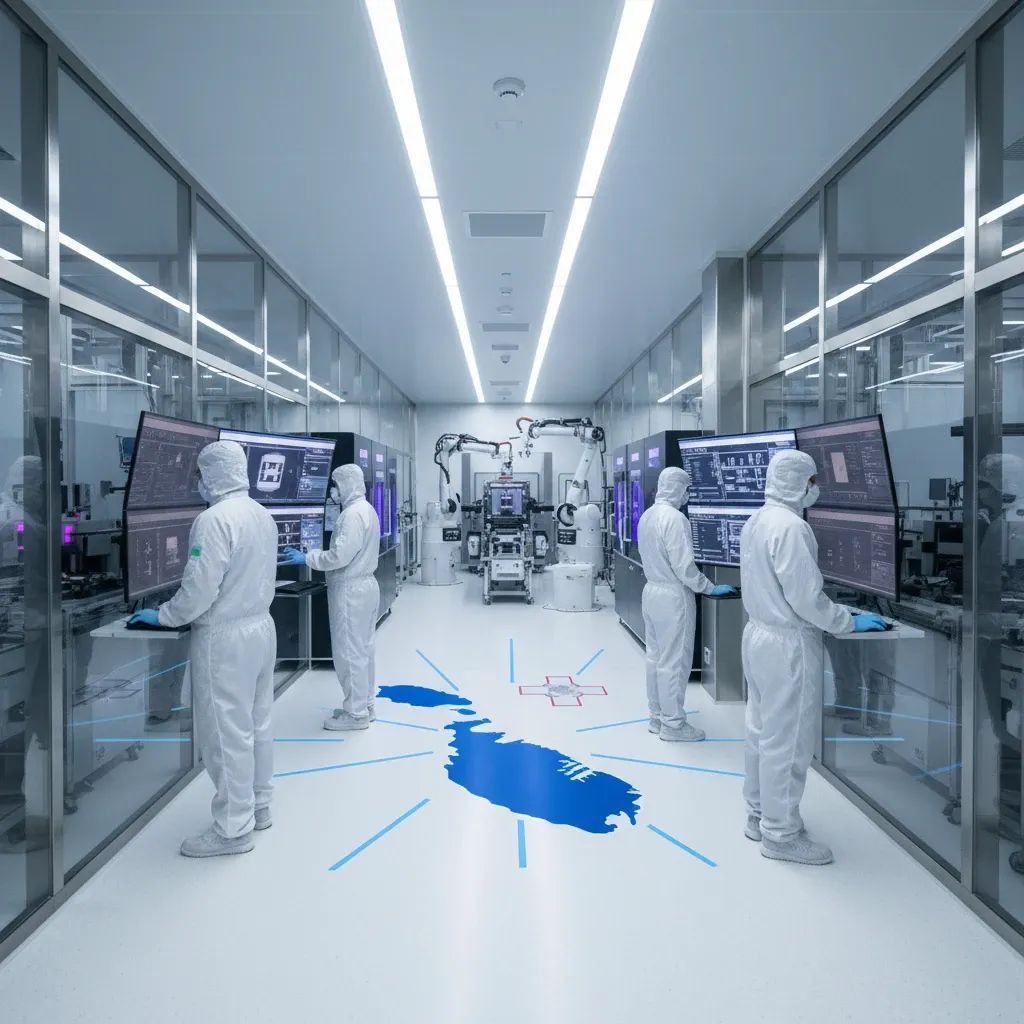
Vantive, a kidney care specialist carved out of Baxter International and now controlled by private equity giant Carlyle, is committing €150 million to build a manufacturing hub in Ħal Far by 2029. The company plans to create 250 skilled jobs and position Malta as a specialized producer of life-sustaining dialysis equipment for a global patient base. This represents Malta's largest single foreign direct investment in history.
Key Points at a Glance
• Construction timeline: Groundbreaking expected later in 2026; operational readiness 2029
• Employment scope: 250 positions spanning manufacturing, engineering, quality assurance, and product development
• Global context: Vantive operates across more than 100 countries, serving roughly 1M dialysis patients daily
Understanding Vantive and Why It Came to Malta
Vantive's story begins with a strategic divestiture. Baxter International, a healthcare heavyweight with roots in Malta stretching back to the 1980s, decided to separate its kidney care division in 2023. That plan evolved when private equity firm Carlyle—managing over $426 billion in assets—stepped in with an acquisition offer. On January 31, 2025, the transaction closed for $3.8 billion, and Vantive formally launched as an independent entity weeks later on February 3, 2025.
Unlike its former parent, Vantive has a razor-sharp focus: vital organ therapies. The company manufactures dialysis systems, acute organ-support technologies, digital monitoring platforms, and clinical training services. Its revenue model is straightforward—kidney disease is chronic and lifelong, meaning demand for consumables remains constant regardless of economic cycles. This predictability appeals to private equity investors planning long-term geographic expansion.
The Malta facility isn't Vantive's first global footprint, but it signals the company's intention to decentralize manufacturing and reduce supply-chain vulnerability. By locating in southern Malta, Vantive gains proximity to major shipping corridors, a European regulatory runway through EU membership, and access to the island's established life sciences talent pool.
Why Ħal Far, Why Now
Malta Enterprise, the island's economic development agency, has spent years courting medtech firms with subsidies for capital expenditure and R&D tax credits. Economy Minister Silvio Schembri's January 2026 teaser about an imminent mega-investment was the public signal that negotiations had progressed behind closed doors for roughly two years.
Ħal Far itself offers logistical advantages. The industrial zone sits minutes from Malta Freeport, one of the Mediterranean's busiest transshipment terminals, substantially cutting shipping costs for inbound raw materials and outbound finished goods destined for European, African, and Middle Eastern markets. Modular construction methods will allow Vantive to build to operational scale without over-capitalizing initially.
Malta's regulatory environment also tilts in the company's favor. The Malta Planning Authority operates according to established timelines for designated industrial zones, avoiding the multi-year approval delays common elsewhere in Europe. Combined with the island's English-speaking workforce familiar with pharmaceutical cleanroom standards and Good Manufacturing Practice certification, Malta presented a lower-friction alternative to expansion in other EU jurisdictions.
The Jobs Question: What's Actually Being Created
The 250-person headcount spans multiple career categories. Manufacturing technicians will staff production lines running 24/7 shifts, ensuring consistent output of sterile consumables. Lab engineers will validate processes and troubleshoot technical issues. Quality assurance specialists will perform batch testing and regulatory documentation. Research and development scientists will innovate product improvements. IT functional leads and serialization technicians will manage supply-chain traceability—a legal requirement for medical devices across the EU.
For recent biomedical science, engineering, and IT graduates, the Vantive facility represents a rare opportunity to stay in Malta while building a career in a niche, high-growth sector. Historically, such talent has migrated to London, Amsterdam, or pharmaceutical hubs in continental Europe. The facility effectively internalizes that brain drain.
Wages for these roles typically exceed Malta's median salary. A lab engineering lead or IT functional lead would command significantly more than hospitality or general administrative positions. Secondary job creation—construction workers, cleanroom specialists, logistics coordinators, maintenance staff—will ripple through the southern region for 18 months during the building phase.
The Supply-Chain Play and Carlyle's Thesis
Chronic kidney disease affects roughly 850 million people globally. Most developed countries have aging populations and rising diabetes rates, both risk factors for renal failure. Dialysis is non-discretionary—patients require treatment three times weekly, indefinitely. This generates recurring revenue for device manufacturers and consumable producers.
Carlyle's decision to spin Vantive as a standalone, private company reflects confidence in this secular demand. Free from the quarterly earnings pressures of a public corporation, Vantive can invest in geographic diversification, product extensions, and strategic acquisitions without justifying every capex decision to institutional investors. The Malta facility is likely the first of several planned production nodes designed to hedge supply-chain concentration risk—a lesson the entire medtech sector learned during COVID-19 shortages.
The Competitive Positioning for Malta
Prime Minister Robert Abela characterized the investment as validation of Malta's political stability and long-term vision. That framing isn't entirely rhetoric. Malta's corporate tax system, EU membership, and English-speaking regulatory environment have attracted sustained pharma and medtech interest over decades. Baxter's own presence since the 1980s proved the model worked, creating infrastructure and workforce expertise that Vantive can now leverage. Separately, Baxter International—now fully independent from Vantive—continues to expand its own Maltese operations, which have operated on the island since the 1980s.
Competing jurisdictions—Ireland, Spain, Portugal, Hungary—all vie for similar investments by offering tax incentives and expedited permitting. Malta's edge hinges on established sector expertise, proximity to Mediterranean markets, and demonstrated execution capability. The Vantive announcement proves all three factors carry weight in boardroom decisions.
Timeline and What to Watch
Construction typically begins later in 2026, pending final permits from the Malta Planning Authority—a process that will unfold publicly. The 2027 completion target is aggressive, suggesting prefabricated modular construction methods and advance equipment procurement. Full operational capacity by 2029 implies Vantive will begin recruiting senior management and engineering leads in late 2026, with bulk hiring of production staff ramping up through 2028.
Residents should monitor planning authority decisions, Malta Enterprise grant approvals (subject to parliamentary oversight), and job postings on Vantive's career portal. The facility's success depends on whether Malta can retain and recruit the technical talent required to meet production timelines. Universities and vocational institutes have been expanding life sciences curricula anticipating such investments; the next test is whether the pipeline produces graduates ready for immediate deployment.
The investment is already reshaping Malta's economic narrative. Rather than relying solely on tourism and online gaming—both subject to regulatory shocks—the island is quietly building a specialized, export-driven medtech cluster. Vantive is the headline act, but it won't be the last.


