Why Malta Is Betting Big on Brainpower, Not Volume
The Malta government is quietly making a calculated gamble. Rather than chase low-cost manufacturing or mass tourism—the economic engines of decades past—the island is repositioning itself as a destination for sophisticated, high-margin sectors: semiconductors, pharma, aviation, maritime services, and life sciences. The shift is real, not marketing theatre. But success hinges on solving three interlocking problems that bureaucrats and business leaders are only beginning to address honestly.
Why This Matters:
• Skills scarcity is immediate and acute: 43% of firms report lacking green-energy talent; IT, healthcare, and engineering shortages persist across virtually every growth sector.
• Economic growth depends on execution, not tax breaks: GDP is forecast at 3.8–4.2% for 2026, but sustained growth requires bridging the gap between laboratory innovation and commercial products.
• Infrastructure and governance reforms are underway but incomplete: €71.3M in maritime investments, a nine-year electricity modernization plan, and corporate law reforms aim to make Malta functional for demanding foreign investors—not just tax-friendly.
The Sectors That Actually Have Legs
Scan the list of industries Malta is targeting, and you'll notice something: they require intellectual capital, not square meters. That distinction matters on an island where land is finite and zoning battles never end.
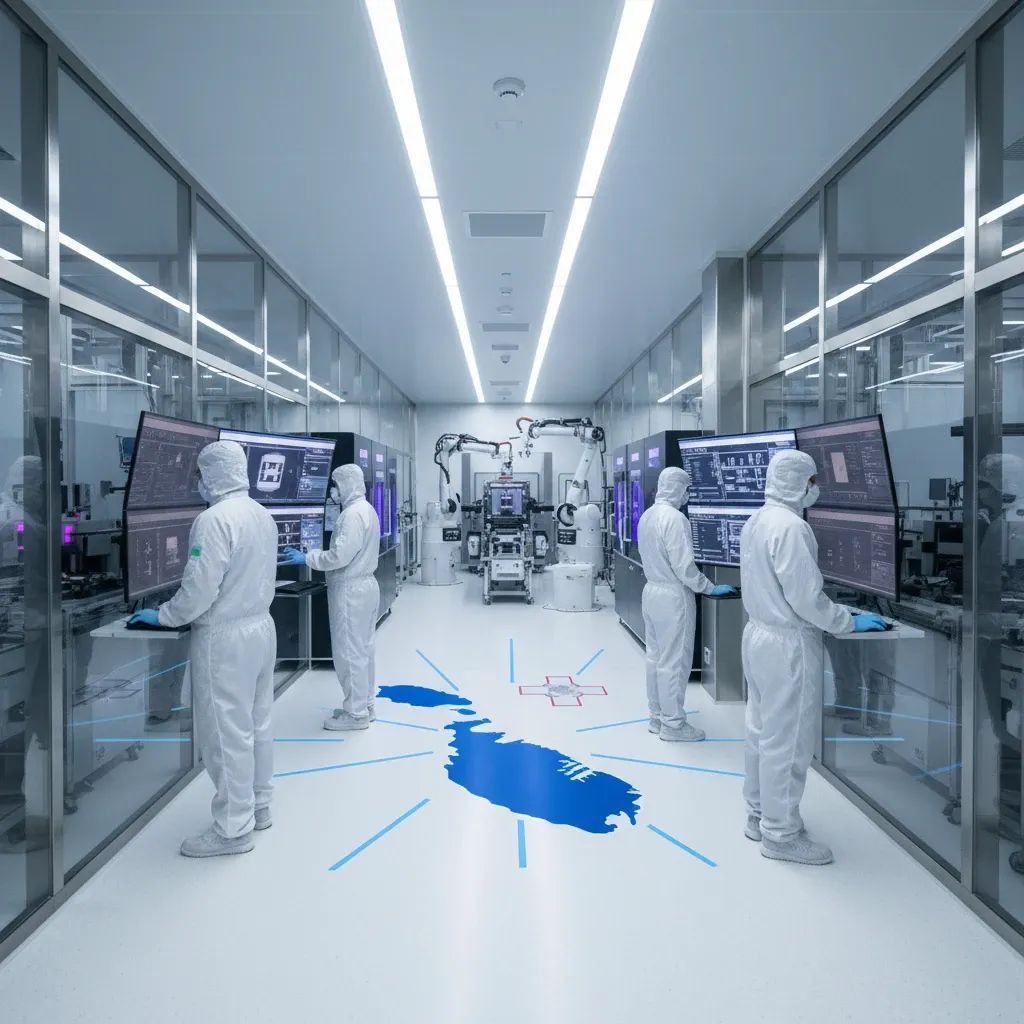
In semiconductors, Malta has been quietly building expertise for half a century. STMicroelectronics has been the anchor tenant, but the new strategy goes deeper. The Malta Semiconductor Competence Centre is mapping a national roadmap to integrate the island into the EU Chips Act value chain—the European equivalent of the United States' CHIPS and Science Act. A semiconductor incubator, developed with Silicon Catalyst, is already hosting international startups. The goal is ambitious but grounded: evolve from a manufacturing outpost into a design and testing hub for specialized semiconductors serving European demand.
Pharmaceuticals tell a similar story, only further along. €500M in annual pharma and chemical exports represents genuine scale for an island of 540,000 people. The competitive edge is not cost—it's regulatory flexibility. Malta's generous interpretation of the Bolar exemption (a patent law clause that allows generic manufacturers to develop copies of drugs before patents expire) lets local companies move faster than competitors in slower jurisdictions. Couple that with the Malta Medicines Authority's international credibility for batch release and Good Manufacturing Practices certification, and you have a magnet for European pharmaceutical firms. A major medical technology company is reportedly preparing the island's largest life sciences foreign investment to date, aimed squarely at supporting this ecosystem.
Aviation and maritime services follow the same logic: intellectual property, regulatory advantage, and proximity to European markets—not land, not cheap labor, not subsidies.
The Talent Crisis Is Not a Peripheral Issue
Here's the uncomfortable reality: Malta's low unemployment rate is simultaneously its greatest asset and its most pressing vulnerability. Businesses cannot find workers. The National Skills Strategy 2026–2035 exists because the shortage is no longer anecdotal; it is structural.
The gaps are everywhere. IT and software development face acute shortages in cybersecurity, data analytics, AI, and blockchain specialists. Healthcare is desperate for nurses, specialized doctors, and allied health professionals. Construction and engineering cannot find enough civil engineers, electricians, and project managers. Green energy is particularly exposed: nearly half of Maltese firms report missing skilled staff for renewable and environmental roles—a critical blind spot given EU decarbonization targets.
The government and Malta Enterprise recognize this cannot be solved by recruiters alone. The Innovation for Industry scheme (through Xjenza Malta) now offers grants up to €150,000 for companies undertaking applied research, plus an additional €40,000 to embed PhD-level expertise into firms. It is a practical acknowledgment that Maltese businesses must build internal research capacity rather than perpetually outsource expertise.
But here is the catch: schemes take time to mature, and international talent is expensive. Attracting a foreign semiconductor engineer or a biotech researcher means competing globally on salaries, visa clarity, and quality of life. The government understands this—hence the heavy investment in infrastructure (see below). Yet for now, the mismatch between demand and supply remains the single greatest constraint on sectoral growth.
Innovation Without Commercialization Is a Hobby
Malta's European Innovation Scoreboard rating has climbed to 95% of the EU average—an impressive trajectory. The problem: research does not automatically become commerce.
The Malta Digital Innovation Hub, debuting in 2026 with the island's first High-Performance Computer, will offer SMEs and startups free access to AI tools, cloud infrastructure, and data analytics. The €100M digital technology investment (announced for AI, cybersecurity, VR, AR, and blockchain) aims to accelerate adoption across the economy. The EU-Startups Summit 2026, returning to the island, will feature a pitch competition with prizes exceeding €1M.
Yet venture capital in Malta remains thin. Public and private R&D spending lags the EU average. The shortage of home-grown PhD graduates means that even when local innovation occurs, the depth of specialized talent needed to scale it globally is missing. The result: promising research gets stuck in university labs or abandoned by founders who cannot raise capital domestically.
Some startups manage the leap—particularly in iGaming, fintech, and blockchain, where Malta has built brand recognition. But semiconductors, medtech, and advanced materials require patient capital, technical depth, and years of development. That ecosystem is nascent. The government's grants programs are real, but they are not yet sufficient to replace missing venture capital. Small grants cannot turn a prototype into a production line.
Building the Physical and Regulatory Backbone
Foreign investors do not decide where to operate based on tax rates alone. They evaluate infrastructure quality, governance predictability, and ease of operation. Malta is scrambling on this front.
Energy modernization kicked off in January 2026 with a nine-year plan to rebuild the electricity distribution system across Malta and Gozo. Twelve new distribution centers and a new 132kV link between the islands aim to prevent grid congestion as demand rises. A €71.3M cargo facility at Ras Ħanżir (co-financed by the EU Cohesion Fund) is under tender and will expand Malta's maritime logistics capacity—critical for attracting shipping companies and related services.
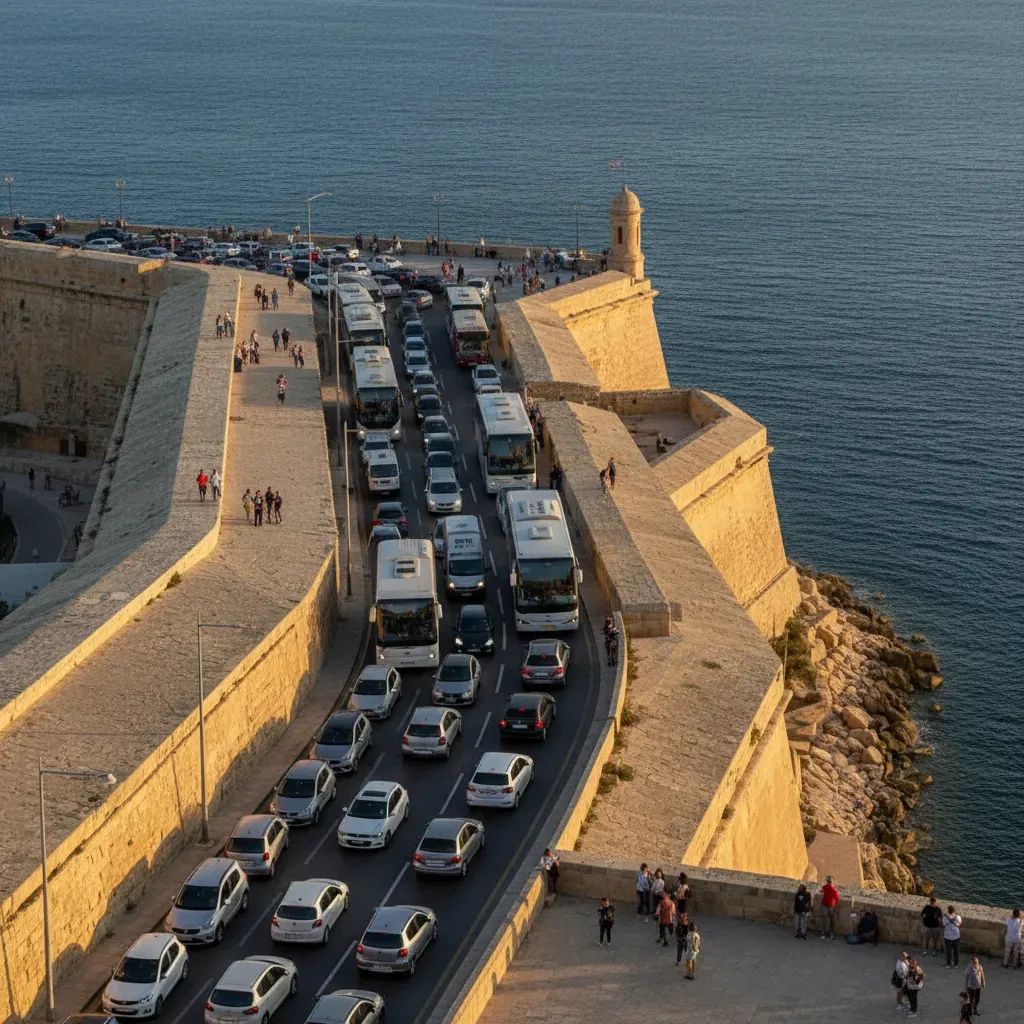
Transport infrastructure is less glamorous but equally vital. The National Transport Master Plan 2030 promises continued road upgrades in Gozo, expanded Park & Ride systems, and electrification of the public bus fleet. The goal is reducing private vehicle congestion—a perennial complaint from residents and investors alike.
On the regulatory side, Bill No. 136 (introduced June 2025) modernizes the Companies Act, streamlining digital administration, clarifying shareholder rights, and simplifying compliance. The Malta Financial Services Authority has set 2026 supervisory priorities emphasizing data-driven governance, board effectiveness, and transparent risk escalation. Constitutional reforms have shifted key government appointments from prime ministerial discretion to parliamentary oversight—a signal to foreign investors that institutional checks exist.
The Malta Diġitali 2022–2027 strategy pushes 5G expansion, smart city initiatives, and hybrid-cloud infrastructure across public services. These are not ribbon-cutting announcements; they are foundational investments for a digital-first economy.
The Stability Paradox
Malta's political continuity and relative economic resilience during global shocks (supply chain disruptions, energy insecurity, geopolitical volatility) remain genuine selling points. For investors spooked by instability, the island's track record is valuable.
But stability cannot be a substitute for structural productivity gains. Subsidies and crisis-management initiatives keep the boat afloat in the short term; they do not build a high-productivity, innovation-driven engine. The Budget 2026 offers expanded MicroInvest tax credits (up to €65,000) and a 175% tax deduction on R&D spending, plus accelerated deductions for digital and automation investments. These incentives help. They do not solve the skills gap or the commercialization bottleneck.
This is the crucial tension: Malta has the right strategic direction. It recognizes where global growth is happening (advanced manufacturing, life sciences, digital innovation). It has genuine competitive footholds in semiconductors and pharma. It is investing heavily in infrastructure and reforming governance. Yet the implementation gap remains wide. Talent is scarce. Venture capital is thin. Commercialization pipelines are underdeveloped.
Where This Leaves Malta
The ambition is credible, not rhetorical. A small island cannot compete on volume or land availability; it must compete on brainpower, regulatory agility, and sectoral depth. Malta has chosen the right battleground.
What will determine success is whether the government and private sector can execute at speed. The National Skills Strategy, the Digital Innovation Hub, the infrastructure modernizations, the governance reforms—these are necessary foundations. But foundations are not buildings.
The industries Malta is pursuing (semiconductors, pharma, medtech, aviation services) reward speed, specialization, and talent density. Competitors in Singapore, Ireland, and the Swiss cantons are not standing still. Malta's window to position itself as a European hub for these sectors remains open, but it is not infinite. The hard work—moving from potential to genuine achievement—has only just begun.