BirdLife Malta has launched Malta's first-ever national eTwinning environmental project, bringing together students from three primary schools to celebrate nature through hands-on activities centered around school gardens. The initiative, called "Magical Trees: eTwinning meets Dinja Waħda," marks a significant milestone in connecting Malta's classrooms with Europe's largest educational network while deepening children's engagement with the island's indigenous biodiversity.
eTwinning is the European Commission's digital platform that connects schools across Europe to collaborate on shared learning projects. This Malta initiative represents a national adaptation of the platform—using its methodology to unite schools within the island for a shared environmental mission.
Why This Matters:
• First-of-its-kind collaboration: Malta's inaugural national eTwinning environmental project integrates European digital learning with local nature conservation
• Three schools involved: Rabat Primary, Dingli Primary, and San Anton School participated in the May 6, 2026 event at the Dinja Waħda Garden
• Long-term impact: The project builds on BirdLife Malta's 30-year Dinja Waħda program, which has now achieved official accreditation by Malta's Directorate for Quality and Standards in Education
What Happened at San Anton School
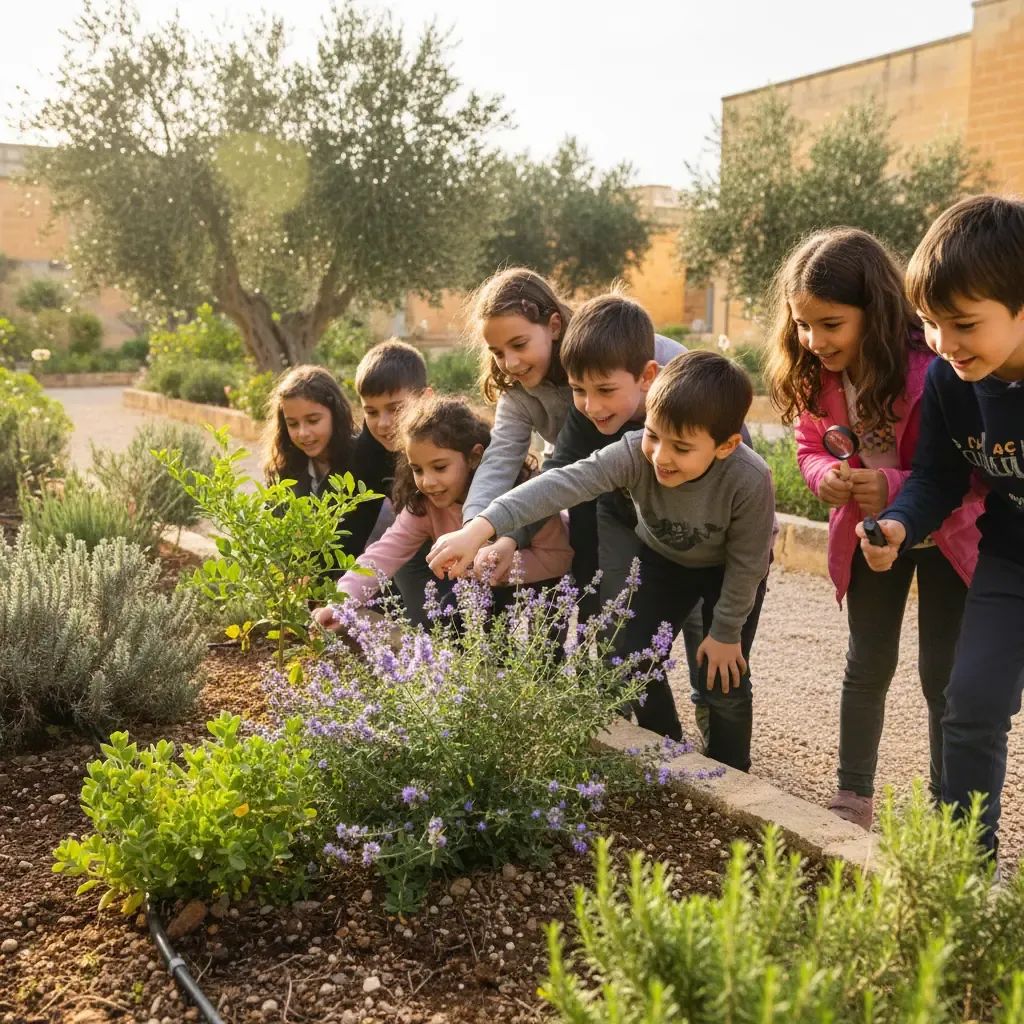
On May 6, 2026, children from Rabat Primary and Dingli Primary traveled to the Dinja Waħda Garden at San Anton School for a day of nature-themed activities celebrating trees. The event served as the practical centerpiece of the broader eTwinning collaboration, which uses digital platforms to connect schools across Europe for shared learning objectives.
The garden itself is part of BirdLife Malta's "Ġonna Dinja Waħda" network—purpose-built school gardens designed to enhance urban biodiversity across the Maltese islands. These spaces are planted exclusively with indigenous flora selected to support local wildlife, from native pollinators to migratory bird species. Unlike conventional school gardens, the Dinja Waħda model integrates curriculum-based learning directly into the garden environment, allowing students to experience ecology, botany, and environmental science through direct observation rather than textbooks alone.
How the eTwinning Framework Supports Local Conservation
The "Magical Trees" project leverages eTwinning's digital tools for activity tracking, reporting, and resource sharing. BirdLife Malta recently launched a new online Dinja Waħda platform specifically for schools, simplifying how teachers document student engagement and access free educational materials. One innovation piloted in the program includes Malta's first bird-table live-feed camera installed in a participating school, allowing students to observe native bird species in real time from their classrooms—a feature that bridges traditional nature observation with modern digital learning.
Why Malta's Schools Are Embracing Environmental Education
The timing of this project aligns with broader recognition of environmental education's role in Maltese schools. Dingli Primary School, one of the three participants, received the eTwinning School Label for 2025-2026, a European distinction recognizing commitment to innovation, collaboration, and quality education. The school's involvement in the "Magical Trees" project contributed to that recognition.
BirdLife Malta's Dinja Waħda program, which celebrated its 30th anniversary in 2024, has impacted thousands of students across Malta and Gozo. The program now offers MQF Level 1 and Level 2 awards for early years and primary students—official qualifications that formalize environmental education as part of the national curriculum framework. This accreditation ensures that participation in Dinja Waħda activities counts toward students' educational achievements, not merely as extracurricular enrichment.
Maintenance of the gardens is supported by the Environment & Resources Authority (ERA) and the Directorate for Educational Services, ensuring that schools without specialized staff or funding can sustain their gardens long-term. This partnership model removes one of the most common barriers to school-based environmental programs: the challenge of maintaining living educational spaces year-round.
What This Means for Residents
For parents and educators in Malta, the expansion of environmental education into eTwinning offers several tangible benefits:
Curriculum Integration: Students participating in Dinja Waħda projects now earn recognized qualifications (MQF Level 1 and 2), meaning environmental education contributes directly to academic progression rather than competing with it.
Digital Skills Development: The eTwinning platform requires students to use information and communication technologies for project collaboration, documentation, and presentation—skills increasingly essential for Malta's digital economy.
Cross-School Collaboration: The national eTwinning model allows students from different regions—Rabat, Dingli, and San Anton in this case—to share experiences and compare biodiversity observations, building a more comprehensive understanding of Malta's varied ecosystems.
Access to European Networks: While this project is national, it positions participating schools to join international eTwinning projects in the future, connecting Maltese students with peers across Europe for shared environmental challenges.
How to Get Your Child's School Involved
Schools interested in participating in future Dinja Waħda or eTwinning environmental projects can inquire through the Directorate for Educational Services or contact BirdLife Malta directly through the Dinja Waħda program. There are no participation fees, though schools must have outdoor space suitable for indigenous garden development. Teachers receive training and ongoing support to implement activities aligned with the national curriculum, and students can earn formal MQF qualifications through documented participation.
BirdLife Malta's 30-year track record and recent infrastructure investments suggest the program will continue expanding across Malta's primary schools in the coming years.