
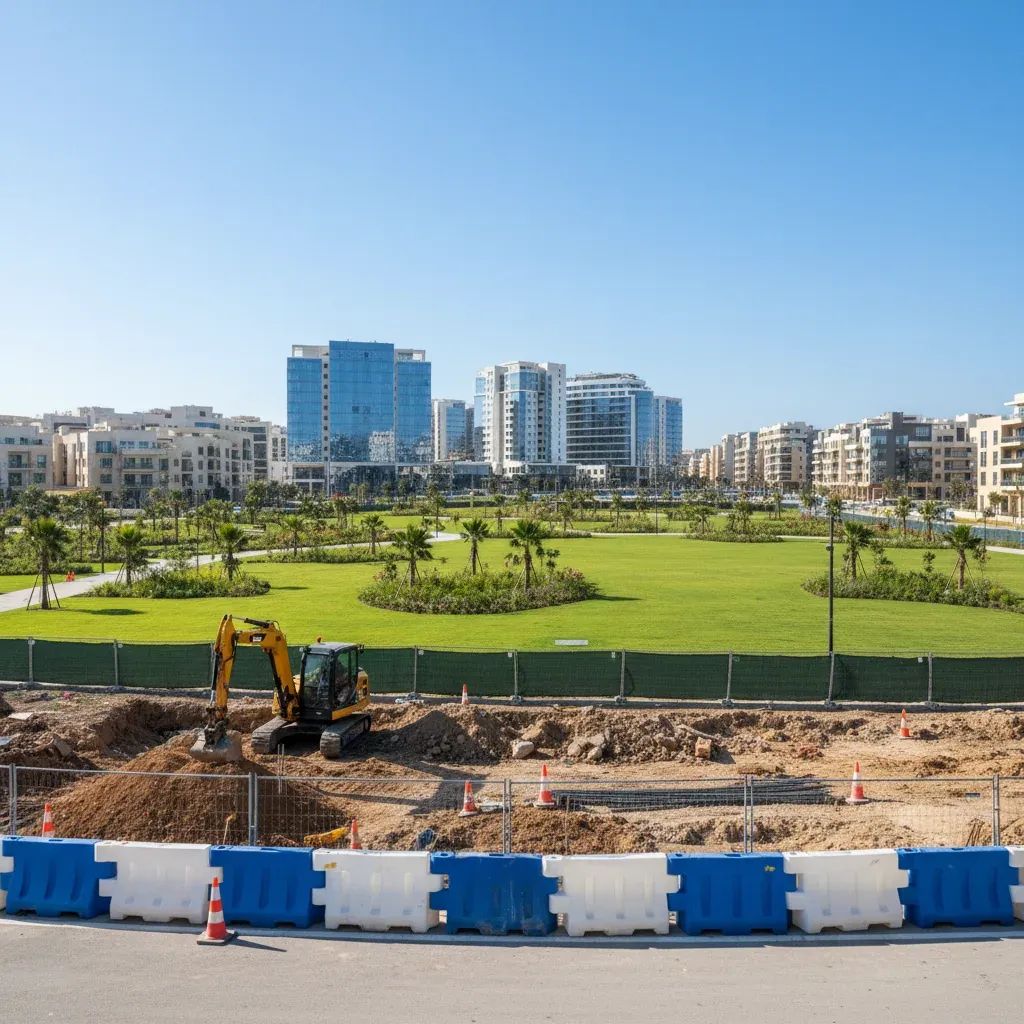
The Malta Labour Government promised to transform five major urban sites into parks and gardens ahead of the 2022 election, backed by a €700M investment in green spaces over seven years. Four years later, none of the five flagship projects have been completed, and several have been quietly shelved or drastically scaled back. The delay raises questions about infrastructure planning, political feasibility, and whether the administration's environmental commitments can survive the collision with technical and fiscal reality.
Why This Matters
• No visible progress on the five original sites: St Anne's Street (Floriana), Ħamrun milk factory, Santa Venera tunnels, Vjal ir-Rihan (San Ġwann), and car parks in Gozo and Cospicua.
• Residents waiting years for promised green spaces while traffic congestion and heat-island effects persist.
• Alternative projects announced but not from the original manifesto—creating confusion over what is actually being delivered.
• Malta's density makes this acute: as one of Europe's most densely populated countries, green space scarcity affects daily quality of life more acutely than in less crowded capitals, making these delays particularly impactful for residents seeking accessible outdoor recreation.
Five Sites, Four Years, Zero Completions
The 2022 electoral pledge centered on turning car parks, industrial sites, and congested roads into pedestrian-friendly green corridors. Prime Minister Robert Abela himself announced the vision, framing it as a transformational leap for Malta's urban quality of life. Yet as of April 2026, the promised conversions remain in limbo or have been abandoned.
St Anne's Street in Floriana was supposed to become a massive green boulevard with traffic rerouted underground. That tunnel concept has since been deemed technically unfeasible. Current plans focus on surface-level restoration of the street's historic arches, with a tender expected soon. The grand garden vision has evaporated, replaced by a more modest pedestrianization effort.
The Ħamrun milk factory site, earmarked for a large garden with underground parking, has seen no commencement of work. Likewise, the Santa Venera tunnels—promised a green roof as part of the transformation—remain untouched, with the government citing the need to wait for the Msida infrastructure project to manage traffic flows. With no timeline announced, the project appears indefinitely postponed.
Vjal ir-Rihan in San Ġwann was slated for pedestrianization via an underpass to divert traffic. That underpass is now under review due to cost and disruption concerns, and the project has effectively stalled. Community discussions continue, but no final design or timeline has been set.
The Gozo car park adjacent to the Victoria bus terminus and the Cospicua car park (later earmarked for an AUM dormitory) were both supposed to be converted into green parks with underground parking. Neither has progressed beyond the planning phase.
What This Means for Residents
For Maltese families and residents, the absence of these projects translates into continued reliance on private vehicles, limited recreational space, and missed opportunities for walkable neighborhoods. Practically, this means:
• Ħamrun residents remain among the furthest from major green spaces, with no nearby parks meeting European standards for accessible green infrastructure—forcing families to travel significant distances for outdoor recreation.
• Floriana and San Ġwann commuters continue navigating congested streets instead of pedestrian-friendly corridors, extending daily travel times and exposure to air pollution.
• Parents with young children have fewer safe, traffic-free play areas within their neighborhoods, limiting independent outdoor activity for kids.
Urban heat, air quality, and mental health all suffer when green infrastructure is delayed. The original pledge implied immediate improvements; the reality is that residents face another multi-year wait while the government recalibrates.
Investors and developers also watch these delays closely. Large-scale infrastructure commitments signal political will and fiscal capacity. When flagship projects vanish from the agenda, it raises doubts about the government's ability to execute complex urban redevelopment—potentially deterring long-term investment in real estate, hospitality, or public-private partnerships.
Government Defense and Alternative Projects
Prime Minister Abela has defended the delays, attributing them to ongoing consultations with residents and the need to coordinate with other infrastructure works. In March 2026, he stated that 82% of the government's electoral manifesto has been delivered and insisted that green spaces remain a priority. However, those percentages do not clarify which specific projects are complete versus merely "in progress."
To demonstrate continued commitment, the administration has announced new park initiatives not included in the 2022 manifesto: plans for Manoel Island, White Rocks, and Fort Campbell as national parks. These are in various stages of public consultation or planning, but they do not fulfill the original five pledges—they are additions to a list that remains unfulfilled.
Meanwhile, Project Green, the government's environmental agency, has announced an ambitious portfolio: 118 projects covering 1.7M square meters with a budget of €350M, scheduled for implementation between 2025 and 2027. In October 2024, CEO Joseph Cuschieri revealed plans to begin work on approximately 1.3M square meters across 22 projects in 2025, with an estimated value of €115M. Yet these figures muddy the water—does this represent progress on the original five sites, or a pivot to entirely different locations?
The Ta' Qali Precedent and Trust Deficit
The government's credibility on green projects took a significant hit with the Ta' Qali picnic area debacle. In a widely criticized intervention, the administration covered a lush grass area with €311,000 worth of imported gravel, ostensibly to alleviate flooding. The result was a barren expanse where grass could no longer grow, even after winter rains. Abela himself conceded that the government "could have done better."
The gravel procurement was reportedly authorized as a direct order by Jason Micallef, chairman of the Ta' Qali National Park, without a public tender or environmental permits. Opposition parties and NGOs condemned this as a textbook example of bad governance and wasted public funds. The episode raised suspicions that political loyalty trumped competence, and that the public was misled with assurances that grass would return.
For residents, the Ta' Qali incident is not just an embarrassment—it is a warning sign about how future park projects may be handled. If a simple picnic area can descend into a €311,000 fiasco, what guarantees exist for complex urban transformations involving tunnels, underground parking, and traffic rerouting?
What's Actually Happening on the Ground
Some progress is visible, though not necessarily on the promised sites. San Anton Gardens in Ħ'Attard are undergoing regeneration, including paths, walls, and the conservatory. The Pinetum in Floriana, a nearly 5,000-square-meter garden project, is expected to begin in 2025. The District Park in Fgura, covering over 40,000 square meters, is progressing with an investment of around €2.8M supported by European funds. The first phase is expected to open soon.
Other initiatives include the Għajnsielem rainwater harvesting park (completion by mid-2026), the Ta' Xwieki sports park in Għargħur (early 2026 target), and the Għaxaq woodland (autumn 2025 completion). These are incremental wins, but they do not substitute for the five flagship urban transformations that were supposed to redefine Malta's cityscape.
The Political and Technical Reality
Urban park projects in Malta face a unique set of constraints: limited land availability, complex utility networks, heritage protection rules, and dense traffic patterns. Underground tunneling in Floriana or San Ġwann is not merely expensive—it may be geologically impractical or require decades of planning. Consultation fatigue is real: residents want green space, but they also resist construction disruption, noise, and parking loss during the transition.
The government's pivot to surface-level interventions and smaller community parks may reflect a pragmatic reassessment. However, that reassessment was never communicated as a formal policy shift. Instead, projects were quietly downgraded or postponed, leaving the public to piece together the timeline through media reports and occasional ministerial statements.
Accountability and the Path Forward
For Malta's urban green agenda to regain credibility, the administration must clarify which of the five original projects are still active, which have been abandoned, and why. Transparency on technical constraints, budget reallocations, and revised timelines would allow residents to adjust expectations and hold officials accountable.
The broader question is whether Malta's infrastructure governance can handle the complexity of large-scale urban redevelopment. The Ta' Qali gravel incident suggests that decision-making remains opaque, accountability is weak, and political convenience often overrides planning rigor. Until those systemic issues are addressed, even well-intentioned promises risk becoming another round of unfulfilled pledges.
The €700M investment in open spaces over seven years was a bold commitment. But four years in, with none of the five flagship sites delivered, the government must either accelerate implementation or acknowledge that the original vision was never feasible. Residents deserve both green spaces and honest answers about when—and whether—they will materialize.


