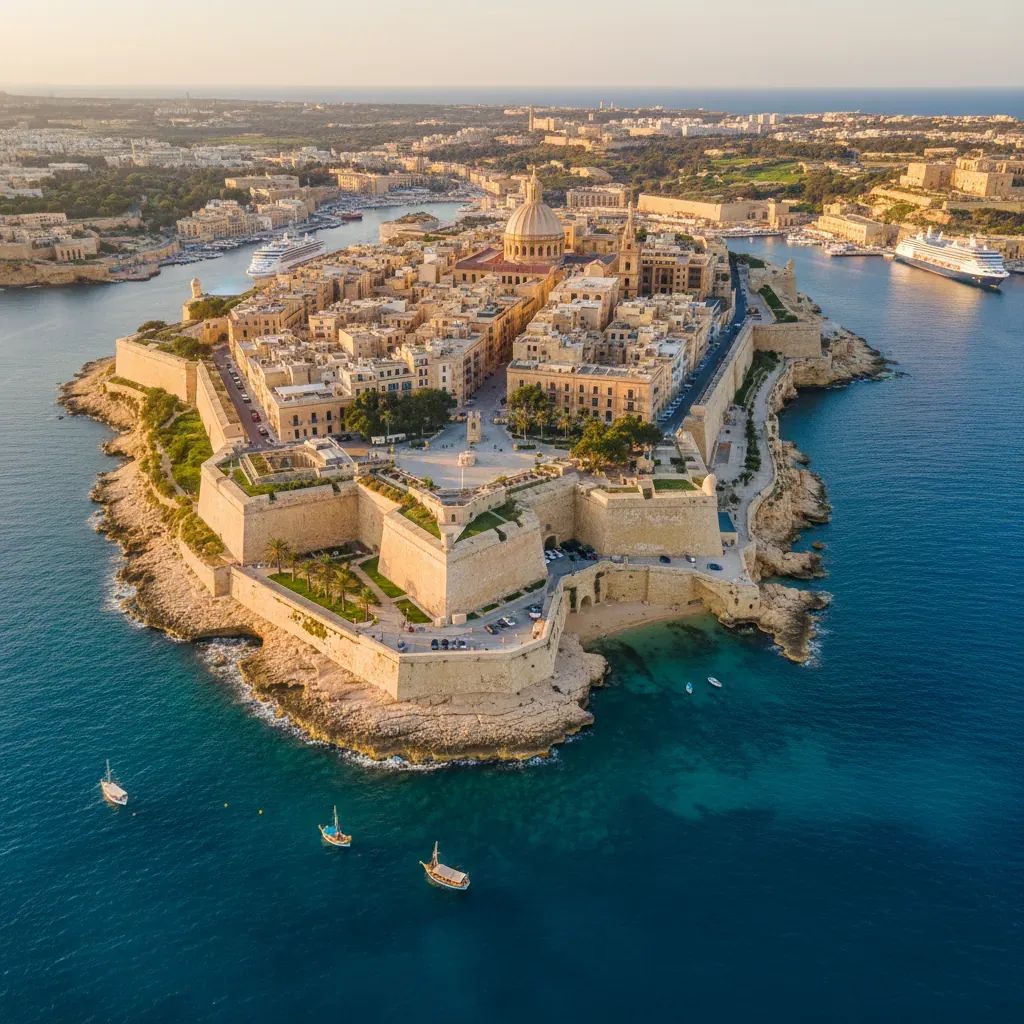
The Malta Planning Authority will decide on Thursday whether to legitimize 20 unlawfully built padel courts on Manoel Island and approve 10 more, a decision that environmental groups warn will irreversibly undermine the government's pledge to transform the site into a national park. The case officer has recommended approval with a fine of just €900, a sum critics note could be less than a single day's revenue from the commercial complex.
Why This Matters:
• National park promise at stake: Prime Minister Robert Abela declared Manoel Island public property in May 2026, with plans for a green national park—a vision backed by nearly 30,000 petition signatures.
• Archaeological damage: The courts reportedly sit atop Roman-era remains, with no substantive objection from the Superintendent of Cultural Heritage.
• Precedent for illegal development: Sanctioning these structures could signal that Malta's planning enforcement is negotiable for those willing to build first and ask permission later.
• Decision deadline: The Planning Board vote is scheduled for July 16, 2026.
The Case Against Sanctioning
The "Manoel Island: Post Għalina" campaign, led by Moviment Graffitti and Flimkien għal Ambjent Aħjar, has mobilized public opposition to the padel complex. Their argument centers on a fundamental question: should commercial sports infrastructure occupy land explicitly promised as non-commercial public space?
The illegal courts were constructed by Sharlon Pace, president of Gżira United FC, who has acknowledged a personal business stake in Malta's padel industry. Activists have pointed to alleged connections between Pace and Johann Buttigieg, chief executive of the Planning Authority, noting that another Pace-owned padel complex was similarly built without permits and later sanctioned.
Moviment Graffitti argues that the recommended €900 fine is an insult to rule of law. "This is not just about padel courts," the group stated in recent advocacy materials. "It is about whether Malta honors its commitments to the public or allows those with connections to bypass the system."
The Momentum party echoed these concerns, framing the issue as a test of Malta's planning integrity. Opposition voices across the political spectrum have questioned how a development of this scale—30 courts total with high-intensity floodlighting—proceeded without enforcement action or meaningful public consultation.
Light, Traffic, and Heritage Impacts
Beyond the legal questions, the environmental and cultural footprint of the padel facility has drawn scrutiny. The courts require extensive floodlighting that operates well into the evening, raising concerns about light pollution within the Valletta UNESCO buffer zone. Residents of waterfront Gżira have complained about the glare, and conservationists worry about the impact on Malta's night-sky protection efforts and views across the historic Marsamxett Harbour.
The site at the former Nicholl Ground is archaeologically sensitive. Academic researchers have documented Roman-era remains beneath the concrete courts, and at least one archaeologist has publicly called for the structures to be removed and the site restored as part of the future national park. The Superintendent of Cultural Heritage reportedly stipulated monitoring for future works but raised no substantive objection to the existing construction.
Traffic analysis is another gap. Critics note the absence of a Transport Statement or Traffic Impact Assessment for what is effectively a high-intensity sports destination. The island's narrow access points and single bridge connection make any increase in vehicle flow a potential choke point for Gżira and surrounding neighborhoods.
What This Means for Residents
For Maltese citizens and those living in the vicinity, the Planning Board's decision will set a precedent on two fronts: enforcement credibility and public land use priorities.
If the courts are sanctioned, it effectively signals that illegal development can be regularized with minimal financial penalty, potentially emboldening other projects to bypass permitting processes. For residents who signed the petition calling for a national park, it also represents a broken promise—proof that government commitments to public space can be overridden by commercial interests.
Conversely, a rejection would force the removal of the courts and restore the site for integration into the planned national park, affirming that Heritage Malta's stewardship of Manoel Island will prioritize ecological rewilding, cultural heritage, and open access over revenue-generating facilities.
The government returned Manoel Island and Fort Tigné to public hands in May 2026 after reaching an agreement with MIDI. At the time, Prime Minister Abela described it as a "historic moment," promising that the sites would be protected for future generations. The government indicated that the local plan would be revised to prevent further development, and that public consultation would shape the park's design.
The Broader Context
Manoel Island's fate is part of a larger debate about Malta's approach to open space. The government has announced similar national park initiatives for White Rocks and Fort Campbell, framing them as priorities for preserving natural landscapes and coastline access in a densely developed country.
The padel controversy, however, highlights the gap between policy announcements and ground-level enforcement. MIDI had previously submitted planning applications for a mixed-use development on the island, including residential units and commercial areas, alongside commitments to deliver over 80,000 sqm of public park space around Fort Manoel. Those plans were superseded by the government's decision to reclaim the island, but the padel courts—built after that announcement—represent a lingering legacy of private interests operating in a regulatory gray zone.
Environmental groups stress that sanctioning the courts would not only contradict the national park vision but also set a dangerous precedent for other sites earmarked for public use. "If Manoel Island can be carved up for commercial sport facilities, what is stopping the same from happening at White Rocks or Fort Campbell?" one activist asked rhetorically.
The Road Ahead
The Planning Board's vote on Thursday will either validate the government's public commitments or reveal them as negotiable. Moviment Graffitti has directly appealed to Prime Minister Abela to intervene, reminding him that the Planning Authority operates under the Cabinet's policy direction.
For now, the 20 courts remain operational, generating revenue while their legal status hangs in the balance. The outcome will determine not only the future of Manoel Island but also the credibility of Malta's planning system and the weight of its promises to the public.