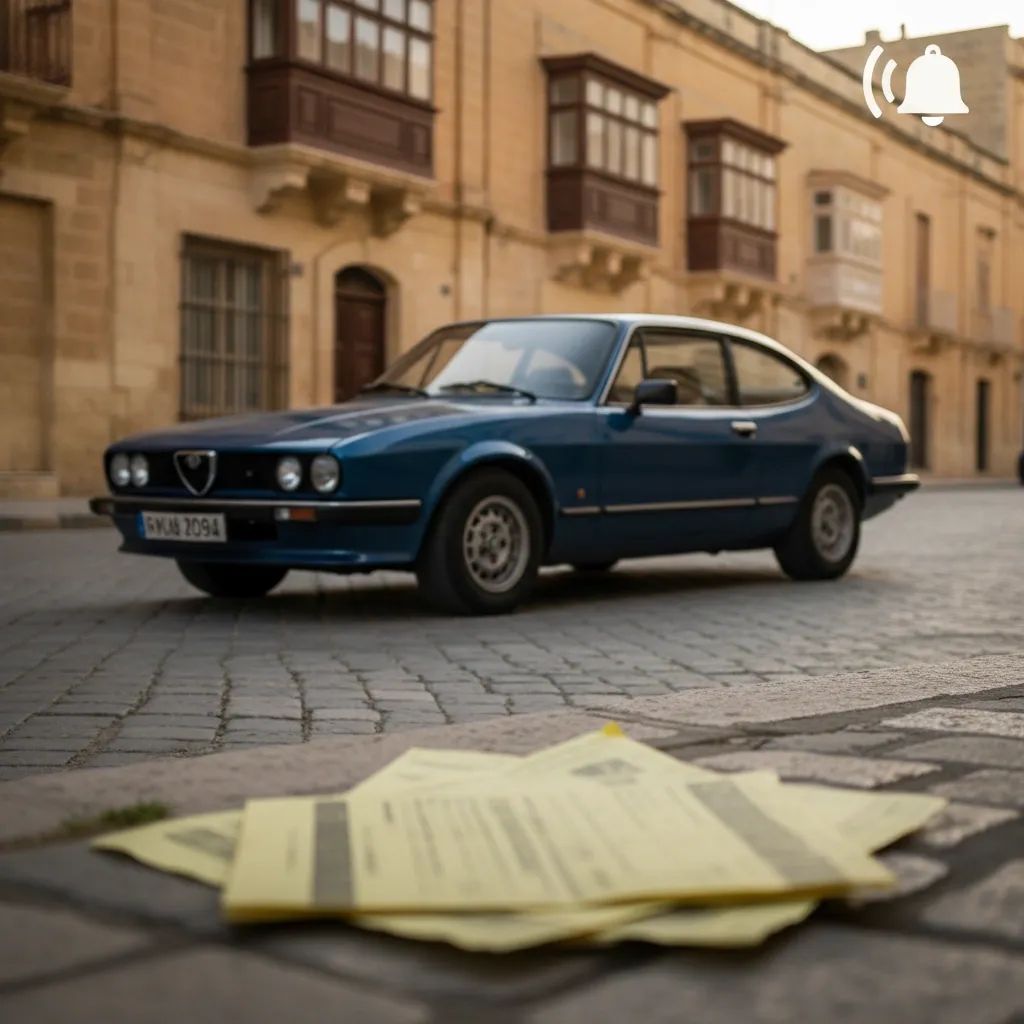
Vintage car owners in Malta are facing an indefinite holding pattern. The Vintage Vehicle Classification Committee, which Transport Malta had tasked with certifying authentic classics, was shut down on January 26 without a replacement lined up. Four weeks later, no new body has materialized to take its place—leaving hundreds of pending applications frozen and the island's classic car certification process effectively stalled.
Why This Matters
• Certification freeze: No new vehicles can be registered as vintage; no renewals can be processed; newly imported classics cannot be certified.
• Administrative gap: Transport Malta had tightened inspection rules to enhance authenticity standards. Those rules now cannot be enforced because the enforcement body no longer exists.
• Immediate impact: Owners with pending applications remain in limbo. Enthusiasts cannot move forward with vehicle certification and registration.
The Sudden Administrative Halt
The Federazzjoni Maltija Vetturi Antiki (FMVA)—Malta's umbrella organization for vintage vehicle clubs—discovered the problem when it tried to coordinate with the committee in late January. Transport Malta had dissolved the body without advance notice to stakeholders, and crucially, without designating successors or arranging any transfer of knowledge. The federation received no briefing materials, no transition plan, no timeline for reconstitution. Just silence and bureaucratic limbo.
This happened to coincide with the rollout of Malta's stricter classification framework. Starting September 1, 2025, Transport Malta had introduced mandatory physical inspections for any vehicle seeking vintage status. Vehicles between 30 and 49 years old now require approval every five years to confirm originality and authenticity. Classics aged 50 or older have different inspection requirements depending on certification status.
The logic behind the September upgrade made sense: tighten the rules, catch fraud, protect genuine enthusiasts. But the logic relied on a functioning committee. With that body dissolved, the framework is orphaned.
What Malta's Classic Car Community Is Actually Experiencing
The practical consequences are immediate. Owners of imported classics cannot legally complete the certification process for their purchases. The FMVA and enthusiasts report that the inability to move forward with certification is causing significant delays and uncertainty in the market.
The regulatory framework designed to enhance classification integrity has become unenforceable because the system itself has been left without operational capacity.
Current Situation and Next Steps
Transport Malta has issued no public statement addressing replacement timelines, successor qualifications, or interim procedures for urgent cases. The FMVA has signaled willingness to provide technical liaison and historical documentation to any reconstituted board, but that offer remains unaccepted. The federation possesses detailed knowledge of Malta's club landscape and can provide expertise to support transition efforts.
Stakeholders are calling for Transport Malta to reconvene an appropriately staffed committee without further delay and establish a clear briefing and handover schedule to restore institutional continuity. Applications should be processed to clear the backlog and allow owners to move forward with certifications.
The federation's offer to facilitate technical liaison represents a practical bridge to restore functionality. Until those steps occur, Malta's vintage vehicle community remains suspended, unable to complete certifications and registrations for their vehicles.