Why This Matters
With parliament dissolved on April 27, 2026, the Malta Electoral Commission faces a 33-day sprint to execute the most competitive general election in over a decade. What voters decide on May 30 will reshape economic policy, environmental protections, and governance standards — potentially reversing decades of Labour dominance or cementing a fourth consecutive term in power. Pending legislation worth years of parliamentary debate has expired. Campaign spending and accountability have become central battlegrounds. And for the first time in 13 years, the opposition has a genuine pathway to victory.
Key Takeaways:
• Parliament dissolved on April 27, killing all pending bills including controversial planning reforms and constitutional amendments on press freedom that had sparked civil society backlash.
• Labour and Nationalist polls now run closer than 2022 — recent surveys range from Labour at 43-52% versus the PN's 38-45%, down from Labour's 13.4-point 2022 victory.
• Alex Borg's first electoral test as PN leader occurs against an incumbent government emphasizing continuity while a new opposition leadership pitches governance reform and environmental prioritization.
• Two veteran Labour candidates have been sidelined — former minister Clayton Bartolo withdrew over reputational concerns, and Roderick Galdes was rejected by the party executive following contractor investigations.
When Legislation Dies Mid-Stream
Dissolving parliament suspends all bills in progress. Every piece of pending legislation — finished or barely begun — simply expires when parliament dissolves. Parliamentary records show only intention. Nothing becomes law.
The Environmental and Planning Review Tribunal overhaul bill is now defunct. So too is the Development Planning Act amendment. These weren't minor bureaucratic tweaks. Environmental advocates, including Moviment Graffitti, had spent months mobilizing against what they characterized as a "developer's wish list" that would have granted the Planning Authority Board authority to deviate from established planning policies and, in narrow circumstances, disregard environmental considerations entirely.
The most contentious provision would have severely restricted public appeals rights — limiting challenges to legal objections raised during initial phases with compressed deadlines that critics called "unrealistic" and "inaccessible." For residents, particularly those in environmentally sensitive areas or communities bordering proposed developments, these restrictions would have shifted power decisively toward permit-granting agencies and away from community participation.
Also defunct: a constitutional amendment pending since 2022 that sought to strengthen press freedom and privacy protections, plus a separate journalist protection bill. The Nationalist Party's September 2025 proposal to enshrine the right to a healthy environment as a constitutional guarantee similarly lapsed.
This legislative reset doesn't resolve the underlying tensions. Both major parties will face pressure to articulate how they intend to balance development, environmental protection, and economic growth. The question now pivots from parliamentary maneuver to electoral mandate.
The Electoral Architecture
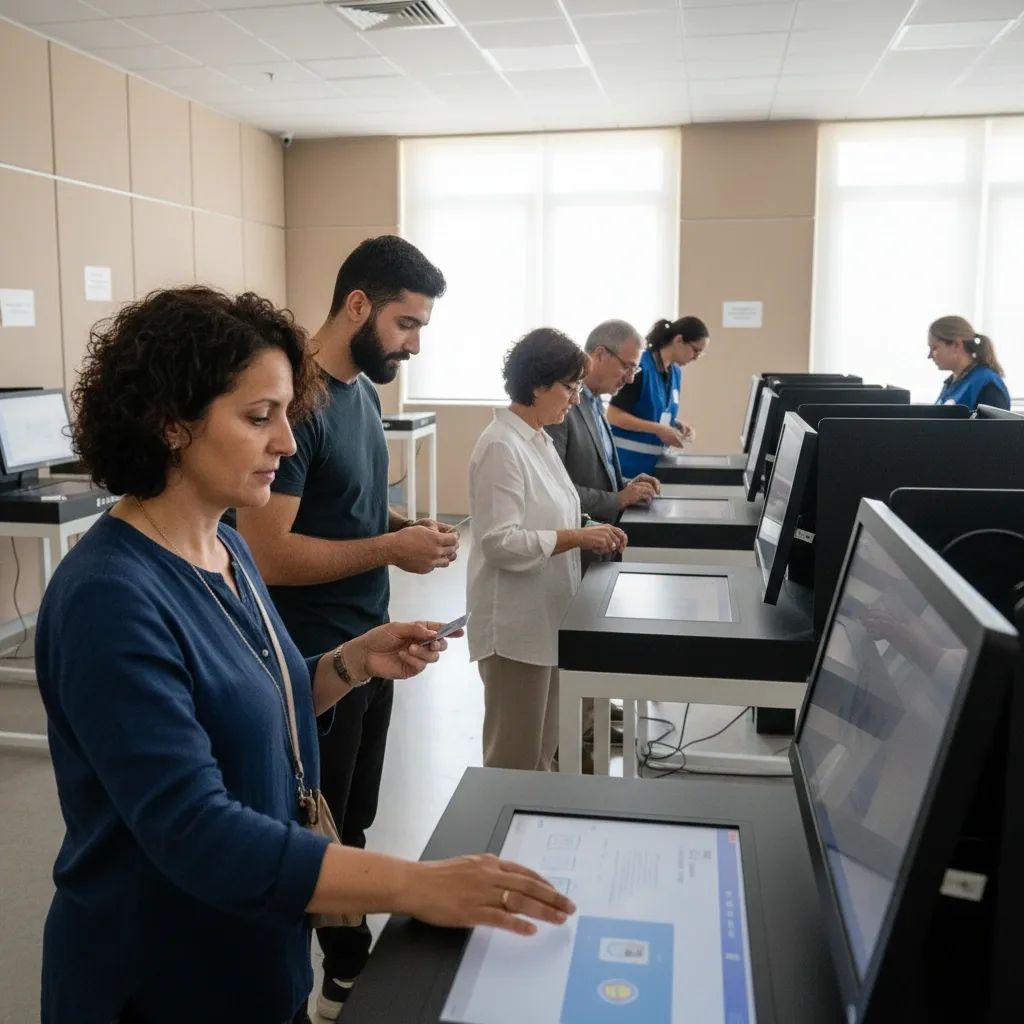
Malta operates through proportional representation across 13 electoral districts, each returning 5 MPs — a system designed to prevent winner-take-all outcomes while still concentrating electoral competition geographically. The Electoral Commission bears responsibility for nominating assistant commissioners to staff polling stations (mostly housed in school buildings and local council offices), appointing counting agents, and printing and distributing ballot materials. Vote counting itself runs entirely on electronic systems — no manual tabulation, which speeds results but requires meticulous pre-election testing.
The proportionality mechanism ensures that when only two parties win seats, parliament expands slightly to align seat distribution with first-preference vote totals. This produced parliaments ranging from 65 to 69 members in recent cycles depending on how votes split.
Polling stations operate throughout May 30, with electronic results flowing progressively through the evening as each district finishes its count. Results emerge district-by-district rather than all at once, allowing observers and analysts to track momentum as counting advances.
Voting Practicalities for Residents
Residents eligible to vote in Malta need to take several steps before May 30:
Voter Registration: Check your voter registration status on the Electoral Commission website (electoral.gov.mt). Non-Maltese EU citizens and third-country nationals permanently resident in Malta are eligible to vote in local and European Parliament elections but not general elections — only Maltese citizens can vote in the May 30 general election.
Voter ID: On polling day, bring valid identification. Accepted forms include a Maltese ID card, passport, or residence permit. Bring your polling card if you received one, though it is not mandatory for voting.
Finding Your Polling Station: Voting stations are assigned by residence. Your polling card indicates your assigned station. If you haven't received a polling card or are uncertain of your location, contact the Electoral Commission at (356) 2595 1111 or visit their website. Polling stations remain open throughout May 30 from 7:00 AM to 10:00 PM.
What to Bring: Bring only your valid ID and your polling card (if received). No campaign materials or phones are permitted inside the voting booth.
The Polling Picture Tightens
The 2022 general election was a Labour victory. Prime Minister Robert Abela's party secured 55.1% of the valid vote — almost 13.4 percentage points ahead of the Nationalist Party's 41.7%. The gap translated to approximately 39,500 votes. Turnout hit its lowest level since independence at 85.5%, suggesting Labour supporters were confident enough to stay home while some opposition voters stayed motivated.
Four years later, the landscape has fundamentally shifted.
An April 2026 Esprimi poll showed Labour at 43.1% and the PN at 37.8% — still Labour ahead, but the margin compressed to a single digit. A March MaltaToday survey placed Labour at 48.2% with the PN at 45.6%, suggesting a 2.6-point Labour lead. Vincent Marmarà's February analysis, which factored in undecided voters who historically lean Labour, projected Labour at 52.8% versus 42.6% for the PN — a comfortable margin but hardly the 13-point cushion of 2022.
The most recent trend data shows Labour polling around 51% with the PN at approximately 45%, depending on methodology and when surveys were conducted.
This compression reflects genuine momentum for the opposition. The turning point came in the 2024 European Parliament elections, when Labour's majority over the PN collapsed from 42,000 votes in 2019 to just 8,454 votes. Local council elections that same year further narrowed the gap to 7.8 percentage points. The PN even flipped Gozo — a significant symbolic victory in an island traditionally Labour-leaning.
Alex Borg, who assumed Nationalist Party leadership in September 2025, inherited this momentum. An October 2025 survey conducted one month into his tenure showed the PN within 8,364 votes of Labour — essentially matching the 2024 MEP result. Early polls suggested Borg had narrowed the trust-rating gap with Prime Minister Abela from double digits to just 8-13 points.
Yet Labour retains structural advantages: an experienced campaign organization, economic growth to cite, and the fact that undecided voters historically break towards incumbents rather than opposition when entering the polling booth.
What Labour Is Promising
Prime Minister Abela is running on continuity, not reinvention. His messaging centers on stability and proven stewardship during what he frames as turbulent global conditions — supply chain disruption, energy volatility, regional conflicts threatening tourism and inflation.
The Labour manifesto promises a five-year program anchored to a "wellbeing index" tied to 25 specific metrics — a first for Malta that aims to measure how government policies translate into quality-of-life improvements. Concrete proposals include expanded support for first-time homebuyers (a constituency Labour has consistently courted), incentives for young entrepreneurs, strengthened elderly services, and policies promoting family time together.
On the economy, Labour emphasizes continuity of tax cuts, higher allowances and stipends, and sustained growth. The party points to historically low unemployment, manageable debt, and minimal inflation — though KPMG research indicates wage stagnation since 2018, a fact neither party can entirely dismiss.
Regulation anchors Labour's agenda. The party is committing to stricter foreign worker recruitment agency oversight — addressing employer dependencies on migrant labor — and tighter contractor licensing in construction, a sector historically prone to cost-cutting that often translates into safety and labor standard violations.
Labour also touts its social liberal credentials, most visibly through Malta's legalization of cannabis for personal use in December 2021 — making Malta the first EU country to decriminalize recreational use. This appeals to younger voters and urban professionals while potentially alienating conservative constituencies.
What The Nationalist Party Is Campaigning On
Alex Borg is explicitly campaigning for victory, not merely a strong showing. The messaging is direct: governance reform, transparency, and a "breath of fresh air."
Transparency and accountability function as Borg's central platform. He's demanding annual asset declarations for all MPs and challenging Abela's government on campaign spending transparency — questioning whether Labour's ability to erect billboards the same afternoon parliament was dissolved indicated advance notice. This strikes at perceived governance deficits without alleging specific illegality.
On the economy, the PN is signaling forthcoming policy rollouts around mass transit infrastructure, VAT relief for selected businesses, a Child Trust Fund, and developing niche economic sectors (fintech, e-gaming) to position Malta as a European leader. These proposals contrast with Labour's emphasis on continuity — the opposition is selling different rather than more of the same.
The Manoel Island development reveals the starkest environmental divergence. For years, the Labour government advanced a major commercial development project on this strategically located Valletta-adjacent site. Borg has reversed the PN's prior position, now advocating to convert Manoel Island into a national park. This repositioning signals genuine environmental concern and offers a concrete symbolic victory should the PN win — tangible proof that governance changes when leadership changes.
Internally, the PN is also promising party restructuring, including appointing a party CEO and implementing tighter financial controls. A planned national convention would gather public input on long-term economic vision, projecting a more consultative approach than voters may perceive from Labour.
Campaign Activity Heats Up
Both parties came out of the gate fast. Labour managed to erect billboards the afternoon parliament was dissolved, provoking immediate speculation about advance notice. The PN responded with rapid deployment of banners and promotional content, but the sequence fueled charges of inside advantage.
The Nationalist Party's messaging leaned into accessibility. MP Darren Carabott appeared in promotional material asking party leader Borg, "Tlaqna, kap?" (Shall we go, chief?), to which Borg responded, "Tlaqna, ejja naħdmu" (Let's go, let's work). This colloquial Maltese framing contrasts with Labour's more formal approach, aiming to position the PN as relatable and direct.
Labour's campaign materials feature bolder design and typography, emphasizing collective identity through the slogan "Int Malta" (You Are Malta). The approach attempts to conflate party identity with national identity, implying that voting Labour is voting for Malta itself.
Smaller parties are also competing for visibility. Partit Momentum erected five political banners in Santa Venera and Marsa but reported that the cleansing department removed them, accusing authorities of political interference. Momentum's inability to maintain street presence highlights how the electoral system advantages the two major parties with greater resources and institutional reach.
Notable Absences Reshape The Contest
The candidate roster is already fluid. Clayton Bartolo, a former Labour minister, announced he would not contest the election, citing concerns that personal attacks would distract from the party's broader campaign. He made this decision one day before the Labour executive was scheduled to formally approve additional candidates — signaling party tensions below the surface.
The same executive meeting rejected Roderick Galdes, former environment minister, who resigned in January following investigative reporting by the Times of Malta linking him to government contractors. Galdes' exclusion removes a potential reputational liability from Labour's ticket but also sidelines a veteran politician who had previously commanded strong personal vote totals.
These absences hint at internal Labour stress. The party is attempting to project unity and forward momentum while managing reputational liabilities. For the PN, these removals represent openings — they expose Labour's vulnerabilities and remove candidates who might have defended their records effectively on the campaign trail.
What Happens Now
Both parties launched inaugural campaign rallies as parliament dissolved — Labour in Żejtun and the PN outside Dar Ċentrali — setting the tempo for a 33-day campaign to polling day.
The fundamental choice facing voters reflects genuine philosophical differences. Labour offers continuity, social liberalism, and experienced governance. The PN offers reform, transparency, environmental prioritization, and a reset. The economy will dominate daily coverage, but issues around governance accountability, environmental protection, and the pace of development will shape the campaign.
For residents, the election outcome determines not just who holds power but which party's vision for development, environmental protection, and regulatory philosophy prevails. The collapsed pending legislation will resurface in some form — both parties will eventually grapple with planning reform and environmental protections. The difference is which party's priorities shape that reckoning.
Polling suggests a competitive race. Yet elections are rarely decided in the final week — they're decided by which campaign narrative captures voter attention and which leader voters ultimately trust more during uncertainty. Abela is betting on continuity and his record. Borg is betting on reform and perceived competence. By May 30, one will have won the argument.