
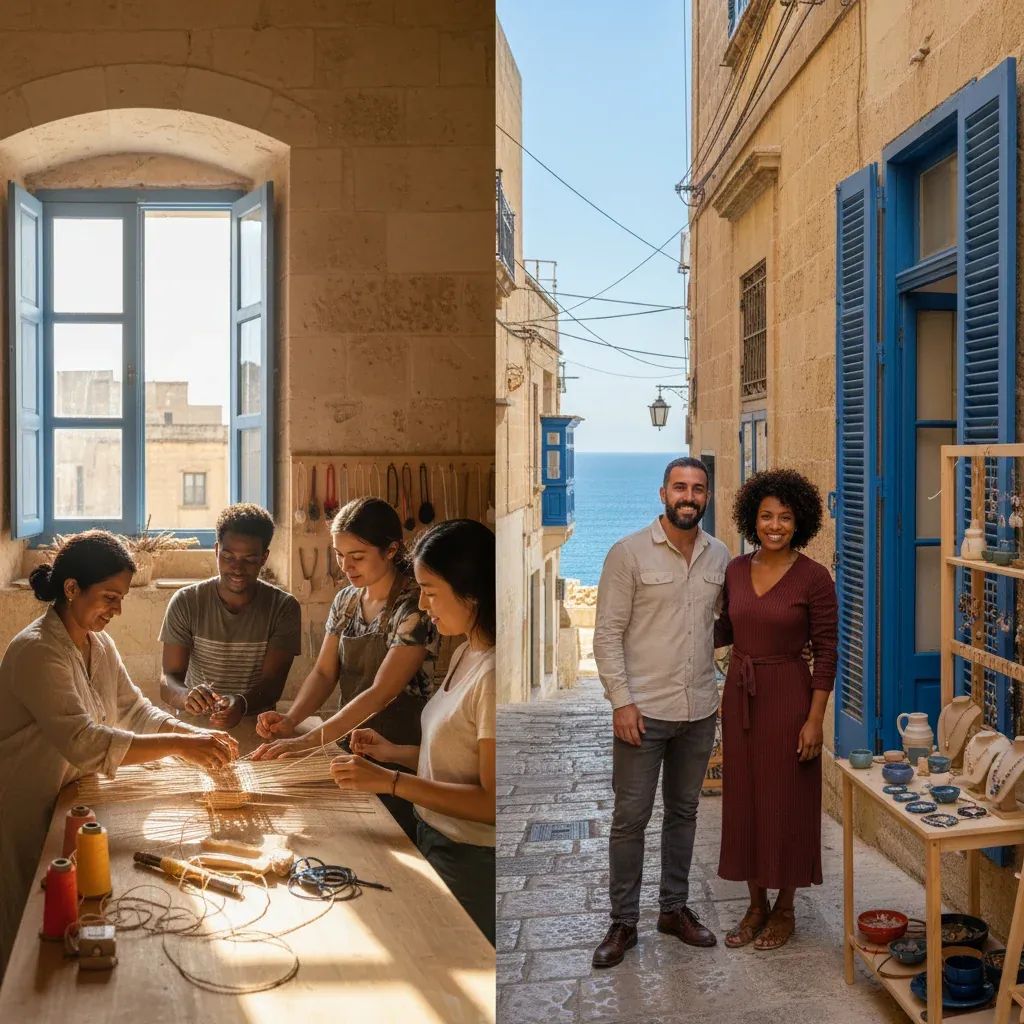
The Nationalist Opposition has tabled a strategy to lower corporate levies for Malta's smallest companies, betting that reduced tax burdens will unlock reinvestment and hiring in an economy where mom-and-pop enterprises dominate the business register. The flagship proposal: slash the tax bill for micro firms and SMEs by as much as 20 percentage points, while exempting thousands more from the quarterly VAT machinery altogether.
Important Notice for Malta Business Owners: These are Opposition proposals announced in May 2026 as part of their electoral platform—they are not current law. No action should be taken based on these proposals alone. Continue filing taxes under current 35% (or elected FITWI 15%) rates. Consult a Maltese tax adviser before making expansion decisions based on proposed rates.
Why This Matters
• Micro operators (10 or fewer staff, under €2M annual revenue) face taxes dropping to 15% from 35%—an immediate saving of €1 on every €5 earned above the first €30,000.
• VAT exemption rolls upward to €70,000, potentially removing compliance obligations for 3,000–4,000 traders and freeing up dozens of hours per year on paperwork.
• Worker training shifts entirely to the public purse, allowing firms to upgrade skills without cost.
• Estimated fiscal hit: €40M–€110M direct; €55M–€95M after accounting for economic stimulus effects.
The 35% Problem and Why It Matters Locally
Malta currently imposes a 35% corporate tax rate—among the EU's steepest when measured in isolation. The bloc averages nearer to 21.6%, with projections suggesting that figure will edge down to around 17.5% by year's end. For years, this headline burden has stung executives in markets where competitors in Ireland pay 12.5% or firms in Hungary just 9%.
Yet the Maltese system has contained a built-in relief: since early 2025, eligible entities have been allowed to lock in a flat 15% rate through the Final Income Tax Without Imputation (FITWI) mechanism. It's a no-frills arrangement—the tax is final, with no shareholder refunds—but it delivers certainty and simplicity. However, the FITWI mechanism requires businesses to actively elect into the 15% rate and involves specific eligibility criteria, adding administrative steps that not all micro operators navigate easily.
The Nationalist Opposition proposes making that 15% benchmark automatic for micro enterprises, removing the election requirement and bureaucracy entirely. They would also extend a 25% bracket to firms with up to 50 staff, guaranteeing access across the board without the need to opt in.
Adrian Delia, the PN's finance voice, underscored that micro and small businesses comprise 99% of Malta's commercial base. In human terms, that translates to thousands of family tradespeople, shop owners, consultants, and start-ups. The Opposition has inserted a gradual tax step-up as businesses grow, so a firm crossing into the next size category won't face a sudden spike that discourages expansion.
The VAT Ceiling: A Quiet Revolution for Street-Level Commerce
The loudest cheer from retailers and sole traders will likely come from the proposed VAT registration ceiling doubling to €70,000. Today's €35,000 threshold—tightened in January 2025—forces any business crossing that line to charge VAT on invoices, file quarterly returns, and contend with compliance scrutiny. The Opposition estimates lifting the bar would exempt between 3,000 and 4,000 enterprises from the apparatus entirely.
For the corner grocer, the freelance designer, the craft maker selling at village events, or the part-time consultant, that relief is tangible: no VAT statements to complete, no quarterly filings to process, no audit risk hanging overhead. Cash stays in the till longer. Pricing simplifies. An accountant's fees shrink, or outsourcing becomes unnecessary.
The flip side merits attention. Businesses that stay VAT-exempt cannot reclaim input VAT on their own purchases—equipment, stock, services. A micro café buying a new espresso machine or an electrician purchasing tools absorbs the VAT cost. For example, a micro construction firm buying €20,000 in equipment absorbs €3,800 in VAT (at Malta's 19% rate) if staying below the threshold. If registered for VAT, that €3,800 becomes reclaimable—meaning capital-intensive businesses should carefully calculate whether VAT savings on purchases exceed the compliance cost burden. Firms climbing past the €70,000 line face a fresh competitive cliff, though at a higher altitude than today. The government also faces a revenue leak as fewer businesses remit VAT on their sales.
Training, Reskilling, and Workspace: The Ecosystem Supports
Flanking the rate cuts are two secondary measures with direct operational weight. First, the Opposition pledges 100% public funding for approved worker training and upskilling, removing cost barriers when businesses navigate automation, digitalization, or sector-specific skill gaps. Second, an affordable rent scheme would inventory government-owned industrial premises and lease underutilized space to small firms at below-market rates, converting idle public assets into workshops and light-manufacturing hubs.
Both moves target the squeeze facing micro operators: capital constraints and access to suitable premises in a crowded property market where commercial rents consume 15–25% of turnover for many tenants.
Who Stands to Gain—And Who Doesn't
A micro enterprise turning €200,000 in annual profit currently pays €70,000 in tax (at 35%). Under the Opposition plan, that liability drops to €30,000 (at 15%), unlocking €40,000 for reinvestment, recruitment, or owner draw. For thousands of artisans, tradespeople, and small-scale service providers, that margin shift could mean the difference between breaking even and expanding.
Seasonal businesses—festival craft stalls, holiday rentals, part-time freelancers—benefit most from the higher VAT threshold, as staying below €70,000 becomes achievable without triggering registration complexity.
Yet there are winners and non-winners. Businesses already above the €70,000 or 50-employee thresholds see no direct advantage. Large corporates and international structures face no change. And these remain campaign commitments, not law. Implementation timelines, transition mechanics, and the nuances of tapering remain unspecified.
The Government Fires Back—And the Numbers Game Heats Up
The Malta Ministry of Finance, steered by minister Clyde Caruana, has met the Opposition's proposals with sustained skepticism, particularly over methodology. Caruana dismissed the PN's broader fiscal arithmetic as a "whole mess," claiming the true cost of their personal tax reforms far exceeds the claimed €110M–€130M, reaching closer to €360M when calculated straightforwardly.
Adrian Delia countered that Opposition figures are "net" calculations that embed multiplier effects—the premise that lower taxes spur spending, investment, and tax-base expansion, offsetting the initial revenue loss. When quizzed on funding sources for the business tax package (direct cost €40M–€110M), Delia referenced waste in direct government contracts, inflated consultant salaries, and bloated budgets like Vision 2050. Neither camp has tabled detailed, line-by-line arithmetic, though Delia asserted the PN's data derives from the National Statistics Office and Commission for Financial Regulation.
The standoff highlights a perennial feature of Maltese election cycles: dueling fiscal promises, opacity on true costs, and public skepticism about which party's calculator is honest. Voters and businesses are left to weigh trust rather than evidence.
A Separate Pillar: Nonprofit Organizations
In parallel, the Opposition announced measures for Malta's voluntary sector. NGOs and community groups would receive a 100% VAT refund on mission-related goods and services, a 30% tax credit on donations (capped at €50,000 yearly), and a right-to-buy option for charities renting government properties. The catch: purchased premises must remain in community use and cannot be converted to commercial assets. The aim, articulated by Opposition member David Pace Ross, is to ease the financial strain on organizations anchoring local identity and civic fabric.
Malta in the Broader European Picture
Within the EU-27, corporate tax rates cluster around an average of 21.81%, ticking up to 22.40% when the OECD Pillar Two global minimum is factored in. Malta's 35% headline is a statistical outlier, yet the availability of the 15% FITWI option and the traditional full-imputation system (which can reduce effective rates to single digits for some shareholders) muddies international comparisons.
If the Opposition wins power and enacts these proposals, Malta would offer 15% for micro enterprises and 25% for SMEs—rates that sit competitively within the EU band for small-business taxation, potentially attracting micro-multinationals and repositioning the island as a genuine small-business hub rather than just a large-corporation domicile.
The Succession Tax Counter-Offer
The government has also moved. Justice Minister Jonathan Attard announced Labour would reduce succession tax from 5% to 1.5% on inherited family businesses and property—a narrower lever than the Opposition's proposal to eliminate the tax outright. Both approaches respond to family-business anxiety about generational wealth transfer, though they differ in magnitude.
Timeline and Practical Next Steps
These proposals were announced in May 2026 as part of the PN's electoral platform ahead of upcoming general elections. They remain promises, not enacted statutes. Parliament has scheduled no debate, and regulatory detail—transition periods, tapering mechanics, eligible training programmes, industrial-space eligibility criteria—remains absent. If the Opposition enters government following a general election victory, the earliest implementation would likely be the 2027 tax year, allowing time for legislative drafting and guidance publication.
For business owners contemplating hiring, equipment purchases, or expansion, the prudent course is to model scenarios under both the current regime and the proposed rates, consulting a tax adviser before locking in major commitments. Campaign pledges, however well-intentioned, are not enforceable until they become law.
The Opposition's fiscal offer—lower levies, reduced compliance, public training investment—appeals to the thousands of micro operators who form the sinew of Malta's economy. Whether the arithmetic stacks, whether the government can afford it, and whether the promised stimulus materializes remains an open argument. For now, it's a vision on offer, not a guarantee in hand.


