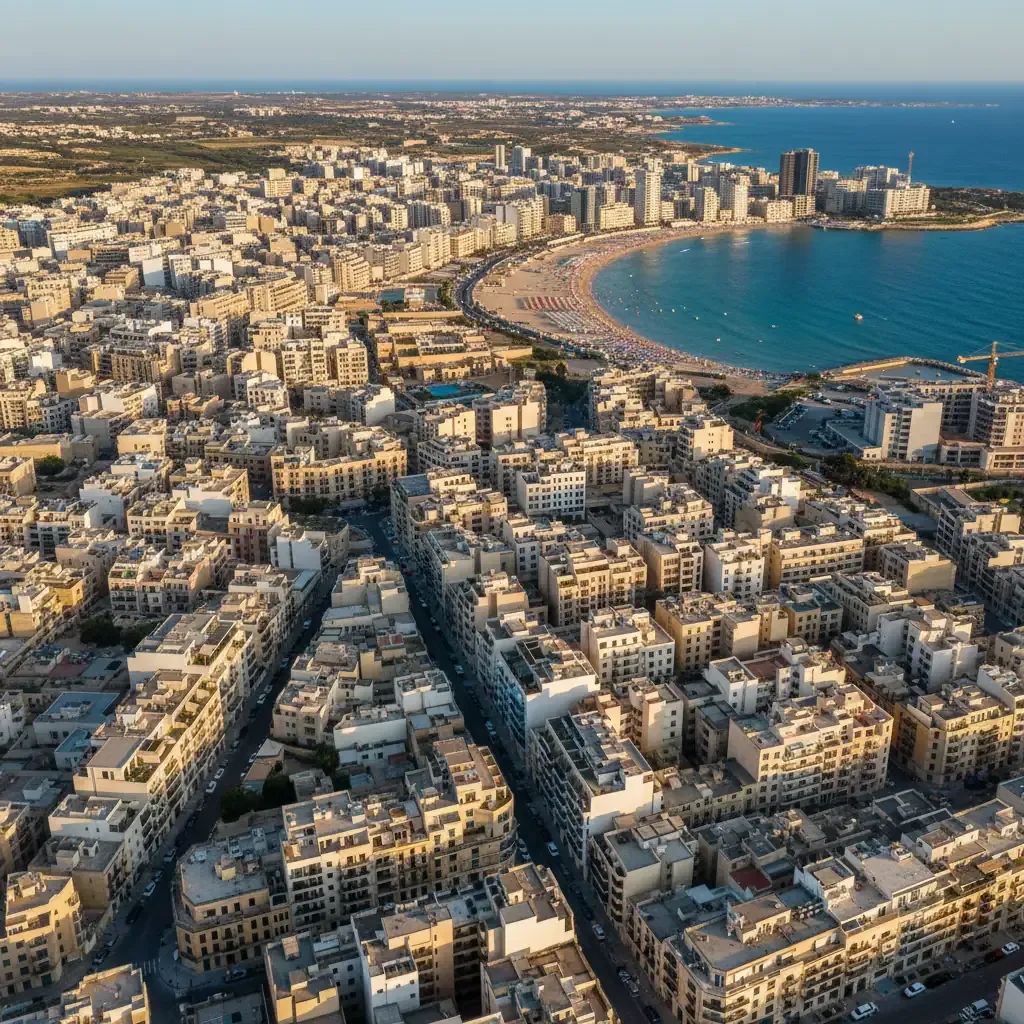
Malta's tourism sector is grappling with a fundamental question that has implications for every resident: should the island celebrate how many people visit, or how much value each visitor brings? The debate over guest nights versus arrivals misses the larger issue—neither metric adequately captures whether tourism is enriching or eroding the quality of life for those who call Malta home.
Why This Matters:
• Housing costs in Malta have surged as short-term rental platforms reduce long-term housing stock, mirroring crises unfolding in Barcelona and Amsterdam
• Infrastructure strain from volume-focused tourism means overcrowded public spaces, traffic congestion, and pressure on water resources already stretched thin on an island with limited freshwater capacity
• Economic benefit distribution remains opaque—high visitor numbers don't automatically translate to prosperity for local businesses or workers, with much revenue leaking to foreign-owned platforms
• The European Commission is finalizing its first comprehensive EU Sustainable Tourism Strategy in early 2026, which will reshape how destinations like Malta approach tourism management
The Volume Trap
The Malta Tourism Authority has historically tracked success through arrivals and guest nights—metrics that reward quantity over quality. This approach aligns with a global pattern: international tourism receipts hit approximately $1.9 trillion in 2025, yet many destinations report that residents feel increasingly displaced and dissatisfied despite record economic figures.
The fundamental flaw in volume metrics is that they ignore the distributional question: who benefits, and who bears the cost? A tourist spending three nights in a budget Airbnb contributes far less to the local economy than one staying a week in a locally-owned guesthouse and dining at family-run restaurants. Yet both register identically in traditional guest night counts.
Malta's compact geography intensifies these challenges exponentially. With approximately 500,000 residents living on just 316 square kilometers, Malta is one of Europe's most densely populated countries. Every additional visitor creates measurable pressure on transport networks, beaches, and urban centers. During peak season, the effective population can surge by tens of thousands daily—equivalent to adding multiple towns overnight. The issue isn't tourism itself—it's optimizing for metrics that don't distinguish between sustainable growth and extractive consumption.
What Value Actually Means
Destinations across Europe are pivoting toward value-based measurement frameworks that assess tourism's comprehensive impact. The UN's Statistical Framework for Measuring the Sustainability of Tourism (MST) provides a blueprint that extends far beyond simple headcounts.
Economic value metrics now examine total export revenues, including passenger transport, alongside the direct, indirect, and induced ripple effects of tourist spending. In many locations, tourism's total contribution to Gross Value Added (GVA) more than doubles when these secondary effects are included—but only if spending circulates through local businesses rather than leaking to foreign-owned platforms and multinational chains.
Average spending per traveler has emerged as a critical indicator. Hawaii, for instance, saw an 11.3% increase in daily spending per person in January 2026 compared to the prior year—a signal that the destination is attracting visitors seeking premium experiences rather than bargain packages. For Malta, this metric would reveal whether tourism policy is cultivating high-value visitors or simply churning through budget travelers who contribute minimally to the broader economy while intensifying pressure on housing and services.
Social value metrics measure community satisfaction with tourism development, the quality of local employment (including the percentage of informal work), and visitor satisfaction rates that predict repeat visitation. These indicators acknowledge what volume metrics ignore: tourism that degrades resident quality of life is ultimately unsustainable, regardless of arrival figures.
Environmental and Infrastructure Costs
The environmental burden of tourism remains largely invisible in traditional metrics. Carbon footprint per tourist, water consumption per guest night, and solid waste generation per visitor provide concrete measures of sustainability. For an island nation like Malta facing chronic water stress and limited landfill capacity, these metrics are existential considerations, not abstract academic exercises.
Malta's water resources are already severely constrained, with desalination plants providing much of the supply and significant costs borne by residents through taxes and utility bills. Each additional guest night increases demand on this fragile system, yet current tourism metrics don't capture this strain or assign responsibility for mitigating it. Similarly, waste management costs rise with visitor numbers, but these expenses typically fall on municipal budgets funded by resident taxes rather than being offset by tourism revenues.
Tourism concentration—the ratio of visitors to residents and habitable land—offers another lens. Venice implemented a day-tripper tax in 2025 precisely because volume overwhelmed infrastructure. Malta faces comparable density challenges during peak season, and policymakers are beginning to discuss whether similar interventions might be necessary.
What This Means for Residents
The lived experience of Maltese residents reflects what flawed metrics obscure. Housing affordability has deteriorated dramatically as short-term rentals proliferate, with long-term rental availability shrinking and prices climbing accordingly. Barcelona plans to eliminate tourist apartment licenses entirely by late 2028 after determining that the housing crisis outweighed tourism revenue benefits—a decision Malta residents are watching closely as similar pressures mount locally.
The cost of living rises when tourism-oriented businesses replace shops serving local needs. Grocers become souvenir vendors; cafés catering to residents are priced out by establishments targeting tourists willing to pay premium rates. This commercial displacement fundamentally alters neighborhood character and liveability. Public protests against overtourism surged across European cities throughout 2024 and 2025, with demonstrations in Barcelona, Rome, Lisbon, Athens, and Amsterdam. These movements aren't anti-visitor—they're anti-volume-at-all-costs policies that prioritize tourism industry profits over resident welfare.
What Residents Can Do
While policy changes require government action, Malta residents aren't powerless. Advocacy groups monitoring housing affordability and tourism policy are growing. Residents can engage by: participating in public consultations on tourism policy when the Malta Tourism Authority launches them; supporting organizations tracking short-term rental regulations; communicating concerns to elected representatives about housing affordability and infrastructure strain; and backing local businesses rather than foreign-owned tourism platforms where possible. As European destinations demonstrate, resident voices shape whether tourism policy evolves.
The Path Forward
The global tourism industry is projected to reach 1.57 billion arrivals in 2026, with roughly half destined for Europe. This growth trajectory means Malta cannot afford to coast on outdated metrics while competitors adopt sophisticated value frameworks.
Regulatory interventions are becoming standard across European destinations. Stricter limits on short-term rentals, tourist taxes calibrated to infrastructure costs, visitor caps at sensitive sites, and dynamic pricing mechanisms all reflect a shift toward managed, sustainable tourism. Greece, Portugal's Azores and Madeira, Barcelona, Catalonia, Thailand, and Kyoto have all introduced or increased tourist fees. Malta's government should examine whether similar interventions align with broader sustainability goals.
Data-driven planning using artificial intelligence can optimize visitor flows, redirect demand to off-peak periods, and identify carrying capacity thresholds before they're breached. The technology exists; what's required is political will to implement systems that prioritize long-term sustainability over short-term revenue maximization.
The European Commission's forthcoming Sustainable Tourism Strategy, expected in early 2026, will likely establish baseline expectations for member states. Destinations that proactively adopt comprehensive value metrics and sustainable management practices will be better positioned than those reacting defensively to mandates.
Redefining Success
Tourism success for Malta should mean higher per-capita spending, longer average stays, measurable community benefit, and neutral or positive environmental impact. It should mean residents feel their quality of life is enhanced, not degraded, by visitors. It should mean local businesses thrive rather than being displaced by foreign-owned platforms.
Guest nights are marginally better than raw arrival counts, but both remain proxies that poorly correlate with actual value creation. The Malta Tourism Authority could lead rather than follow by adopting the UN's MST framework, publishing transparent data on economic distribution, environmental costs, and resident satisfaction, and setting targets that explicitly prioritize value over volume.
The question isn't whether Malta should welcome tourists—tourism remains a vital economic pillar. The question is whether policy will continue rewarding metrics that serve industry interests while residents absorb the costs, or pivot toward frameworks that ensure tourism genuinely benefits the people who live here year-round. The answer will determine not just tourism's future, but Malta's liveability for the next generation.