Why This Matters
• Specific disruption window: Setup begins July 6–7; live filming July 8–10; area cleared by midday July 11, 2026.
• What's being removed: Boats and vehicles from three Marsaxlokk waterfront zones will be temporarily displaced to make room for production activities and temporary set construction.
• Sound warning: Pyrotechnic devices simulating gunfire will be deployed during filming days—expect sharp, repetitive noise across the bay for approximately 72 hours.
• Who approved this: The Malta Film Commission (MFC) issued the permit; the Marsaxlokk Local Council granted consent and received a financial contribution for hosting the production.
Latina Pictures has secured approval to transform three sectors of Marsaxlokk Bay into a filming location this July, temporarily reconfiguring one of Malta's most recognizable working harbor communities. The production company's plans—filed with the MFC and cleared by local authorities—will displace boats and vehicles and involve temporary set construction and prop setup. For residents and business owners, the practical effect is unavoidable: a week of congestion, altered access patterns, and ambient noise that will reshape daily routines in the village.
Marsaxlokk isn't a stranger to international productions. The village's authenticity—colorful luzzus painted in primary hues, weathered fishing nets, narrow cobbled streets, waterfront restaurants—makes it a location scout's natural choice. Yet each production that arrives carries a hidden cost borne directly by people who live and work there. This shoot tests that calculus afresh.
The Waterfront Squeeze
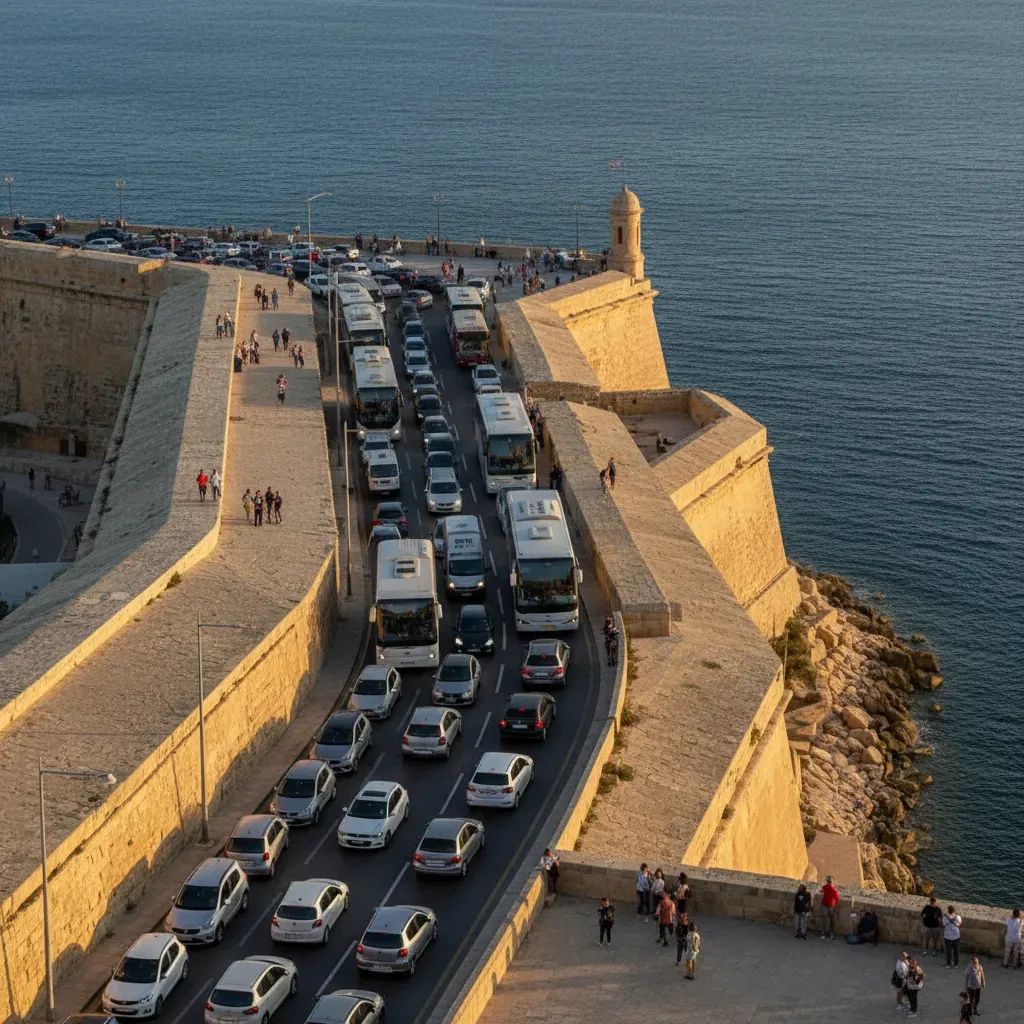
Marsaxlokk's harbor-front road functions simultaneously as a parking zone, pedestrian thoroughfare, delivery route, and atmospheric core of the village's identity. Remove vehicle access for a week, and the system buckles. Street-parking dependent residents will need to seek alternative zones—potentially in residential neighborhoods already saturated with vehicles. For commuters, delivery drivers, and visitors, navigation becomes a puzzle without a clear solution.
The three designated waterfront locations will become active work zones. Temporary structures for production materials and set dressing will displace the postcard vistas that define casual strolls. Production vehicles, equipment trucks, and temporary set construction will populate spaces normally reserved for parked cars and foot traffic. The village's charm derives partly from its unpolished, working-community character; during filming, that authenticity temporarily yields to production apparatus.
Businesses hugging the quay operate on razor-thin margins. Restaurants and cafes dependent on walk-in traffic face a genuine challenge. Advance notice helps—social media posts, email alerts to regular customers, clear signage explaining how to reach the business despite cordoned areas. Yet psychology is powerful. A potential diner seeing production activity instead of calm water and fishing boats may simply choose another village. Past productions in Valletta have proven that transparent communication and visible customer accommodation can mitigate losses, but they don't eliminate them.
Boat owners and active fishermen face the most direct disruption. Temporarily relocating vessels from established moorings creates logistical friction—where exactly are alternative berths, who coordinates the move, and what window exists for the relocation? The MFC and Marsaxlokk Local Council should have issued detailed schedules, but residents report inconsistent clarity on operational timelines. Early contact with the council's administrative staff is essential; waiting until July 6 invites last-minute chaos.
The Noise Question
Filming an action sequence inherently generates acoustic impact. Pyrotechnic devices designed to simulate gunfire—while visually compelling on screen—produce sharp, repetitive sound signatures. Unlike ambient noise (traffic, voices), this sound has a startling quality that carries across water and echoes off stone structures.
Noise pollution is regulated in Malta through the Environment and Resources Authority (ERA). Residents concerned about noise levels during the filming window should note that July 8–10 are likely to be the noisiest days and adjust schedules if sensitive to repetitive noise.
The filming window—midweek in mid-July—sidesteps the Sunday market rush, when Marsaxlokk's infrastructure strains most visibly. That's fortunate for logistics but means weekday residents and business operations absorb the full acoustic and traffic impact.
How Malta's Film Machinery Works
The Malta Film Commission sits at the apex of this system. Productions submit comprehensive dossiers: scripts, storyboards, detailed shooting schedules, precise location lists, crew rosters, equipment inventories, budgets, and production liability insurance (typically €1M–€1.5M minimum). This isn't bureaucratic busywork; it's a risk-management framework designed to prevent chaos and protect public infrastructure.
For public-area filming, a "no objection" letter from the local council is non-negotiable. In theory, the council represents residents' interests and can impose conditions or deny consent. In practice, councils often review and approve applications, especially when a financial contribution is offered. The logic is straightforward: productions receive permission to use public space, and local authorities receive compensation for managing the temporary disruption.
Depending on the location's sensitivity, additional layers of approval may be required. Transport Malta coordinates traffic management plans. The Planning Authority and ERA review proposals, particularly in sensitive zones. Heritage Malta weighs in on archaeology-adjacent or heritage-protected areas. Malta Tourism Authority offers guidance on managing visitor experience. The system is theoretically comprehensive—sometimes production companies note coordination timelines can be lengthy. Yet the framework exists to balance industry needs with community protection.
Latina Pictures, as the local production company, likely acted as intermediary—a "fixer" role that navigates permits, manages logistics, and translates between industry timelines and bureaucratic reality.
Malta's Status as a Film Destination
Malta's audiovisual sector is an established part of the national economy. The government offers support mechanisms for productions, helping to attract international companies. Productions hire local crews, rent equipment, secure catering, book accommodations, and create ancillary work in hospitality, security, transportation, and services.
The economic logic is clear: the industry generates employment and raises Malta's profile internationally. Yet harder questions persist. Is the disruption to daily life—particularly in heritage-sensitive or densely populated areas—adequately compensated? Does the village itself benefit, or do profits flow primarily to production companies and international studios? Proponents note that spending from production teams enriches the broader economy and builds expertise and infrastructure. Skeptics note that direct benefit to residents is often invisible, while inconvenience is visceral.
For Marsaxlokk, the calculus tilts toward short-term friction and speculative long-term gain.
Practical Guidance for Residents and Business Owners
Residents should contact the Marsaxlokk Local Council directly for detailed road closure maps, access restrictions, and parking guidance. Those with waterfront permits or moored boats require clarity on relocation zones and deadlines. The council should provide written notice of the precise timeframe for boat moves; verbal assurances aren't sufficient.
Business owners benefit from proactive outreach to regular customers. A Facebook post—"We're operating normally; here's how to reach us during the shoot"—manages expectations and retains foot traffic. Some businesses have capitalized on disruption by offering themed packages or discounts. The principle is simple: visibility and accommodation reduce customer defection.
Boat owners and fishermen must confirm whether their moorings fall within the three cordoned zones and secure written confirmation of temporary relocation arrangements from either the production company or the council. Verbal promises collapse when logistics tighten.
Malta's Evolving Identity
Marsaxlokk joins Valletta, the Three Cities, and countless coastal hamlets in doubling as cinematic backdrops. The economic case is compelling; the lived reality is messier. For six days in July, the bay will host production activity, and the air will punctuate with simulated gunfire. By midday July 11, boats will return to their berths, vehicles will reclaim waterfront parking, and Marsaxlokk will slip back into its postcard profile—until the next production crew arrives with permits in hand.
The reality is that Malta's status as a film destination reflects deliberate government support and a societal decision—increasingly debated—to accommodate international productions. Whether that trade-off remains acceptable to residents is a question that grows louder with each production and each set of temporary closures.