
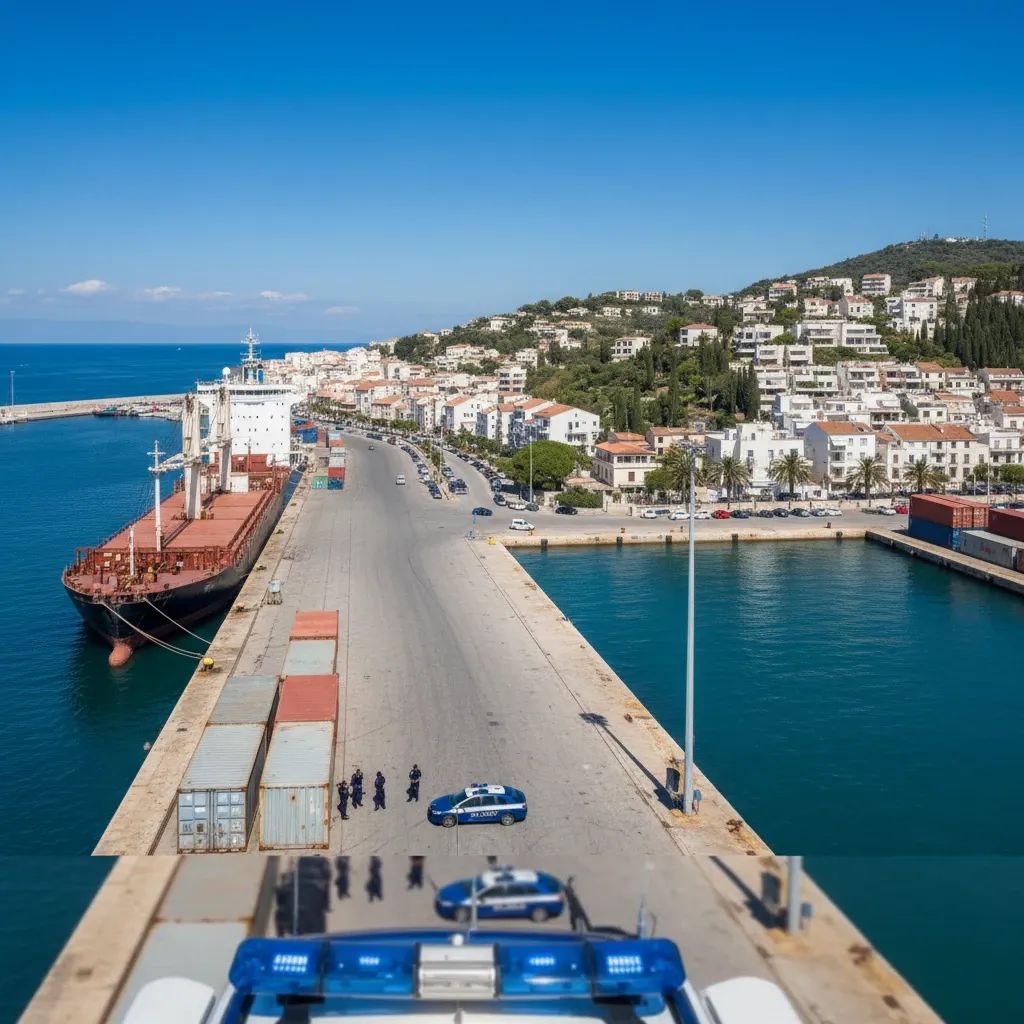
The Conviction
A Marsaxlokk fisherman has begun serving a sentence that closes one chapter of a remarkable legal odyssey. On Thursday, the Malta Criminal Court confirmed a five-and-a-half-year prison term for Piero Di Bartolo, who admitted to possessing cocaine and cannabis resin in quantities indicating commercial intent rather than personal use. The conviction caps a 21-year legal saga that began with an unsolved disappearance and resumed just three years after Di Bartolo was acquitted of murder charges.
The admission of guilt came through a negotiated agreement between the Attorney General's office and Di Bartolo's legal team, formalized on February 25 when both sides requested the specific custodial term. Mr. Justice Neville Camilleri confirmed Di Bartolo had sufficient time to grasp the irreversible nature of his admission and issued the negotiated sentence without deviation. Beyond imprisonment, Di Bartolo faces financial obligations totaling €24,027—combining the fine and court expenses—which he must settle upon release from Corradino Correctional Facility.
The Shadow of an Unresolved Death
Understanding Di Bartolo's trajectory requires stepping back to a disappearance that fractured a coastal community. Albert Brian Rosso, a 48-year-old marine biologist, vanished on October 10, 2005, after departing the San Luċjan Aquaculture Centre in Marsaxlokk. Prosecutors theorized that Rosso became entangled in a fatal dispute over the fishing vessel Desiree, which he co-owned with Anthony Bugeja and which Di Bartolo operated commercially. The alleged sequence: Bugeja retrieved a firearm outside his Marsaxlokk residence, fired at Rosso during a heated business disagreement, and—with Di Bartolo present—disposed of the body in maritime waters near the Malta Freeport. The corpse was never recovered.
Both men faced indictment in 2008. The trial consumed 15 years of the court system's resources before collapsing in June 2023, when a jury delivered a 7-2 verdict of acquittal on murder charges and 8-1 on related counts involving unlawful firearms possession and body concealment. The collapse hinged on a procedural breakdown: the Court of Criminal Appeal declared inadmissible the confessions Di Bartolo and Bugeja had provided to police—statements extracted without proper legal caution or any notification of their right to remain silent. That evidentiary flaw, coupled with the absence of human remains, disintegrated the prosecution's narrative entirely.
The acquittal did not absolve the state from accountability. Rosso's widow, Mary Rose Rosso, and their daughter, Desire, pursued constitutional litigation in 2024, alleging that investigative negligence and procedural failures violated Rosso's fundamental right to life. In June 2025, the First Hall of the Civil Court in its constitutional jurisdiction awarded the family €350,000, finding that the state's investigation shortcomings—particularly its reliance on inadmissible confessions—amounted to a breach of the victim's rights.
The Criminal Record and Current Charges
Di Bartolo's drug conviction marks his second major criminal charge in recent years. The charges specify aggravated possession of cannabis resin, plant material, and cocaine, terminology the Malta Criminal Code reserves for circumstances indicating distribution rather than consumption. The "aggravated" designation activates stricter sentencing frameworks and signals judicial recognition that the quantities and context pointed toward trafficking. Di Bartolo initially contested the charges before abandoning that defense on February 25, when the Attorney General signaled willingness to accept a negotiated plea in exchange for the specific five-year-and-a-half term.
Also factored into the sentencing was a secondary charge: breach of bail conditions imposed on February 7, 2006, during the Rosso investigation. Although Di Bartolo was acquitted in 2023, the legal obligation to comply with those conditions technically remained in force throughout the intervening years. Under Article 579(2) of the Malta Criminal Code, breaching bail constitutes a standalone offense carrying up to six months imprisonment, fines, or both. The court incorporated this violation into its overall sentencing calculation, treating the breach as evidence of Di Bartolo's disregard for judicial authority.
Malta's Drug Enforcement Context
The conviction arrives amid an intensifying crackdown on organized trafficking operations that have transformed Malta into a Mediterranean hub for cocaine and cannabis distribution. Law enforcement agencies—particularly the Malta Police and Customs authorities—have dismantled multiple international rings operating from the island. In January 2026, police arrested five Italian nationals and seized approximately 13 kilograms of cocaine and cannabis, with a street valuation near €250,000. That operation was followed, months later, by another that yielded 12.5 kilograms of cocaine smuggled from Sicily, valued at €600,000.
These seizures underscore systemic trafficking flows. The 'Ndrangheta and Cosa Nostra—Italian mafia organizations—operate from Malta as operational bases, frequently exploiting the island's online gaming sector and business infrastructure for money laundering. North African and Georgian criminal networks have also established footholds. During 2025 alone, authorities confiscated 668 kilograms of cocaine, representing the majority of the record €87 million in drugs seized by Maltese police that year.
For Di Bartolo, the sentencing reflects courts' strict approach toward supply-scale possession. The conviction illustrates the priority law enforcement agencies assign to disrupting trafficking networks that use the island as a logistics corridor for Mediterranean organized crime operations.


