
Momentum, the centrist party in Malta, has unveiled a sweeping reform blueprint designed to pull decision-making power away from the executive branch and place it directly in the hands of citizens and Parliament. The package includes mandatory public consultation for all projects over €1 M, propositional referendums, and tax incentives for civic participation—a bid to overhaul what the party describes as a developer-centric, opaque governance model.
Why This Matters
• €1 M trigger: Any public project exceeding this threshold would require full consultation before contracts are signed, potentially slowing approvals but increasing transparency.
• Prime Ministerial powers stripped: Decisions on election dates, publication of magisterial inquiries, and senior appointments would shift to two-thirds parliamentary majorities.
• Propositional referendums: Citizens could propose new laws directly, moving beyond the current yes-no format on existing legislation.
• Tax incentives for civic participation: Financial rewards tied to voting, jury duty, timely tax payments, and volunteer community activities—designed to encourage civic engagement.
Understanding the Current System and Why This Matters for All Residents
For expat residents and international observers unfamiliar with Malta's governance, it's important to understand the baseline. Currently, Malta's consultation processes on major projects are often informal and non-binding, with many developments approved with minimal genuine public input. Magisterial inquiries—formal investigations into serious matters (such as deaths, accidents, or allegations of malfeasance) conducted by a judge—are frequently kept confidential by the Prime Minister's discretion, limiting public accountability. Bills 143 and 144, introduced by the Labour government in 2023, attempted to streamline planning procedures but sparked massive public outcry over concerns they would bypass environmental protections and community consultation, forcing the government to withdraw them.
The concept of "juridical interest"—the legal standing required to challenge government decisions in court—currently operates as a significant barrier for residents. For example, if an NGO or resident group wants to challenge an environmental permit for a development project affecting their neighborhood, they must prove direct personal harm beyond the general public impact. This narrow definition has historically prevented many community-based challenges from reaching the courts, even when decisions affect entire localities.
Curbing the Office, Empowering the Chamber
At the core of Momentum's vision is a transfer of authority from the Prime Minister to Parliament. Under the current framework, the PM holds sole discretion over when to call elections, whether to release magisterial inquiries, and how to fill key posts like the Police Commissioner, Standards Commissioner, and Chief Electoral Commissioner. Momentum argues that concentrating such power in one individual is incompatible with modern democratic norms.
The party proposes that these decisions be subjected to full parliamentary debate and, for critical appointments, a two-thirds majority vote. For posts not requiring parliamentary approval, Momentum would impose clear competence criteria and publicly accessible scoring systems, aiming to end behind-closed-doors recruitment and reduce political patronage.
Understanding Malta's Parliamentary Math: What Two-Thirds Majority Means
For readers unfamiliar with Malta's political structure, understanding the significance of a two-thirds majority requirement is crucial. Malta's House of Representatives has 69 seats. A two-thirds majority requires 46 votes, meaning no single party can unilaterally pass constitutional changes or major appointments under Momentum's proposed framework without securing cross-party support. Currently, Momentum holds no seats in Parliament, operating as an extra-parliamentary party that contests elections but has not yet achieved parliamentary representation. This reality underscores the scale of political repositioning required for Momentum's reforms to advance—they would need either substantial electoral gains or broad multi-party consensus. For comparison, a government with a simple majority of 35 seats currently wields considerable power; the two-thirds requirement would fundamentally shift this balance.
Broadening Legal Standing for Citizens and NGOs
One of the most consequential proposals targets Malta's legal definition of "juridical interest"—the threshold an individual or organization must meet to challenge government decisions in court. Momentum contends that the current bar is so high it effectively locks out most citizens and civil society groups, forcing them to prove a narrow personal stake even when the issue affects the broader public good.
By widening this definition, Momentum would enable NGOs and residents to take legal action against government decisions without demonstrating direct personal harm. This change could open the floodgates for court challenges on planning approvals, environmental permits, and administrative decisions, potentially reshaping the balance of power between the state and civil society.
Mandatory Consultation on Projects Over €1 M
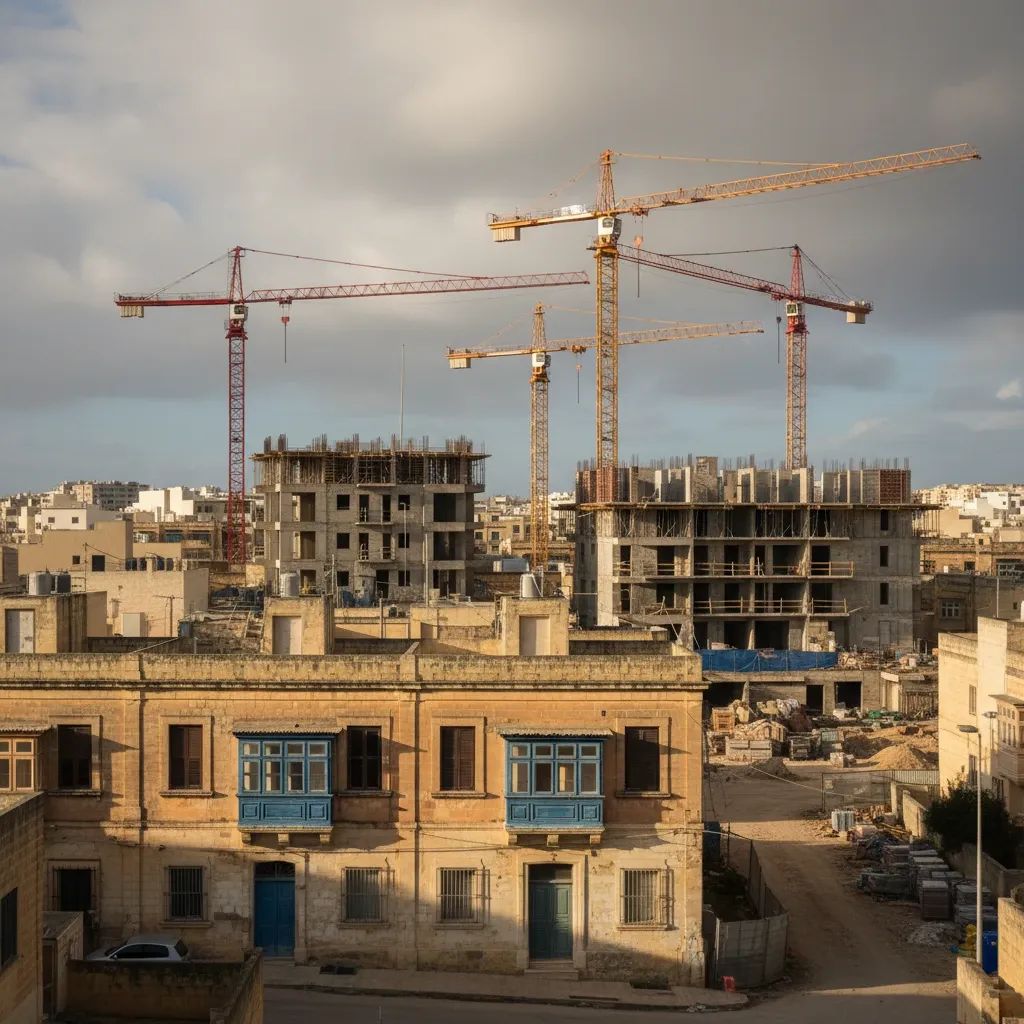
Momentum's proposal to require mandatory public consultation on all projects exceeding €1 M before any funds are committed or contracts inked is a direct response to widespread frustration over Malta's planning system. Civil society groups and residents have long complained that major developments are approved without genuine consultation, with communities learning of projects only when construction begins.
The party's blueprint would replace the controversial Bills 143 and 144—planning reforms that sparked a "massive public backlash" and were subsequently halted—with a White Paper and extensive public consultation. Momentum also calls for a comprehensive national planning strategy to assess the cumulative impact of developments on infrastructure, traffic, quality of life, and the environment, addressing what critics describe as fragmented, developer-driven growth.
What This Means for Residents
For Maltese citizens and residents, the most immediate practical impact would be felt in planning and transparency. If enacted, the €1 M consultation threshold would apply to everything from road upgrades to school renovations to public-private partnerships, potentially delaying approvals but giving residents a formal voice before deals are finalized.
The propositional referendum mechanism would allow citizens to draft and submit legislative proposals, which, if they meet certain criteria, would go to a binding national vote. This contrasts with Malta's current system, where referendums can only confirm or reject laws already passed by Parliament.
The tax incentive program for civic engagement would reward residents for participating in democratic processes: tax credits or deductions for voting, jury service, timely tax payments, and registered volunteer work in community organizations. Unlike a tax "break for paying taxes on time" (which would be contradictory), this mechanism creates positive incentives for civic participation, akin to rewards for desired behaviors. Momentum has not yet specified the size of the tax incentives or detailed mechanisms for tracking participation, but the proposal signals an attempt to shift civic duties from obligations to incentivized behaviors.
"Vision Circles" and Constitutional Conventions
Momentum plans to introduce "Vision Circles," new consultation forums designed to integrate residents from diverse backgrounds into the policymaking process. These would operate alongside a proposed constitutional convention comprising legal experts, civil society representatives, social partners, and political actors selected through a transparent process.
Draft constitutional reforms emerging from this convention would be submitted to structured citizen assemblies for deliberation and refinement, then undergo full parliamentary scrutiny, and finally be put to a binding national referendum. This multi-stage process is intended to ensure that constitutional changes reflect broad public consensus rather than narrow party interests.
Political Party Finance and Accountability
Momentum's reform package extends to political party financing, proposing transparent state funding allocated according to a formula and conditional on full financial disclosure, democratic internal governance, and meaningful civic engagement. The party advocates for mandatory and timely publication of all donations above a specified threshold, enforceable caps on individual and corporate contributions, and independent auditing of party accounts.
These measures aim to close loopholes in Malta's current political finance legislation, which transparency advocates describe as largely ineffective.
Reactions from the Political Spectrum
ADPD – The Green Party has broadly aligned with Momentum's stance, calling for a moratorium on massive development and high-rise construction until thorough studies on environmental and community impacts are completed. Both parties have endorsed the manifesto of Flimkien għal Ambjent Aħjar (FAA), an environmental NGO advocating for significant planning reforms, including a moratorium on major projects until carrying capacity studies are conducted.
The Labour Party, which initially introduced Bills 143 and 144, later halted their progression due to public outcry. Labour's president, Alex Sciberras, has stressed that planning reform must be an "inclusive process" where the public's voice is heard, not just developers. The party's 2026 electoral manifesto includes a commitment to "extensive consultation" for the revision of the 2006 local plans, though this is a broader pledge rather than a direct endorsement of Momentum's specific proposals.
The Nationalist Party (PN) has condemned the government's approach to planning reforms, particularly the lack of consultation surrounding Bills 143 and 144, calling for a "serious process with genuine, open consultation." However, the PN has not yet outlined detailed counter-proposals that directly mirror Momentum's framework for mandatory parliamentary oversight and pre-project consultation.
Civic Education and Empowering Civil Society
To support these structural changes, Momentum proposes state education programs and incentives for higher education institutions to offer courses or workshops on democratic rights, electoral systems, and holding authorities accountable. The party also aims to grant NGOs and civil society groups greater access to government processes and introduce regular feedback mechanisms for residents to evaluate government performance.
Additional proposals include enabling citizens to allocate a portion of their income tax to voluntary organizations, providing financial assistance to these groups, and establishing a public service work release scheme. Tax credits and formal recognition would be offered to registered volunteers, strengthening civil society's capacity to act as a bridge between citizens and government.
The "Open Malta Act" and Transparency Overhaul
Momentum plans to replace Malta's current Freedom of Information framework with an "Open Malta Act" that mandates the proactive publication of government information by default, eliminates ministerial veto powers, and imposes daily penalties for officials who unlawfully delay or deny access to information. The party also advocates for the automatic publication of all magisterial inquiries upon completion and the creation of a fully searchable online database for all government contracts, memorandas, and direct orders.
These measures are designed to illuminate government dealings and expenditure, addressing longstanding concerns about transparency in public contracts and senior appointments.
Constitutional Equality Provisions
Momentum's reform package includes plans to entrench age equality and non-discrimination based on physical and mental disabilities within the constitution. This would provide constitutional protection for these categories, aligning Malta's legal framework with broader human rights standards.
Challenges and Implementation Timeline
While Momentum's proposals are ambitious, their implementation would require constitutional amendments, new legislation, and significant shifts in administrative practice. The party has not yet provided a detailed timeline or cost estimate for the reforms, and questions remain about how mechanisms like tax incentives for civic engagement would be monitored and enforced.
The proposals also face political headwinds. As an extra-parliamentary party without current representation in the 69-seat House of Representatives, Momentum would first need to achieve electoral success to introduce legislation. Constitutional changes typically require two-thirds majorities in Parliament (46 of 69 seats), meaning Momentum would need broad cross-party support to advance its agenda. The party's centrist positioning and endorsement by environmental groups suggest potential for coalition-building, but the scale of the reforms—and the transfer of power they entail—will likely provoke resistance from entrenched interests.
For Maltese residents and expats frustrated by opaque decision-making and developer-dominated planning, Momentum's blueprint offers a systemic alternative. Whether it can navigate the legislative gauntlet, achieve parliamentary representation, and secure the cross-party support required for implementation remains the central question as Malta heads deeper into the 2026 electoral cycle.


