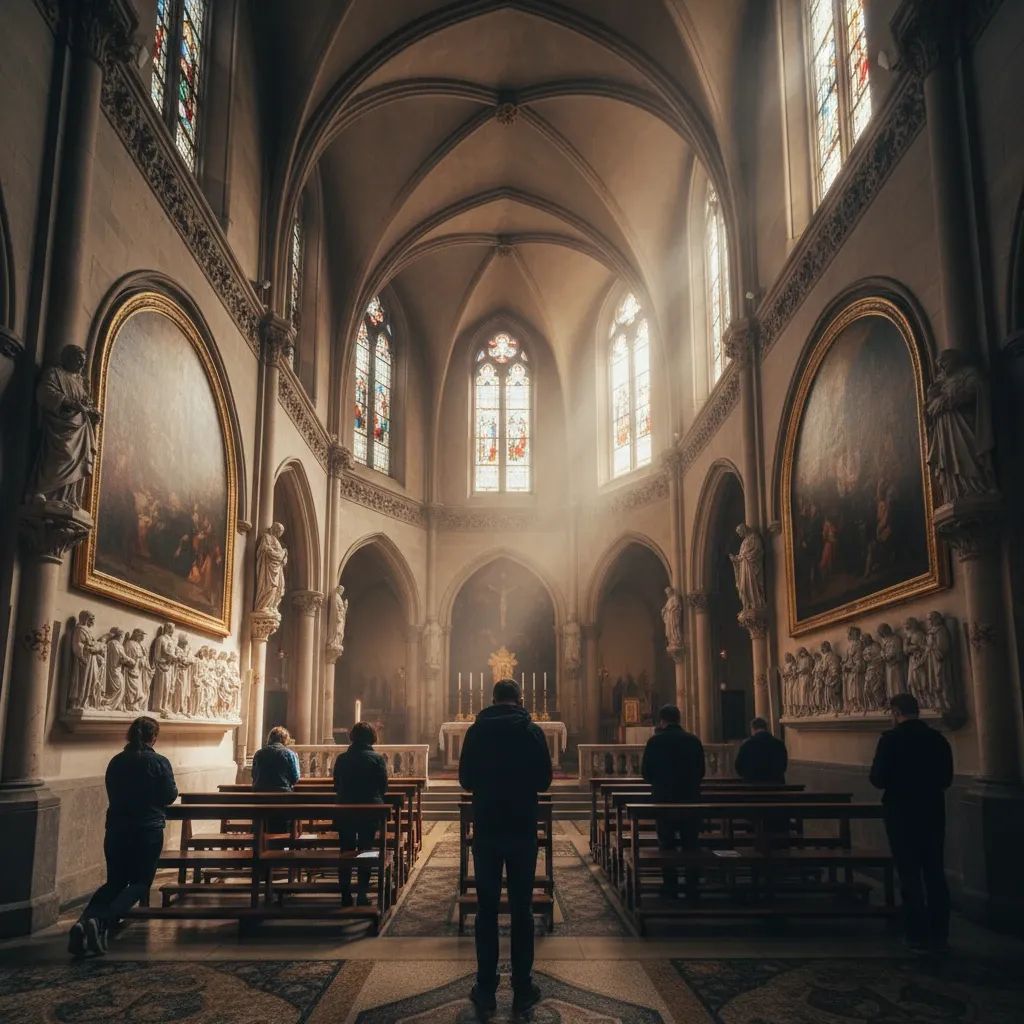
Malta's National Museum Authority is staging a posthumous exhibition of Raymond Pitré, Malta's most celebrated abstract painter, whose private studio works—kept unknown even to close associates during his lifetime—are now on display to Italian audiences. The exhibition, running through September 22, 2026 at Rome's Museo Hendrik Christian Andersen, represents a rare international spotlight on works that remained unseen throughout Pitré's 50-year public career.
Why This Matters:
• Cultural export milestone: Sandro Debono, the exhibition's curator and former director of Heritage Malta, is positioning Maltese contemporary art within elite European museum circuits, following his 2018 MUŻA transformation.
• Estate revelation: These paintings were unknown even to Pitré's inner circle during his lifetime, offering insight into an artist who publicly painted presidents but privately explored existential themes of mortality and faith.
• Mediterranean narrative: The show, officially titled "Mediterranean Soul," frames Malta's creative identity as inherently tied to island isolation, creative struggle, and the paradox of producing art on Europe's periphery.
From Police Force to Palazzo
Raymond Pitré's career spans more than five decades. Born in 1940, he briefly entered the Capuchin religious order before serving 12 years in the Malta Police Force. In his mid-30s, he committed fully to painting, staging his first public exhibition at the Museum of Fine Arts in 1976. That debut triggered national acclaim, eventually making him the official portraitist of Malta's presidents and prime ministers, with his commissioned work hanging in the Auberge de Castille.
His public career was distinguished: he designed five sets of Malta stamps, painted ceiling frescoes at St. Joseph parish church in Msida and Stella Maris in Sliema, and represented the nation at the 1999 Venice Biennale. Yet alongside this celebrated public practice, Pitré maintained a separate studio practice that remained virtually unknown. Debono's Rome exhibition excavates these private works—pieces created away from public view that strip away the ceremonial polish of commissioned portraits and instead explore raw themes of mortality, faith, and psychological struggle.
The Studio Nobody Saw
The paintings now on view in Rome employ thick brushstrokes, vibrant slashes of color, and expressive intensity that diverge sharply from Pitré's formal commissioned technique. Some canvases reduce backgrounds to monochrome voids, isolating elongated faces that stretch the full length of the frame—echoing his earlier "Screaming Man" series but stripped of restraint. Debono describes the work as focused less on "capturing likeness" and more on "capturing the soul," a phrase that doubles as the exhibition's alternate title.
Themes of sadness, frustration, insecurity, and the inevitability of death dominate the collection. The curator characterizes these works as reflecting the artist's engagement with existential questions that persisted throughout his life, even as his public stature grew.
Arte Povera and Psychological Expression
Pitré was an early Maltese proponent of Arte Povera, the Italian movement that repurposed discarded materials into fine art. His mixed-media works explored psychological themes through unconventional materials, including metal scraps and industrial fragments. This approach threads through his darker private works, which confront mortality and existential doubt with intensity comparable to major European modernists.
That tension—between Malta's sunlit tourism image and its density—surfaced in Pitré's thematic preoccupations. Works titled "Triumph of Deaths" and "Beheadings" featured dissected anatomies rendered with psychological intensity. The private paintings now in Rome continue this lineage, suggesting the artist's existential questions never resolved, even as institutional honors accumulated.
What This Means for Malta's Art Legacy and Local Community
Pitré died in November 2024 at age 84. For Malta residents interested in his work, the Rome exhibition creates both an international milestone and practical questions about local access.
Debono's curatorial intervention ensures Pitré's posthumous international reach expands rather than contracts. The Rome exhibition positions Pitré within broader European discourse on periphery, isolation, and artistic struggle—validating his decades-long contribution to Mediterranean art conversations.
For Malta's cultural sector, the show represents recognition of Debono's strategy to embed Maltese art within global museum networks. His roles include architect of MUŻA's 2018 reopening during Valletta's European Capital of Culture year and member of international museum advisory boards, giving him institutional leverage to secure placements like the Rome exhibition.
For local implications: Pitré's "Figure in Rods" sculpture is confirmed for the permanent collection at MICAS, Malta's forthcoming contemporary art museum. However, the status of the private paintings displayed in Rome—whether they will return to Malta for exhibition at MICAS or remain in international circulation—has not been publicly announced. Malta residents should monitor announcements from Heritage Malta and MICAS regarding future local access to these works.
Recognition and Legacy
In 2000, Pitré was made a Member of the National Order of Merit for services to art, recognizing his standing as Malta's leading abstract painter. His international exhibitions spanned London, Berlin, Florence, Copenhagen, Brussels, Palermo, Algiers, New York, and Kyoto. Yet the private paintings suggest that institutional recognition offered little psychological refuge—existential questions from his early career persisted through decades of success.
The Rome exhibition establishes a precedent: Malta's artists are increasingly recognized not as provincial talents but as contributors to transnational conversations about universal human themes. For Maltese residents, the show underscores how the island's cultural legacy is being preserved and promoted internationally.
The exhibition closes September 22, 2026. After that date, the private paintings' destination remains uncertain, though questions about their permanent institutional home in Malta are expected to be resolved as MICAS development progresses.