A Missing Masterpiece Returns: Private Patrons Restore Sacred Heart of Gozo's Chapel
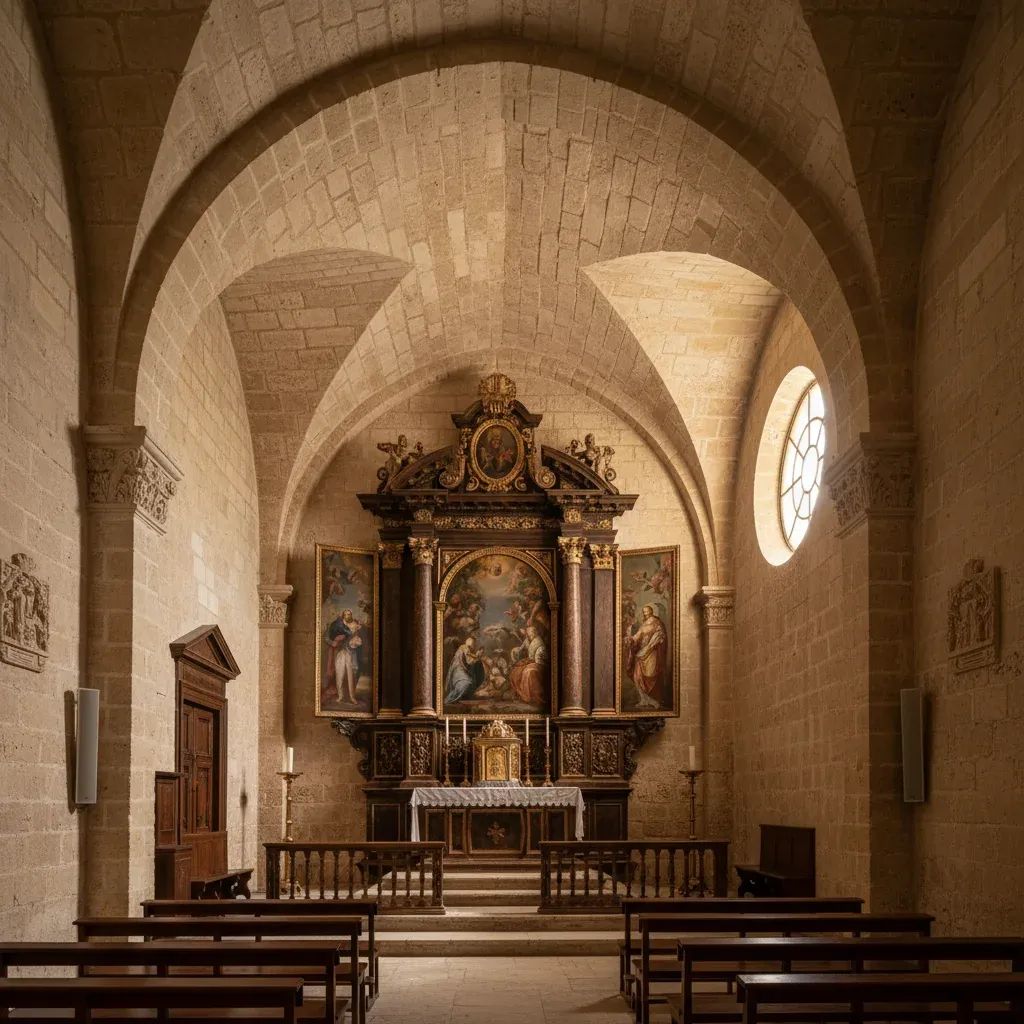
On March 19, 2026, the St Joseph Chapel in Gozo's Citadel will reclaim its visual centerpiece when artist Paul Falzon's replica altarpiece takes its place above the altar. A 1pm mass will inaugurate the reproduction, commissioned and funded by Paul and Josephine Zahra, restoring what the chapel lacked for four decades: the artwork that gives this 17th-century sanctuary both aesthetic and spiritual coherence. Following the blessing, visitors gain rare access to the adjacent Palazzo Cagliares, the bishop's former residence, normally closed to public touring.
Why This Moment Matters
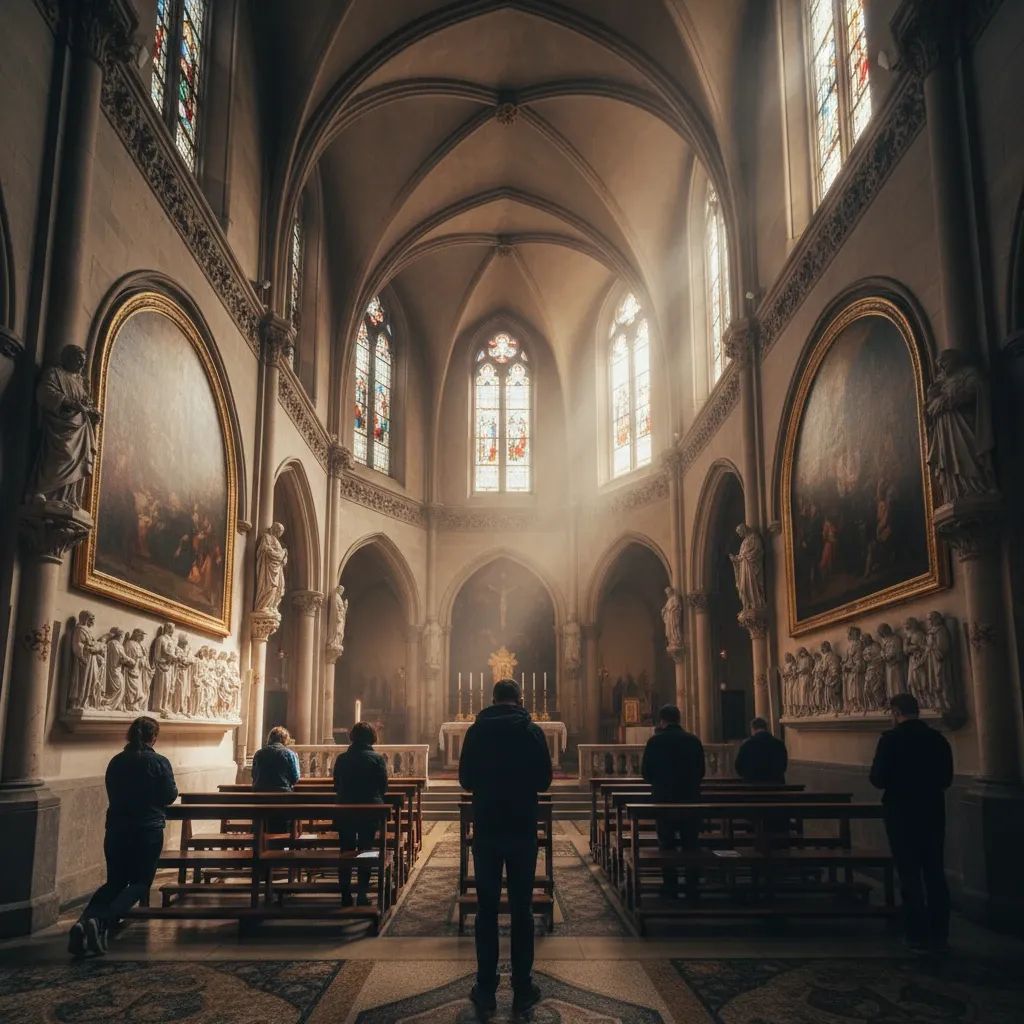
Worship space restored to completeness: For over 40 years, the chapel functioned without the altarpiece that originally anchored its interior. The replacement allows worshippers to experience the chapel as Bishop Baldassare Cagliares envisioned it in the 1620s—a cohesive devotional environment defined by a significant religious painting.
Rare cultural access: The palace tour grants visitors uncommon entry to a Grade 1 scheduled building that typically remains closed, revealing how ecclesiastical authority physically manifested in fortified Gozo through spatial arrangement and 17th-century domestic design.
Private patronage in action: The sponsorship demonstrates how individual benefactors can solve specific conservation problems efficiently—a pattern embedded in Malta's religious architecture for centuries.
Attending March 19: Practical Details
Event schedule:
• 1:00pm – Mass and blessing ceremony in St Joseph Chapel, led by Cathedral Archpriest Noel Saliba
• Approximately 2:15pm–3:45pm – Guided tour of Palazzo Cagliares (approximately 90 minutes total on site)
Location: St Joseph Chapel, Gozo Citadel, Victoria
Parking: Citadel entrance car parks typically reach capacity on feast days. Arrive before noon to secure parking and avoid congestion.
Attendance: No pre-registration required. Tours accommodate visitors on a first-come basis; capacity limits may apply during peak attendance periods. For questions, contact the Cathedral Archpriest's office.
What to expect: The palace tour reveals restoration work in progress, showing how 17th-century masonry, fenestration, and spatial organization survive beneath later modifications. Rooms arranged around a central courtyard demonstrate the layout of ecclesiastical authority.
The Chapel's Four-Century Journey
The chapel occupies a unique place in Gozo's religious geography. A sanctuary stood at this location as early as the 1570s—originally the Chapel of St Nicholas of Bari—and Pietro Dusina's Apostolic Visitation in 1575 documents that the faithful already assembled there in significant numbers, making it an established pilgrimage site.
Bishop Baldassare Cagliares rebuilt and rededicated the chapel in 1625, renaming it after St Joseph. This became the first church in all of Malta explicitly dedicated to the saint, signaling the bishop's particular veneration and establishing a precedent that echoed through subsequent generations. The original altarpiece, created by late Mannerist painter Filippo Paladino, depicted the Flight into Egypt and remained the chapel's focal point for roughly 350 years.
The 1693 earthquake devastated the structure along with much of the archipelago, and the chapel fell into prolonged disuse. Not until 1930 did restoration momentum gather pace under Sir Harry Luke, then Lieutenant Governor of Malta. Systematic repair work resumed in the 1970s through local volunteers, leading to the chapel's reopening in 1975 and formal blessing from Bishop Nikol Joseph Cauchi in 1976.
Why the Original Artwork Relocated
By the late 20th century, environmental deterioration accelerated the altarpiece's fragility. Stone buildings dating to the 1620s cannot maintain stable climate conditions—humidity swings, temperature fluctuations, and constant dust infiltration are nearly inevitable. The Cathedral Museum in Rabat offered what the chapel could not: climate control, professional conservation monitoring, and controlled access. The decision to relocate the original there was scientifically sound.
But it left a visible void—a worship space architecturally intact yet visually incomplete. This presented a curatorial puzzle that many Mediterranean heritage institutions face: preserve the work by removing it or risk the original through reinstallation? Most institutions default to accepting that authenticity sometimes demands aesthetically unsatisfying compromise.
A Different Approach: Private Patronage Steps In
Paul and Josephine Zahra chose differently. Rather than petition government agencies or wait for EU funding application cycles, they commissioned artist Paul Falzon to create a high-quality replica and funded the project privately. This reflects a centuries-old pattern in Malta's religious architecture: lay patronage sustained ecclesiastical heritage when institutional resources proved insufficient. Wealthy families stepped in where the church lacked funds, and individual benefactors underwrite restoration work that would otherwise languish unfunded.
Falzon's replica adheres closely to Paladino's original composition—the theological subject matter, dimensional proportions, and color palette—without attempting to deceive. The work is explicitly framed as a 21st-century reproduction, acknowledging both the original's location in Rabat and the necessity that made the replica practical. Visitors will know they're viewing a contemporary rendition of a 17th-century masterpiece. For the purpose of creating a functionally complete chapel, it accomplishes what matters most: restoring the visual and spiritual anchor that Cagliares originally intended.
The Adjacent Palace: From Ecclesiastical Residence to Heritage Asset
Bishop Cagliares constructed the Palazzo Cagliares immediately adjacent to the chapel, creating an ecclesiastical enclave within the Citadel. This residence anchored his administrative authority while establishing spatial proximity between spiritual and temporal power. The palace stands as a Grade 1 scheduled building, indicating architectural and historical significance recognized by heritage authorities.
Between 2014 and 2016, the Malta Government and the European Union co-financed extensive Citadel-wide reconstruction. The EU contributed 85% of the €14.8M budget, with Malta providing 15%. The Palazzo Cagliares received attention as part of this initiative, making it more structurally stable, though full interpretive restoration remains ongoing.
The March 19 palace tour offers rare opportunity to observe this restoration work firsthand—a building typically inaccessible to the general public, now briefly open to visitors interested in how 17th-century ecclesiastical power expressed itself through architecture and domestic space.
Why This Restoration Matters for Malta Residents
This event exemplifies how heritage preservation actually works in practice. When institutional funding stalls, patronage sometimes accelerates solutions. When bureaucracy falters, individual commitment can step in. The chapel entering March 2026 with its altarpiece intact—after centuries of presence, decades of absence, and recent completion through private sponsorship—demonstrates a practical model for heritage restoration.
For Gozo residents and visitors, March 19 offers more than a religious observance: it's a rare opportunity to witness how committed patrons, skilled artists, and ecclesiastical institutions collaborate to restore the sensory and spiritual completeness of a space that has served the faithful for over 450 years.