
Why Violent Resistance to Police in Paceville Can End With You in Jail
An 11-month prison sentence and €1,200 fine against a 21-year-old Colombian national sends an unmistakable message to anyone living in or visiting Malta's nightlife district: violent resistance to police officers carries genuine prison time. The case, concluded following the May 13, 2025 incident, also reveals how video evidence now dominates courtroom verdicts, reshaping what counts as legal proof and why judicial interpretation of that footage matters as much as the footage itself.
Why This Matters:
• Violent resistance to police = custodial risk. A pattern of escalating physical aggression can result in double-digit prison sentences, regardless of intoxication.
• Assault and threatening behavior are legally distinct. Courts evaluate the severity and intent behind each act; understanding these distinctions determines conviction outcomes and sentence severity.
• Foreign nationals carry compounded exposure. Imprisonment in Malta triggers immigration consequences, work barriers, and visa complications that far exceed the sentence itself.
The May 13 Incident: Timeline and What Body Camera Revealed
On the early morning of May 13, 2025, officers from the Malta Police Force arrived at the Footloose nightclub in Paceville following a fight report. Club staff directed them to Anlly Xiomara Caro Perez, 21, who was mid-argument with another woman. When Sergeant Manuel Decelis and his colleagues intervened to separate them, the situation escalated.
Caro Perez pushed one of the officers. Decelis moved in to restrain her. She slapped him across the face.
What followed was captured entirely on the sergeant's body camera—footage that became the centerpiece of the prosecution case. The recording showed Caro Perez escalating her resistance systematically: she threw her shoes at multiple officers, managed to slip out of handcuffs not once but three separate times, and threw the restraints back at police. The original confrontation between the two women was also visible.
This unedited visual record meant the court wasn't relying on officer memory or witness accounts. The magistrate could see, frame by frame, what happened and in what sequence. The body camera footage clearly documented a pattern of sustained physical resistance, not an isolated momentary interaction.
The Acquittals Tell as Much as the Convictions
Magistrate Gabriella Vella found Caro Perez guilty on four counts: threatening Sergeant Decelis, causing him slight injury (facial redness), failing to obey police orders, and breaching the public peace. She was acquitted on three counts: assault, public intoxication, and providing false information.
The assault acquittal is significant. Under Maltese criminal law, the court determined that while the slap caused minor injury, the evidence did not meet the legal threshold for assault as a separate charge. The court interpreted the incident as threatening conduct accompanied by minor physical injury, a distinction with real consequences. The slap and other physical acts were prosecuted within the broader context of resisting arrest and breaching the peace, rather than as a standalone assault offense.
Public intoxication was thrown out because police had no evidence beyond her presence in Paceville. No sobriety tests were administered. No witness statements described visible intoxication. The court essentially told the Malta Police Force that location alone—nightlife district, early morning hours—cannot establish a crime.
False information charges were dropped because the prosecution offered nothing to prove she'd lied to officers.
Inspector Roderick Attard, prosecuting on behalf of the Malta Attorney General's Office, nevertheless secured four guilty verdicts. Magistrate Vella imposed 11 months imprisonment, a €1,200 fine, and a three-year restraining order protecting Sergeant Decelis. The restraining order alone carries legal weight; violating it becomes a separate criminal offense.
Body Cameras and Court Evidence
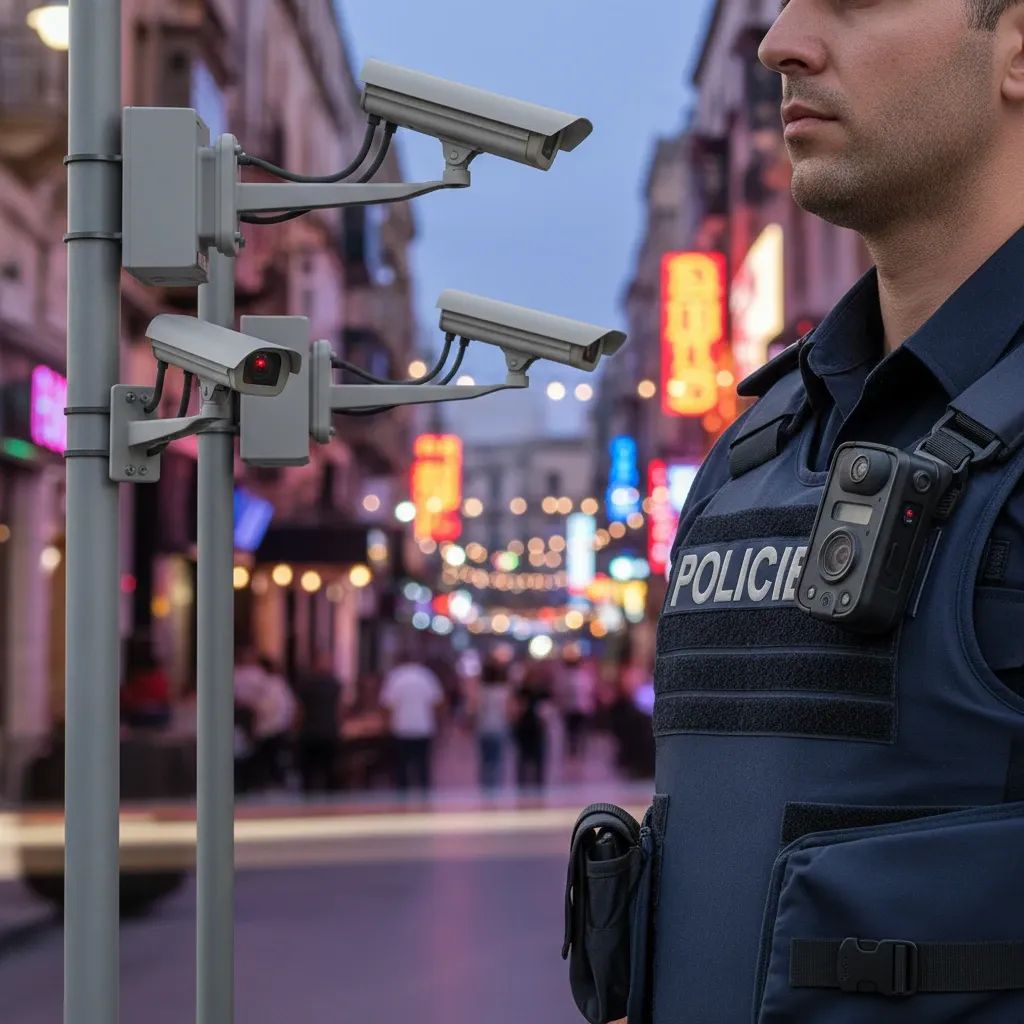
The Malta Police Force equipped frontline officers with body-worn cameras in mid-2021, a significant government investment designed to modernize evidence collection and establish accountability. The Caro Perez case exemplifies how this technology has become evidentiary backbone in Maltese courts.
The recorded footage was instrumental to the prosecution case. Without the clear visual documentation of Caro Perez's actions—the slap, the shoe-throwing, the repeated handcuff escapes—establishing the pattern of resistance would have relied entirely on officer testimony and witness accounts.
In recent years, magistrates across Malta have increasingly relied on body camera and CCTV evidence to adjudicate disputed incidents. In a 2024 Ħamrun case, bodycam clips played a central role in determining liability. In November 2024, a magistrate reviewed video evidence that contradicted police sworn testimony. And in other high-profile cases, video footage has been decisive in reconstructing events.
Paceville's Transformed Security Architecture
The Caro Perez sentencing arrives as Paceville undergoes substantial security overhaul. More than 40 new CCTV cameras were installed across the district by summer 2025, part of a broader national surveillance program monitored around-the-clock by the Police Control Room. The stated rationale: intelligence-led policing and rapid deployment when violence erupts.
Enforcement posture has tightened alongside infrastructure. Uniformed and plainclothes officers now conduct increased patrols, conducting random bag checks and monitoring underage alcohol purchase attempts. Illegal smoking is strictly policed. Drug checks are routine.
New national alcohol policies for 2026–2031 introduce heavier penalties against venues that serve minors or visibly intoxicated patrons. Offending establishments may face mandatory staff education programs or license suspension. The Town Centre Management for Paceville is advocating for additional measures: a dedicated, specialized police unit assigned to the district, a fast-track protocol to temporarily exclude repeat offenders linked to violence or narcotics, and improved street lighting.
Regulation of private security personnel (bouncers) remains pending. A draft licensing framework to vet and establish standards has yet to be formally enacted, though documented evidence of unlicensed individuals working venues has mounted over years. Advocacy groups have pushed repeatedly for statutory oversight.
Practical Implications for Residents and Visitors
For anyone living in or frequenting Paceville and similar entertainment zones, the Caro Perez ruling carries immediate, actionable implications:
Assume you are always recorded. Body cameras, CCTV, and venue surveillance mean that disputes with police or witnesses are almost certainly captured. Courts increasingly rely on this objective footage rather than competing testimony, so your behavior on camera is what will be adjudicated.
Understand the legal categories and consequences. Resisting, threatening, and assaulting are separate offenses with different burdens of proof. Sustained physical resistance to police—pushing, hitting, escaping restraints—can result in custodial sentences regardless of how an individual act is technically classified.
Foreign nationals face amplified consequences. Beyond the immediate sentence, a criminal conviction in Malta carries immigration ramifications—deportation, work permits suspended, future visa applications denied or scrutinized. A criminal record is not merely a legal matter; it is a barrier to living and working in the country long-term.
Restraining orders are routine and lasting. Courts habitually issue multi-year protection orders favoring officers threatened or injured during duty. Breaching such an order—approaching the protected person or communicating with them—triggers separate criminal charges. A three-year order is not unusual; many extend longer.
Intoxication is not a legal defense. Being drunk does not excuse assaulting, threatening, or resisting officers. The court may consider it a mitigating factor during sentencing, but it will not acquit you of the conduct itself.
The Transparency Gap: Video Clarity Does Not Equal Accountability
The European Commission against Racism and Intolerance (ECRI) noted in its 2024 report on Malta that while the Malta Police Authority—established in 2022 and replacing a less independent predecessor—now investigates public complaints against officers, few allegations have advanced to criminal prosecution or resulted in convictions.
Comprehensive national data on police use-of-force incidents, trials, and convictions for 2025 and early 2026 remain unpublished. Such statistics are typically compiled retrospectively, making it difficult for residents to know the actual scope or frequency of force incidents or the enforcement outcomes.
Yet here lies a paradox: video evidence does not eliminate contested interpretation. The Caro Perez bodycam footage clearly documented her actions—the slap, the shoe-throwing, the handcuff escapes. But the court still exercised judicial discretion, acquitting on assault while convicting on threats and breach of peace. The magistrate's interpretation of what that video meant legally determined the verdict, not the footage itself.
As surveillance infrastructure expands and body cameras become standard, transparency mechanisms are improving. But without comparable growth in conviction rates for officer misconduct or predictable, published enforcement data, the relationship between objective evidence and actual accountability remains asymmetrical. Video clarity advances the process; judicial consistency and publishing transparency remain ongoing challenges for the Malta Police Force and the courts.


