Malta's Building and Construction Authority has confirmed that emergency foundation stabilization work is now underway at the troubled Stivala hotel site in Sliema following a pump failure in June 2026 that left excavations submerged in seawater and triggered a stop-work order from safety regulators.
The Emergency: What Happened and Why It Matters Now
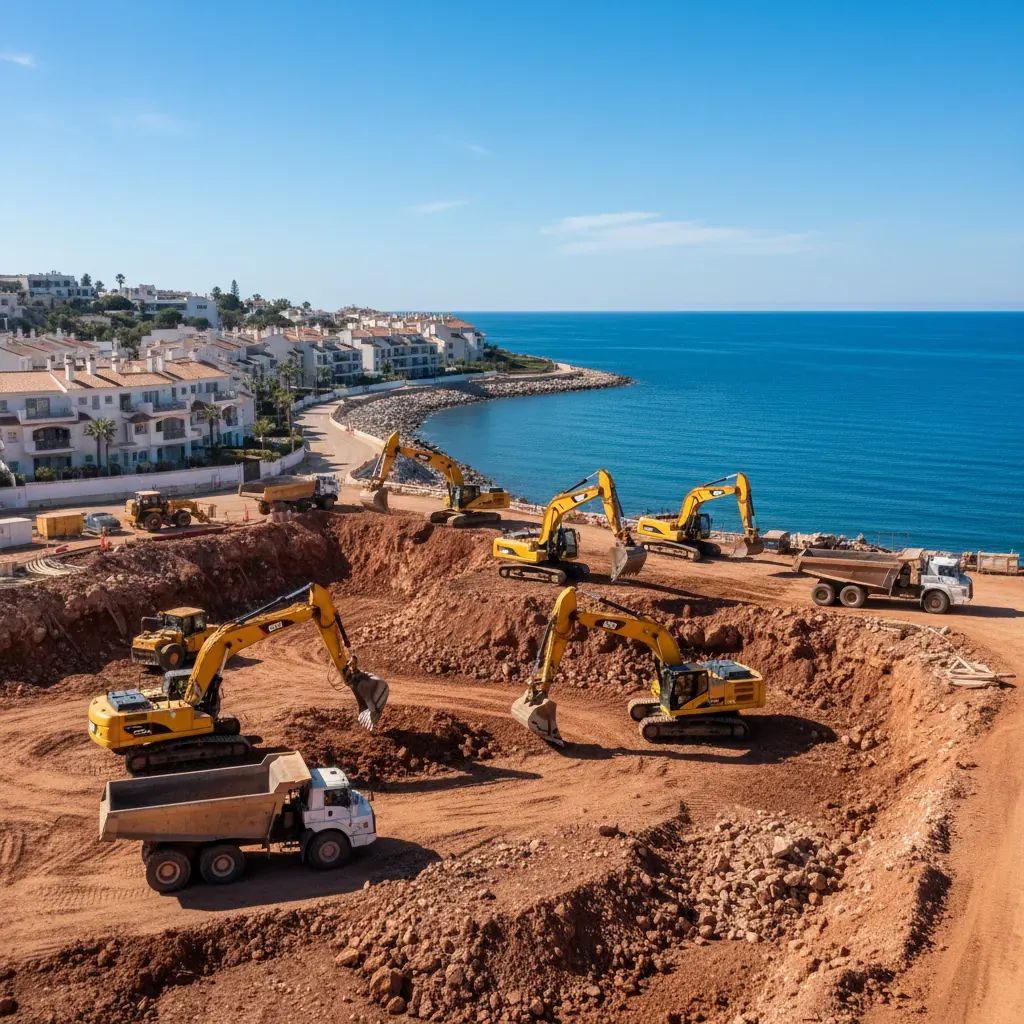
On June 5, 2026, the Occupational Health and Safety Authority (OHSA) issued an immediate stop-work order at the site after a dewatering pump broke down, allowing Mediterranean seawater to flood the excavation pit. Video evidence showed workers operating partially submerged excavators in water-logged foundations that had been excavated below sea level—a hazardous situation that prompted regulatory intervention within hours.
For Sliema residents, this incident raises urgent questions about construction safety near their homes. Workers had reportedly been battling recurring water ingress for weeks as the dig progressed deeper below sea level, where hydrostatic pressure from the surrounding Mediterranean intensified the flooding risk. Residents living near Triq San Vincenz had previously complained about the site "constantly flooding with seawater," with some excavators sinking into the saturated soil.
The foundation crisis is not just a technical problem—it poses real risks to neighboring properties. Water-logged soil loses its load-bearing capacity, creating the risk of foundation settlement, structural cracking, or even partial collapse. When foundations are excavated below the water table—as is the case in coastal Sliema—the surrounding soil becomes unstable if dewatering systems fail. The deeper the excavation, the greater the water pressure and the higher the stakes for nearby buildings.
Response and Stabilization Efforts
The Malta Building and Construction Authority responded by mandating the use of specialized machinery and equipment to stabilize not only the hotel's foundations but also those of neighboring properties. The authority has brought in affected third parties and their appointed structural engineers to assist with technical assessments and ongoing oversight of the remedial works.
The Sliema Residents Association initially disputed claims that neighboring buildings were at risk, insisting that excavations were not near their properties. However, the BCA's inclusion of adjacent properties in the stabilization mandate suggests that authorities identified at least some risk of lateral ground movement or settlement affecting nearby structures.
A Pattern of Compliance Issues at This Site
This is the second major intervention at the Stivala hotel site in recent months. In March 2025—over a year ago—the BCA suspended works after developers allegedly attempted to demolish part of an adjacent building, causing damage to a residential apartment. That incident prompted a formal meeting with all responsible parties to address structural, procedural, and safety-related shortcomings before work could resume.
Residents have repeatedly raised concerns about the Stivala group's alleged disregard for regulations, including commencing work before permitted hours, unsafe practices such as throwing metal pipes from heights, and continuing excavation despite prior stop-work orders. Applications were also filed to sanction already completed demolitions of protected facades, fueling accusations of a pattern of non-compliance.
What Residents Should Know: Your Rights and How to Report
If you live near a construction site in Malta and observe similar safety violations or hazardous practices, you have rights and recourse:
• Report to OHSA: Contact the Occupational Health and Safety Authority directly with photographic or video evidence of unsafe working conditions, worker endangerment, or site management failures.
• File with the BCA: The Building and Construction Authority accepts formal complaints about non-compliance with building permits, unauthorized work, or structural concerns affecting neighboring properties.
• Request monitoring: Under current regulations, residents can request that authorities include their properties in formal risk assessments and monitoring programs, particularly if excavations or foundation work occurs nearby.
• Document evidence: Keep records of flooding, damage, noise, or safety concerns with dates and photos. This documentation strengthens formal complaints and helps regulators identify patterns of non-compliance.
The reformed regulatory framework now in place since late 2025 gives OHSA and the BCA expanded authority to issue stop-work orders and enforce compliance, but resident complaints are often the first alert system for violations.
The Regulatory Framework Now in Force
Malta's construction sector has undergone significant reforms, with key protections now in force including:
• Mandatory appointment of a competent Project Supervisor for Health and Safety, with authority to halt unsafe work.
• Written risk assessments covering hazards to workers, visitors, and neighboring properties, updated regularly throughout the project.
• Formal notification to OHSA at least four weeks before commencement for projects exceeding workforce or duration thresholds.
• Joint inspections by the BCA and OHSA to uncover and address violations, with both authorities having expanded enforcement personnel.
• Immediate stop-work orders and penalties for non-compliance, with accountability extending to contractors, supervisors, and clients.
These reforms, part of a broader overhaul of Malta's construction sector continuing through 2026-2027, aim to address public frustration over overdevelopment, noise, dust, and safety. Mandatory waste audits for major projects took effect on January 1, 2026, and new licensing standards for contractors and a national register are also in development.
Accountability and What Happens Next
The Stivala hotel controversy has become a test case for Malta's reformed construction oversight regime. The BCA's decision to impose additional conditions and mandate specialized equipment reflects a more proactive stance than the reactive approach of the past. The involvement of third-party experts and the formal inclusion of neighboring property owners in the stabilization process signal an effort to rebuild trust with residents who have felt sidelined by high-density development.
However, the timeline and cost of the stabilization work remain undisclosed. What is clear is that the project has been plagued by delays, regulatory interventions, and community opposition since its inception.
The BCA emphasized that it is "closely monitoring the situation" and will ensure that all works are "carried out safely and in full compliance with regulatory standards." Whether this latest crisis will prompt further reforms—or lead to the permanent suspension of the project—remains to be seen.
For Sliema residents and others navigating Malta's rapidly changing built environment, the message is clear: the days of unregulated construction are ending, but enforcement will be tested repeatedly as developers push the limits of what is physically and legally permissible in one of Europe's most densely populated island nations. Your vigilance and reporting remain essential tools in holding developers and regulators accountable.