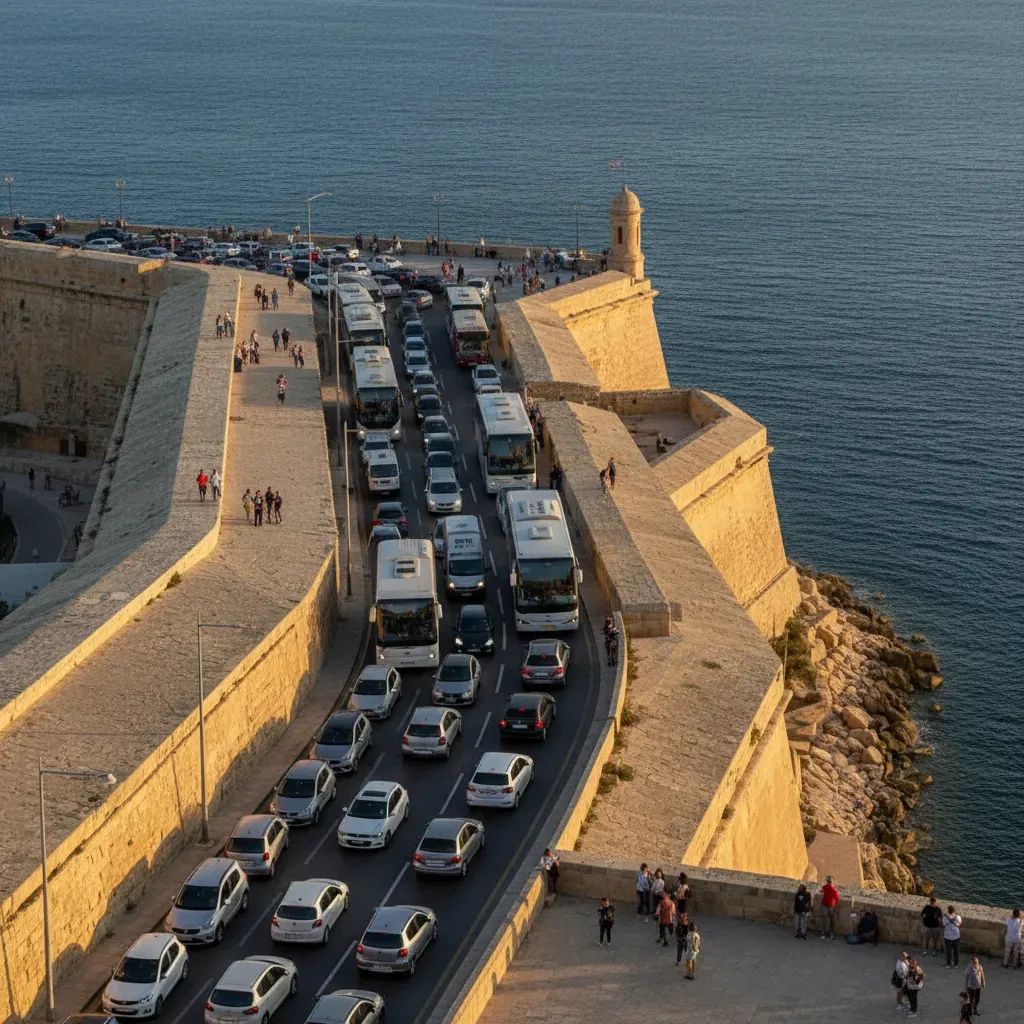
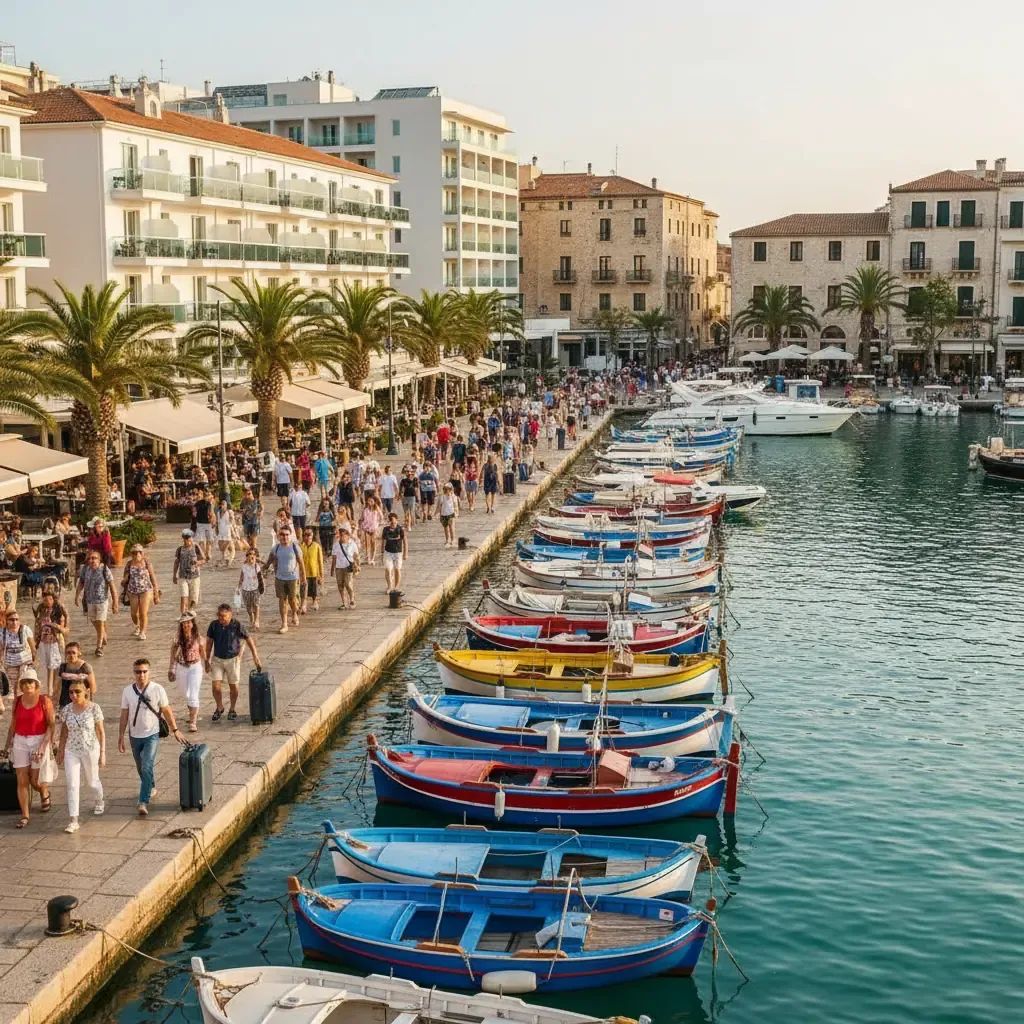
The Malta Police Force is tightening enforcement across Valletta's busiest attractions after a coordinated crackdown on pickpocketing crews prompted a rethinking of how the country protects both residents and the estimated 800,000+ tourists expected to pass through the capital annually.
Why This Matters
• Concrete deterrent: Starting June 1, 2026, offenders face immediate electronic fines rather than court delays—a policy shift designed to catch thieves before they leave Malta.
• Localized problem, measurable response: The Malta Police Force deployed additional patrols to Upper Barrakka Gardens, the Valletta entrance, and bus terminals, with a dedicated Tourist Police unit stationed at St. John's Street handling reports and coordination.
• Evidence-based prosecution: Police have filed charges in connection with pickpocketing investigations, using CCTV footage across multiple locations as the primary evidence-gathering tool.
• Real numbers show the trend: Pickpocketing incidents have shown a noticeable increase in recent years, reflecting higher tourist arrivals rather than a deteriorating safety environment.
The incident trend, while notable, deserves context. Malta's overall violent crime remains exceptionally low, and the recent surge reflects primarily one variable: tourism is booming again, and crime is proportionally increasing alongside it—not because Valletta has become fundamentally less safe, but because it's busier.
The Mechanics of the Problem
Pickpocketing in crowded spaces follows predictable patterns, and Valletta's geography makes it vulnerable. The Upper Barrakka Gardens acts as a natural funnel—particularly during the noon and 4 PM cannon firings—where tourists cluster physically close. The same dynamic applies at the Valletta bus terminus and main entrance, where people move shoulder-to-shoulder, distracted by cameras, maps, or simple wonder. These conditions are not unique to Malta; they're standard in any Mediterranean hotspot.
Tourist guides report that crews work in coordinated teams. While one member creates a distraction—dropping something, asking for directions, or staging an accidental collision—an accomplice works the crowd. This method is low-risk for the perpetrator and difficult to detect in real time, which is why CCTV review has become the investigation backbone rather than on-the-spot interventions.
Police investigations have shown that multiple perpetrators often act independently or in different configurations, making pattern detection challenging and requiring systematic video evidence analysis across sites.
How Malta Compares and Why Context Matters
Valletta's security concerns, while climbing, remain modest compared to other major European tourist destinations. Mediterranean cities with high tourist volumes have experienced significantly higher rates of petty theft, particularly in metro systems and around major landmarks.
The Maltese capital does maintain one of Europe's lowest violent crime rates, which is the relevant comparison. The distinction matters because fear of "crime" often conflates petty theft with personal safety—different categories entirely.
What changed in recent years is not Malta's fundamental security posture but the volume of people in confined spaces during peak times. Visitor numbers have been climbing steadily since the post-pandemic recovery, and more people in smaller areas naturally creates more opportunities for theft.
The Policy Pivot: From Prosecution to Prevention
The Malta government's introduction of on-the-spot electronic fines represents a shift in enforcement philosophy with practical teeth. Previously, police would file reports and hope cases made it through court proceedings—a process that often failed because offenders, especially tourists or visitors with no permanent address, would depart the country before trial dates arrived.
The new system, active since June 1, 2026, allows any Malta Police Force officer to issue immediate fines to foreign non-residents for breaching Maltese law, from minor theft to other violations. The authority to issue these fines has been extended to LESA and the Environment and Resources Authority, expanding enforcement capacity beyond police alone.
From a practical standpoint, this closes a loophole. A visitor caught pickpocketing can no longer simply walk away, hoping the Maltese court system won't track them down internationally. The fine is assessed and collected on the spot—a genuine deterrent because consequence becomes immediate rather than theoretical.
Infrastructure and Human Resources
The Malta Police Force has bolstered its physical presence through both traditional patrols and technology. A new fleet of electric vehicles rolled out as part of expanded community policing operations provides officers with greater mobility in congested tourist zones, allowing faster response times to reports and more frequent high-visibility presence at known hotspots.
The Tourist Police unit at St. John's Street has become a reporting and coordination hub. Officers stationed there now handle calls from victims, guides, and business owners, allowing them to compile pattern data and alert responding officers to recurring locations or behavior profiles. This vertical integration of information—connecting individual reports to broader trends—is standard in large metropolitan areas but represents a meaningful enhancement for Malta's capital. Residents and visitors can report pickpocketing incidents directly to this unit.
CCTV coverage, while still incomplete compared to cities like London, has proven instrumental in recent investigations. Police review footage across multiple sites, cross-referencing timestamps and identifying perpetrators. The broader push for upgraded surveillance systems across tourist zones extends naturally to Valletta as well.
Practical Defense Strategies That Work
Tourist guides and the Malta Police Force have converged on a consistent set of behaviors that materially reduce theft risk:
Money belts worn under clothing remain the gold standard for storing cash, passports, and cards. This single practice eliminates the most common theft target—an easily accessible bag or pocket. Cross-body bags worn in front with zippers facing inward add a second layer because access becomes physically awkward rather than seamless.
Timing awareness matters. The noon and 4 PM cannon firings at Upper Barrakka Gardens create predictable surges in crowds; visitors should anticipate reduced awareness and maintain tighter control of belongings during those windows. The same principle applies to bus journeys between Valletta and St Julian's, where thieves know passengers are often distracted by boarding or exiting.
Distraction recognition is learnable. When strangers suddenly occupy your personal space, bump you, or draw your attention to something on the ground, treat it as a theft opportunity and check your belongings immediately. Move to a less congested area if possible.
Digital redundancy is underutilized. Keeping scans of your passport, credit cards, and travel documents in a secure cloud service means theft of the physical items becomes inconvenient rather than catastrophic. If your wallet disappears, you can still prove identity to your bank or embassy.
ATM positioning matters. Use machines inside banks during business hours when staff are present and monitoring. Outdoor ATMs in tourist areas attract both thieves and pickpockets watching for cash withdrawals.
These strategies—all variations on secure storage, situational awareness, and digital backup—apply universally. They're not Malta-specific advice; they're the operational baseline for moving through any crowded tourist environment safely.
What Residents Should Understand
For people living in Malta year-round, the pickpocketing concerns affect daily life unevenly. Those who commute through Valletta during peak tourist season face marginally elevated risk in crowded spaces. Residents who work in tourism or retail see the issue directly. Those living in outer neighborhoods notice little day-to-day impact.
The increased police presence benefits residents by deterring not just pickpockets but other opportunistic offenders. Enhanced visibility and faster response times improve overall public safety, though the visible gain is most apparent in high-traffic zones.
The electronic fine system also applies to residents committing breaches, though theft-related enforcement naturally focuses on high-volume offender patterns.
Looking Forward
Recent investigations and ongoing enforcement signal genuine institutional attention. Coordination between Malta Police Force units, the Tourist Police, guides, and business associations is stronger than in previous seasons, and information-sharing is faster. These are the institutional muscles that prevent isolated incidents from becoming systemic problems.
The fact that pickpocketing concerns are rising while violent crime remains historically low is actually the correct outcome—it means the security environment is directing criminals toward low-risk, low-harm opportunistic theft rather than confrontational violence. That's not complacency; it's appropriate resource deployment.
For anyone spending time in Valletta in 2026—resident, visitor, or guide—the practical reality is straightforward: keep valuables secure, stay alert in crowds, and report incidents to the Tourist Police unit at St. John's Street. The infrastructure is now in place to act on reports quickly and with real consequences for offenders.