
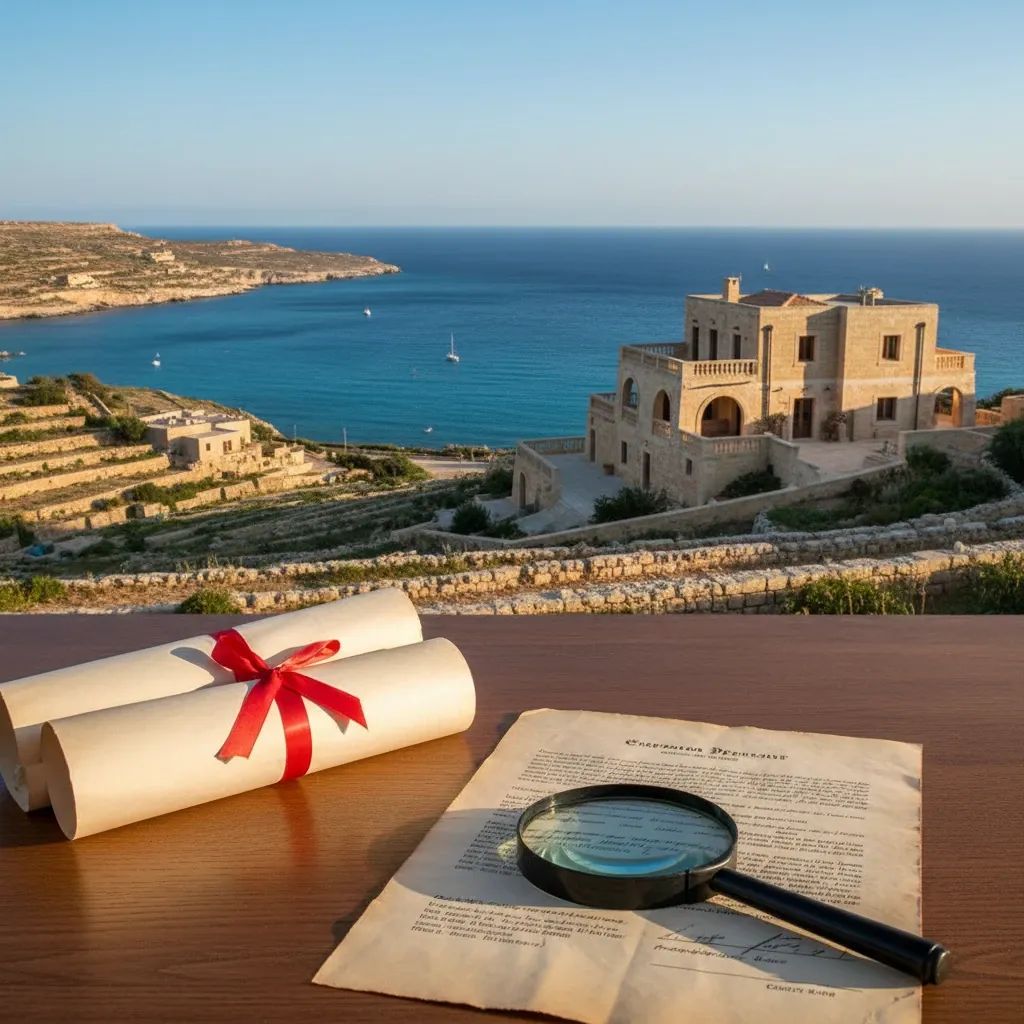
Malta's Agriculture Minister Anton Refalo is facing questions over his Gozo villa lease. Italian media claim the property was once used by Sicilian mafia boss Salvatore "Totò" Riina as a hideout. The government has flatly rejected the allegations.
Why This Matters
Political Credibility on the Line
A sitting cabinet minister's associations—however circumstantial—with organized crime infrastructure could influence public trust ahead of upcoming political cycles.
Property Transparency Questions
The case has reignited debate over due diligence requirements for government officials leasing or purchasing real estate with murky ownership histories.
Malta-Italy Mafia Links
Riina's family has documented ties to Malta, including his son-in-law's arrest here in February 2024 (two years ago), making historical claims about the island's use as a mafia refuge particularly sensitive.
The Villa at the Center of the Storm
The property in question is a sea-view villa in Qala, Gozo, currently leased by Refalo since June 2002. Italian investigative outlet RAI 3 and the daily La Stampa published reports in early April claiming the residence was used by Riina—known as "the boss of bosses"—during his time on the run between the late 1980s and his eventual capture in January 1993.
According to the Italian investigation, the evidence includes testimony from Gaetano Grado, a former mafioso now living under protection, who reportedly identified the villa from photographs and described entering it alongside Riina. Local sources in Gozo told investigators they had seen the notorious crime boss in the area during that period, describing him as polite and discreet. An anonymous letter and historical claims dating back to April 1993—when Riina's driver testified that his boss owned a Gozo farmhouse possibly registered under his wife's name—add layers to the allegations.
Refalo has dismissed the reports as "absolute hogwash and cheap sensationalism." He insists he leased the property nearly a decade after Riina's arrest, was never the owner, and had no knowledge of any alleged mafia connection. When initially confronted by an Italian journalist, Refalo reportedly told him to "mind your own business" and claimed he did not know who Totò Riina was.
Abela's Defense—and Conspicuous Silence
Prime Minister Robert Abela defended his minister on April 7, stating he had personally reviewed documentation proving no link between Riina and the property's ownership or Refalo's lease. Abela clarified that the villa belongs to an Italian woman and has been managed since 2002 by her legal representative, Alfred Grech, a former Nationalist Party (PN) candidate. The last confirmed sale of the property dates to May 1979.
However, Abela conspicuously declined to defend Refalo's claim of ignorance about Riina himself. When pressed, the Prime Minister stated simply: "What I can tell you is that I know who Totò Riina was." This non-defense of Refalo's claim—that he didn't know who one of Europe's most infamous criminals was—fueled questions about the credibility of the minister's account. Abela also questioned why "decades-old speculations" were resurfacing now, suggesting political motives.
Abela used the controversy to pivot politically, noting that Riina allegedly moved freely in and out of Malta between 1987 and 1993—a period when the PN was in power. The Labour Party echoed this line, framing the Italian reports as a "coordinated attack" and emphasizing that Refalo holds no title to the property.
Opposition and Civil Society Push Back
The Nationalist Party and the NGO Repubblika have both expressed skepticism. The PN has called for full transparency from Refalo regarding the property's history and questioned whether Malta's police have opened any investigation into the claims. Repubblika has similarly demanded greater accountability, arguing that a cabinet minister's association—even indirectly—with mafia-linked real estate warrants thorough scrutiny.
No official police investigation has been publicly announced as of this writing.
Broader Implications
For Malta residents and property investors, the episode underscores the complexity of conducting due diligence when leasing or purchasing property with contested ownership histories. While there is no indication that Refalo violated any law, the controversy illustrates how past associations—real or alleged—can surface years later in a small jurisdiction like Malta where property records and political networks are tightly interwoven.
The case also highlights Malta's complicated historical relationship with Italian organized crime. Riina's son-in-law was arrested in Malta just over two years ago on a European Arrest Warrant, and historical testimony has repeatedly placed Riina on the island during the height of his criminal reign. Whether Malta served as a passive refuge or an active operational base remains debated among observers, but the frequency of such allegations suggests the island's geographic proximity made it attractive to fugitives.
From a political standpoint, critics note the damage may hinge less on the strength of the evidence and more on the optics of Refalo's response. In an environment where transparency and accountability are already under strain—Malta's government has faced criticism over social housing tenders and property deals involving politically connected developers—this episode adds another layer of reputational scrutiny.
The Broader Context: Malta's Mafia Shadow
Salvatore Riina, who died in prison in 2017, was convicted of ordering over 150 murders and orchestrated the assassination of anti-mafia judges Giovanni Falcone and Paolo Borsellino in 1992. His 24-year run as a fugitive was enabled by a vast network of safehouses and sympathetic contacts across Italy and beyond. His last confirmed hideout—a villa in Palermo—was symbolically converted into a police headquarters in 2015.
The Gozo villa, by contrast, remains in private use. Whether it was ever truly part of Riina's fugitive infrastructure is unproven in a legal sense, but the Italian investigation suggests it was part of a broader pattern of properties used by the Cosa Nostra in the Mediterranean.
What Comes Next
The Italian media reports are unlikely to disappear. If new testimony or documentation emerges linking the property more directly to Riina, pressure on Refalo and Abela will intensify. The opposition has already signaled it will keep the issue alive, and civil society groups like Repubblika have a track record of pursuing such cases through both political and legal channels.
For now, the Malta government is holding the line: Refalo leased a property legally, years after the alleged mafia boss was arrested, and no evidence ties him personally to organized crime. But in a small island state where politics, property, and past associations are never far apart, the story is far from over.


