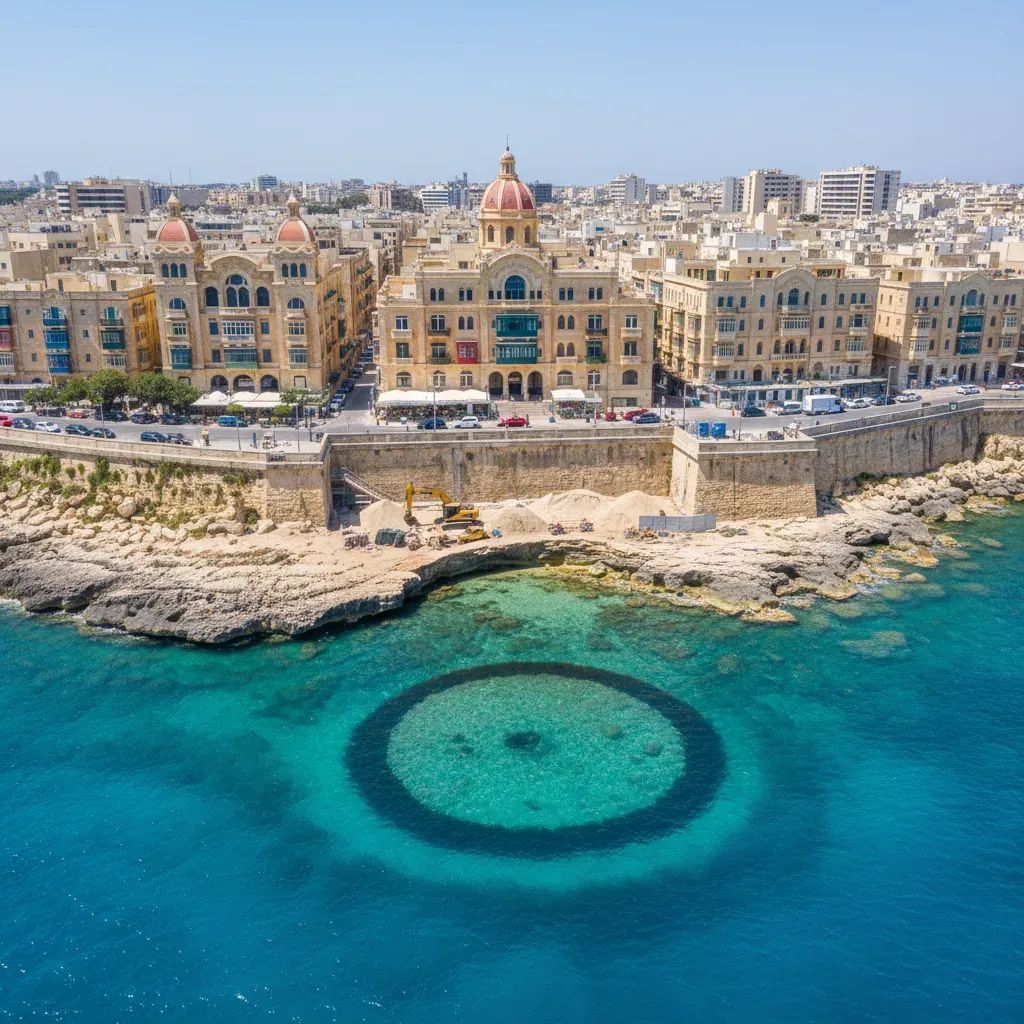
The Superintendence of Cultural Heritage has once again objected to a proposed water sports facility expansion in St Julian's, warning that 2,230 square meters of land reclamation in Balluta Bay could compromise Grade 2 scheduled heritage structures and archaeologically sensitive underwater zones that have yet to be properly surveyed.
Why This Matters
• Balluta seawall and stairs, formally protected as Grade 2 heritage, would be directly incorporated into the project footprint.
• The San Giljan Aquatic Sports Club's expansion plan (PA/6663/24) has advanced without completing mandatory archaeological investigations first requested in 2022.
• Environmental group Flimkien għal Ambjent Aħjar says the project would destroy 197 square meters of protected seagrass meadow and commercialize public foreshore.
• The proposal includes commercial facilities such as a gym and Class 4D restaurant that critics argue do not justify coastal land appropriation.
Heritage Watchdog Demands Pre-Construction Surveys
The Superintendence of Cultural Heritage reiterated its concerns on February 27, emphasizing that the Balluta Bay waterfront represents a layered historical landscape dating to St Julian's 19th-century transformation from fishing village to British colonial resort. The bay's Art Nouveau Balluta Buildings (1928) and 18th-century Villa Cassar Torregiani define an architectural ensemble that could harbor submerged cultural remains reflecting centuries of human settlement.
Cultural heritage officials have stipulated that pre-construction trenches must be excavated and inspected before any reclamation begins, followed by underwater surveys after sediment settlement. Any discovery of cultural material would trigger an immediate work stoppage for further investigation. These conditions were first outlined in a 2022 assessment but remain unfulfilled, according to the Superintendence's latest submission.
The development also sits within sight lines of the recently scheduled Villa Palazzina Vincenti, the Carmelite Church, and the St Julian's Tower and Battery, all protected sites whose visual integrity could be compromised by new infrastructure on the bay's edge.
Environmental Coalition Flags Commercialization Concerns
Flimkien għal Ambjent Aħjar filed a formal objection on the same day, arguing that the project's true purpose is foreshore commercialization disguised as sports infrastructure. The NGO points out that the San Giljan Aquatic Sports Club's proposal allocates substantial reclaimed land to commercial activities including a gym, a Class 4D restaurant, kitchen facilities, and extensive outdoor dining areas.
FAA contends these amenities do not qualify as coastal-dependent uses under the Strategic Plan for Environment and Development (SPED) and could be accommodated within St Julian's existing urban fabric without sacrificing public seabed. The organization also cites the destruction of 197 m² of Posidonia oceanica seagrass meadow, a protected marine habitat critical to coastal water quality and fish nursery zones.
The objection warns that vertical circulation structures and a food-and-beverage outlet at promenade level would obstruct uninterrupted public sea views, violating DC2015 policies designed to safeguard the public realm. FAA argues the project represents a shift from maritime function to commercial exploitation, setting a dangerous precedent for other coastal clubs seeking to expand onto public foreshore.
Project Footprint Reduced After Environmental Scrutiny
The proposal initially sought to reclaim 3,200 square meters of seabed. Following review by the Environment and Resources Authority in August 2025, the footprint was scaled back to approximately 2,230 m². Despite the reduction, heritage and environmental stakeholders maintain that the revised plan still poses unacceptable risks to both cultural heritage and marine ecosystems.
The San Giljan Aquatic Sports Club has defended the expansion as necessary to modernize training facilities and accommodate international-standard water polo pools. Supporters argue that the club's competitive success and youth development programs justify the use of reclaimed land, and that commercial revenue would cross-subsidize sports operations.
What This Means for Residents
Balluta Bay is one of St Julian's most iconic coastal spaces, valued by residents for its promenade access, architectural character, and historic ambiance. The reclamation debate centers on whether semi-public sports clubs should be permitted to appropriate seabed and foreshore for facilities that include commercial revenue streams not directly tied to maritime activity.
If approved, the project would set a regulatory precedent for similar applications along Malta's congested northeast coast, where pressure to monetize public foreshore is intense. Residents concerned about heritage protection and public access can review the full application and submit comments through the Planning Authority portal under reference PA/6663/24.
Regional Context: How Mediterranean Neighbors Handle Coastal Heritage
Across the Mediterranean, countries face similar tensions between coastal development and archaeological preservation. Italy, Spain, and Greece have adopted Integrated Coastal Zone Management (ICZM) frameworks under the Barcelona Convention, which mandates a 100-meter setback zone from sensitive heritage areas and requires comprehensive Environmental Impact Assessments before reclamation projects proceed.
In Sardinia, the Phoenician and Roman site of Nora underwent non-invasive marine geophysical prospection before harbor expansion, allowing developers to map submerged ruins without costly excavation delays. Spain's Pollentia project in Majorca employed similar techniques, integrating advanced monitoring systems to protect underwater cultural heritage from both construction and climate-induced erosion.
The Medistone project in North Africa demonstrated the value of interdisciplinary collaboration, using scientific diagnostics to preserve stone-built archaeological sites threatened by coastal development. Malta's Superintendence of Cultural Heritage has repeatedly cited such best-practice models, arguing that Malta's regulatory framework should require equally rigorous pre-construction archaeological assessment for projects in sensitive zones.
Approval Timeline and Next Steps
The Planning Authority has not yet scheduled a hearing date for PA/6663/24. Heritage and environmental objections will be weighed alongside economic and sporting benefit arguments from the club and its supporters. The Superintendence of Cultural Heritage's insistence on completed archaeological investigations before approval could delay the process by several months, depending on whether the applicant commissions the required surveys.
Malta's coastal planning policies have come under increasing scrutiny as development pressure intensifies along the Sliema-St Julian's-Paceville corridor. The outcome of this application will signal whether heritage safeguards and public access protections retain meaningful enforcement power, or whether commercial and sporting interests can override them through incremental reclamation approvals.