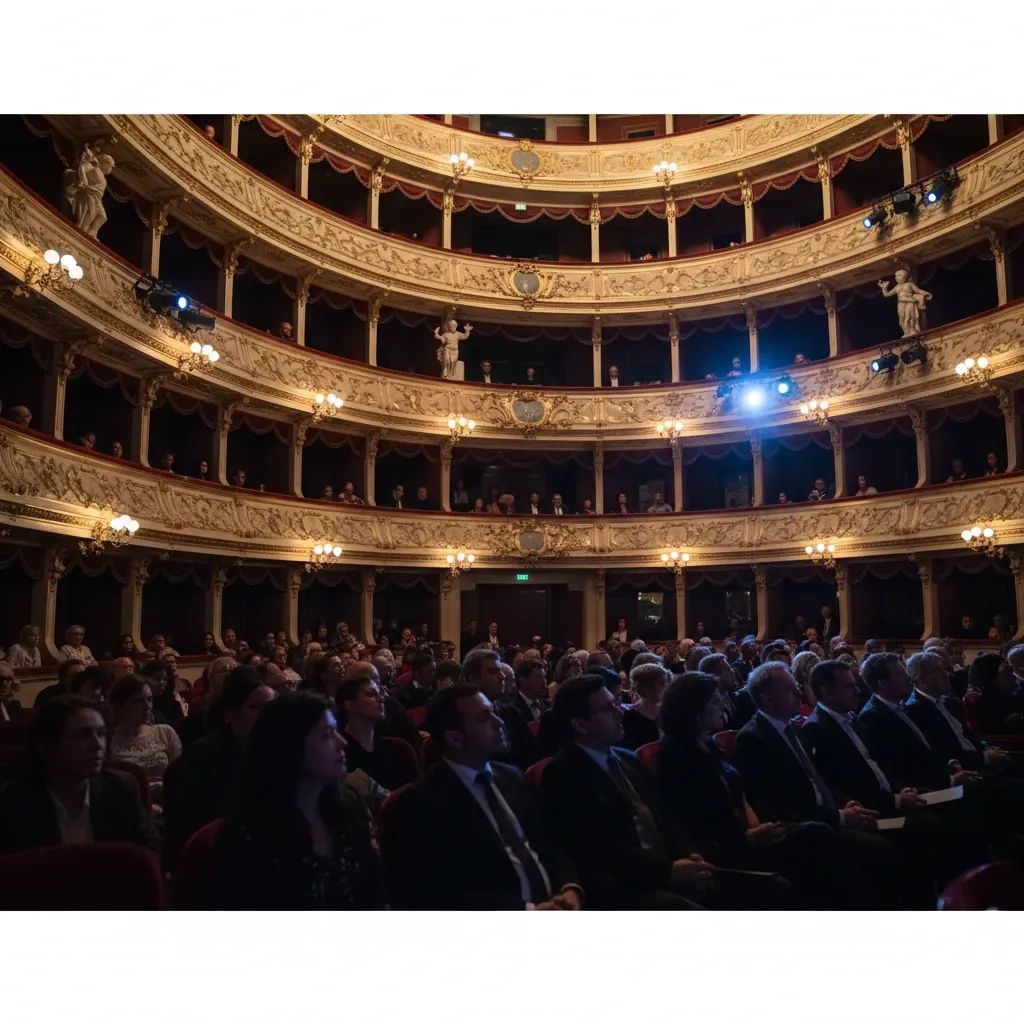
Teatru Manoel in Valletta will host a seven-day international festival in April 2026 showcasing theatre performed in four of Europe's smaller languages, spotlighting the cultural survival of linguistic minorities through dramatic performance. The Drama of Smaller European Languages (DoSEL) International Showcase, running from April 16 to 22, brings together productions from Malta, Slovenia, Croatia, and Estonia in a Creative Europe-backed program designed to elevate theatrical works that rarely travel beyond their home countries.
Why This Matters
• Historic Maltese premiere: Ir-Rebħa tal-Ħuta Li Ttir, a Maltese-language play, receives its first-ever staging, making this production a significant moment for Maltese dramatic literature.
• Access to linguistic diversity: All performances will be conducted in their original languages with English surtitles, allowing Maltese audiences to experience Estonian, Slovenian, Croatian, and Maltese theatre without language barriers.
• Cultural diplomacy in action: The festival, co-funded by the European Union's Creative Europe Programme, positions Malta as a hub for minority-language artistic exchange.
• Four distinct productions: The showcase features theatrical work from each participating nation across scheduled performance dates at one of Europe's oldest working theatres.
A Platform for Endangered Theatrical Voices
The DoSEL initiative addresses a persistent challenge in European cultural policy: how to sustain dramatic traditions in languages spoken by smaller populations when commercial theatre gravitates toward English, French, German, and Spanish. Theatre written in Maltese, Estonian, Slovene, or Croatian faces structural disadvantages in translation markets, international touring circuits, and audience reach. This festival disrupts that dynamic by creating a dedicated showcase where linguistic scale is irrelevant and artistic merit drives programming.
Teatru Malta and the National Agency for the Performing Arts Malta (NAPA) serve as local hosts for the event, which unfolds across dramaturgical workshops, public discussions, translation laboratories, and consortium meetings in addition to the four staged productions. The broader DoSEL collaboration includes partners from Spain (representing Basque and Catalan), Kosovo, and Bulgaria, though the Valletta showcase focuses on the quartet of participating nations.
The Maltese Entry
Malta's contribution, Ir-Rebħa tal-Ħuta Li Ttir (The Triumph of the Flying Fish), will be performed in Maltese with English surtitles, ensuring accessibility for the island's substantial foreign-resident population. Performances are scheduled for April 16, 24, 25, and 26, providing multiple opportunities for audiences to experience this production.
What the Touring Companies Are Bringing
Slovenia presents Tekst Telesa (Text of the Body) on April 18, while Croatia performs Always Be Like a Dragon on April 20. Estonia rounds out the festival on April 22, presenting MEDIUM, a production from one of Europe's most innovative theatre ecosystems.
What This Means for Residents
For Maltese theatergoers, the festival offers rare exposure to theatrical traditions that seldom reach the Mediterranean. It's an opportunity to see how other small-language communities sustain their dramatic heritage through performance. The English surtitles remove linguistic barriers, making this accessible even to non-Maltese speakers living on the island.
For expats and cultural tourists, the festival provides a concentrated dose of European theatrical diversity in a single venue. Tickets can be purchased through Teatru Manoel's box office, and the schedule allows audiences to attend multiple productions over an extended weekend.
For local artists and translators, the accompanying workshops and residencies create networking pathways into EU-funded theatrical collaboration. The DoSEL project emphasizes translation as an artistic discipline, not merely a technical service, which could open professional opportunities for Maltese-language cultural workers seeking international partnerships.
The Economics of Small-Language Theatre
The festival's existence reflects a broader EU cultural strategy to counterbalance the dominance of English-language performance. Without targeted funding mechanisms like Creative Europe, productions in Estonian or Maltese face near-impossible odds in securing international tours. The logistics of subtitling, the limited pool of translators, and the unfamiliarity of foreign programmers with smaller-language repertoires create compounding barriers.
DoSEL attempts to solve this by bundling productions into a traveling showcase, reducing individual tour costs and creating a curatorial brand that emphasizes linguistic diversity as a selling point rather than a liability. The model has parallels in European minority-language literature festivals, which have successfully built audiences for Catalan, Welsh, and Frisian writers by framing linguistic specificity as cultural value.
Beyond the Stage
The festival's non-performance programming includes public talks on translation ethics, research presentations on minority-language dramaturgy, and consortium meetings where partner organizations coordinate future collaborations. These activities position the festival as infrastructure-building rather than merely a performance series—an investment in long-term capacity for small-language theatre ecosystems.
For Malta, hosting the showcase reinforces the island's positioning as a European cultural crossroads, leveraging its geographic location and bilingual population to serve as a neutral ground for minority-language exchange. It also provides a template for how NAPA and Teatru Malta might program future international work outside the Anglophone and Italian circuits that typically dominate Maltese stages.
Tickets and full schedule details are available through the Manoel Theatre box office and the Teatru Malta website.