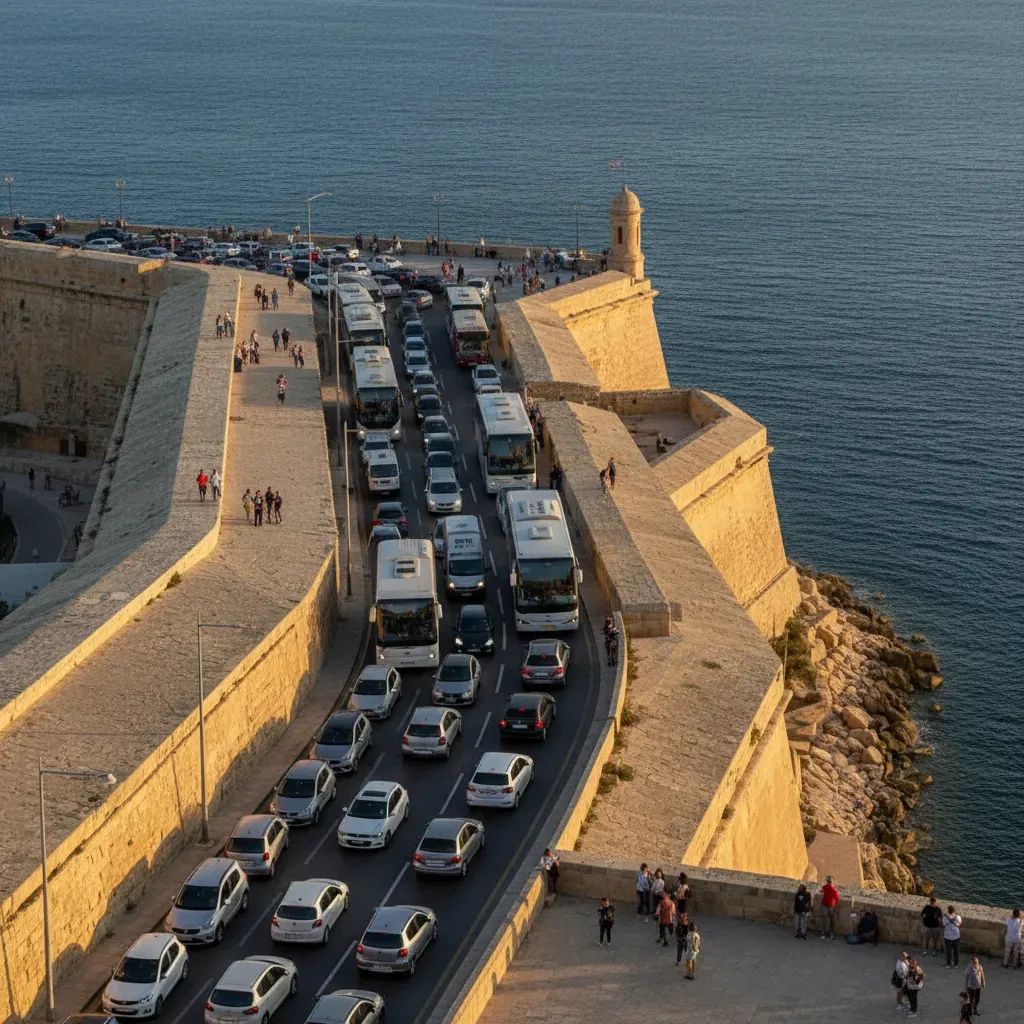
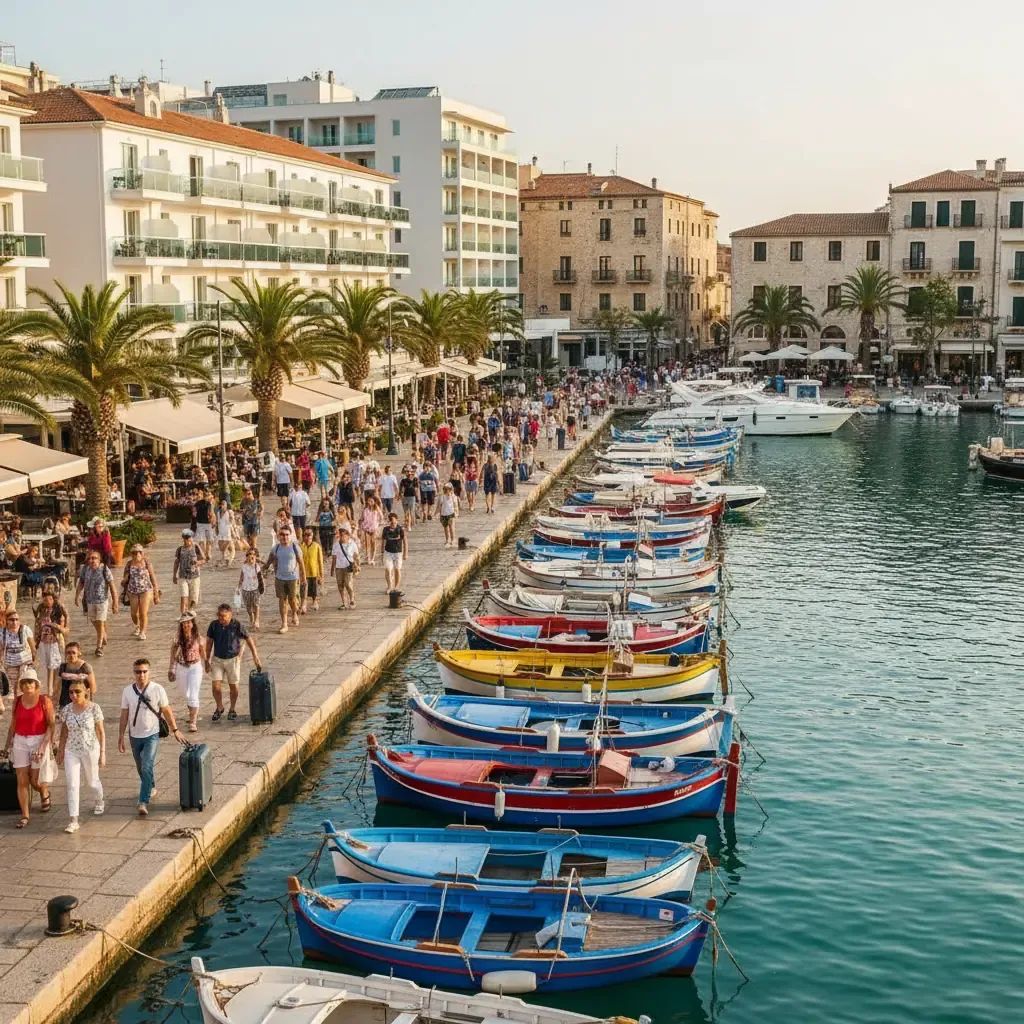
Malta's tourism officials keep invoking the phrase "quality tourist" like a mantra, but industry veteran Emmanuel Galea has called out what should have been obvious years ago: nobody has actually defined what that means. The government's own 10-year strategy, 'Recover, Rethink, Revitalise,' pledges to prioritize quality over volume, yet contains no measurable criteria for the type of visitor it aims to attract. Galea's intervention cuts through the rhetoric with a practical framework that questions whether a tourist's value should be measured by branded clothing and club-class tickets, or by what they actually leave behind for the islands.
Why This Matters
• Definition gap: Malta's tourism strategy lacks clear benchmarks for "quality," making policy effectiveness impossible to measure.
• Four proposed tests: Galea offers specific criteria—local spending retention, seasonal timing, geographic spread, and behavioral impact.
• Mixed signals: While 2025 saw record spending of €3.9 billion, early 2026 data shows per-capita expenditure declining despite rising arrivals.
• Mediterranean peers: Spain and Italy have already shifted to sustainable models with defined metrics Malta could adopt.
The Empty Vocabulary of Tourism Policy
Anyone who has sat through a Malta Tourism Authority presentation in recent years will recognize the refrain. "Quality over quantity" has been the stated pivot since at least 2021, reinforced through the Malta Tourism Strategy 2030 and Malta Vision 2050. Deputy Prime Minister Ian Borg told industry stakeholders earlier this year that success should be measured by expenditure and off-peak performance, not sheer arrival numbers.
But Galea's critique exposes the vacuum beneath the language. Without a definition, "quality" becomes whatever the speaker wants it to be—a moving target that shelters policymakers from accountability.
The timing of his intervention is particularly sharp. August 2026 figures showed Malta surpassing four million annual inbound tourists for the first time, with total expenditure hitting €3.9 billion in 2025—an 18.6% year-on-year increase. On the surface, the strategy seems to be working. Yet the National Statistics Office revealed a more uncomfortable reality for January through April 2026: while arrivals jumped 16%, per-capita spending slipped from €770.30 to €756.39. Real spending per tourist fell to €616.89 from €642.99 the previous year.
In other words, Malta attracted more people who individually contributed less. That's not a quality shift. That's volume dressed in different clothes.
Four Tests That Actually Measure Something
Galea's proposed framework sidesteps the easy markers of luxury and instead asks where the money goes, when the visitor arrives, where they travel, and how they behave.
Local spending impact gets to the heart of economic leakage. A tourist who drops €500 mostly circulating through Maltese businesses—local restaurants, family-run guesthouses, independent tour operators—generates more sustainable benefit than one spending €1,000 primarily on foreign airlines and international booking platforms. The distinction matters profoundly for a small island economy where tourism revenue can either anchor local prosperity or evaporate instantly overseas.
Seasonality addresses one of Malta's persistent structural weak points. August brings congestion, strain on infrastructure, and frustrated residents. The shoulder months—May, June, September, October—offer better weather without the density. Galea's argument suggests a quality tourist is one who arrives precisely when the islands have capacity to welcome them properly.
Geographic distribution tackles the Sliema-St. Julian's-Paceville bottleneck. The saturation along Malta's eastern coast drives housing pressure, noise complaints, and the sense that tourism happens to residents rather than alongside them. Galea points to Gozo as an under leveraged alternative—57.3% of visitors in 2025 reached Gozo or Comino, but that figure includes same-day excursions. Shifting more overnight stays northward would spread economic benefits and reduce the sense that certain neighborhoods have been surrendered entirely to the visitor economy.
Behavioral impact introduces something more difficult to quantify but impossible to ignore. How tourists treat public spaces, interact with residents, and respect environmental limits shapes daily life in ways statistics cannot capture. A visitor who spends little but moves respectfully through Mdina's narrow streets may contribute more to social sustainability than a high-spender whose presence degrades community patience.
What The Neighbors Have Already Figured Out
The uncomfortable truth for Malta's policymakers is that other Mediterranean destinations have already done this work.
Spain's Sustainable Tourism Strategy 2030 explicitly prioritizes socio-economic and territorial sustainability. It sets measurable objectives around employment quality, social equity in wealth distribution, and resident involvement in decision-making. Italy has launched its "Luminous Destinations" initiative, focusing on managing carrying capacity and ensuring tourism serves community well-being rather than overwhelming it.
The Balearic Islands—facing overtourism pressures remarkably similar to Malta's—have capped new hotel capacity and tightened vacation rental regulations. Mallorca's luxury segment has tripled its economic weight specifically by targeting visitors who seek authentic cultural and gastronomic experiences. The lesson isn't that Malta should only chase wealthy tourists; it's that the Balearics defined their target market and built policy around it.
Slovenia offers perhaps the most instructive model. Its Green Scheme certification program provides clear standards for sustainable tourism development, giving businesses tangible benchmarks and travelers reliable expectations. The result is a boutique, high-value approach that spreads visitors across regions and seasons rather than concentrating them.
What This Means for Residents
The practical implications of Galea's framework extend far beyond industry boardrooms. If adopted, these criteria would shift how Malta markets itself, invests infrastructure, and regulates the sector.
For residents of Sliema, St. Julian's, and other saturation zones, a geographic distribution metric could mean gradual pressure relief. For Gozitan business owners, it could translate into meaningful policy support to attract overnight visitors rather than day-trippers.
The seasonal criterion directly affects quality of life. If Malta successfully steers growth toward shoulder months, August becomes marginally less intolerable while May and October gain economic vitality. Residents win twice: reduced peak-season congestion and year-round employment stability for those working in tourism-dependent roles.
Perhaps most significantly, the behavioral impact test acknowledges what many Maltese have felt but rarely heard articulated in policy circles: tourism that degrades daily life isn't sustainable regardless of its economic contribution. Embedding community respect into the definition of quality creates language for enforcement and expectation-setting that current metrics ignore.
The government has already taken steps that align with Galea's thinking, sometimes without naming it. July 2026's eco-contribution increase to €1.50 per night and accompanying tax credit scheme for accommodation upgrades incentivize higher-end, lower-impact operations. The "Review, Reset, Realign" strategic review launched in February 2026 by the Malta Tourism Authority signals institutional recognition that the current trajectory needs adjustment.
But without the definition Galea demands, these remain scattered initiatives rather than coherent strategy. A target nobody can see is impossible to hit—and impossible to miss.