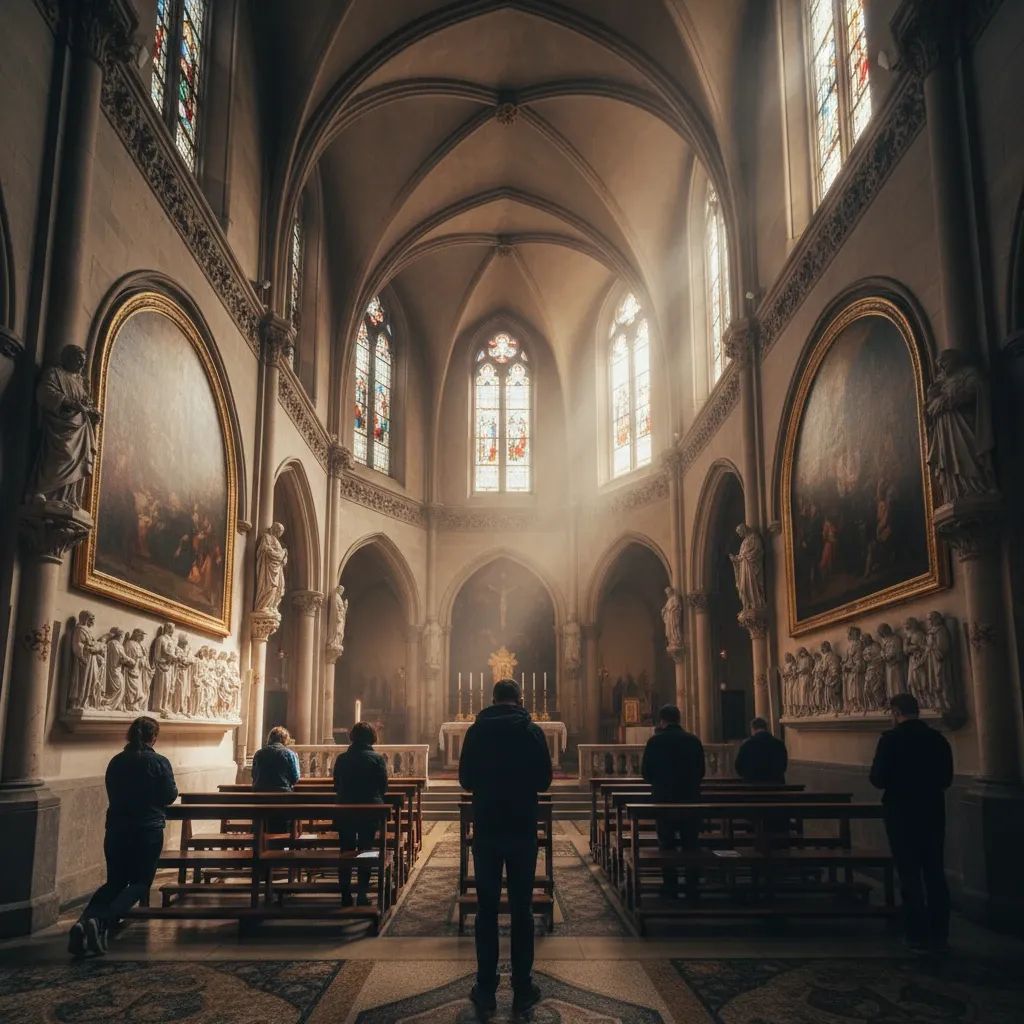
Malta's cultural paradox during the 17th and 18th centuries remains a striking anomaly in Mediterranean history: a capital city renowned for cutting-edge Baroque architecture yet entirely devoid of a single functioning bookshop. While Valletta dazzled visitors with monumental fortifications and ornate palaces, illiteracy pervaded even the island's administrative elite, creating a society where military prowess vastly overshadowed intellectual pursuit.
Understanding the Historical Context
To grasp Malta's modern educational landscape, it's essential to understand how profoundly the Baroque period shaped institutional attitudes toward learning. The Knights' governing philosophy prioritized corsairing, fortress construction, and naval defense over scholarly pursuit—a cultural priority that left lasting imprints on how the island approached education and knowledge-sharing for centuries to come.
The Capital Without Books
When a Venetian diplomatic envoy surveyed Valletta in 1715, he documented a cultural void that bewildered visiting scholars: zero operating bookshops in a capital that housed thousands of residents. Multiple Venetian publishers—representing the era's most sophisticated book trade—attempted commercial ventures on the island, only to declare bankruptcy within months. The market simply did not exist.
Athanasius Kircher, a prominent Jesuit scholar, abandoned his Malta posting in 1637 specifically because the scarcity of printed materials made serious academic work impossible. Among the island's elite, book ownership was dismissed as worthless, and book purchases condemned as unnecessary expense. This attitude stood in jarring contrast to mainland Europe, where cities like Rome, Venice, Naples, and Marseille sustained thriving book trades that fueled the continent's intellectual ferment.
Administrative Priorities by Design
The Order of St. John, Malta's governing authority throughout the Baroque period, cultivated what historians describe as an "elitist mentality" centered on corsairing, fortress construction, and naval defense. Grand Master La Cassiére explicitly prioritized warriors and seamen over scholars in appointments, establishing an institutional culture where literacy ranked as a secondary—often irrelevant—qualification for high office.
The consequences manifested in concrete ways. In the town of Qormi in 1773, only 22 of 226 household heads—a mere 9.7%—could sign their own names. Since signature ability falls well short of functional literacy, actual reading comprehension rates likely hovered in single digits among the general population. Written materials remained the exclusive domain of clerics, who jealously guarded access to Latin and Italian texts.
The Church's Complex Role in Education
The Roman Catholic Church dominated what little formal education existed during this period. The Collegium Melitense, established by Jesuits in Valletta in 1592, offered the island's most rigorous instruction—teaching theology, logic, mathematics, grammar, and humanities. By 1706, enrollment exceeded 400 students, and the institution gained university status in 1727, eventually becoming the University of Malta in 1769.
Yet this achievement served an infinitesimal fraction of the population. The curriculum required fluency in Latin, with Italian and Maltese permitted only on designated days. Bishop Baldassare Cagliares discovered in a 1615 census that numerous priests lacked even a personal Bible, forcing him to mandate ownership under penalty. His decision to found a seminary in Notabile that year addressed a genuine crisis: widespread ignorance among the clergy itself.
Other religious orders—Franciscan, Carmelite, Dominican, and Augustinian—operated small grammar schools for wealthy families. Augustinian friars taught in Gozo, and individual priests ran informal schools in Senglea, focusing on basic literacy alongside religious catechism. The Church's institutional stance, however, generally opposed mass education for lower classes, viewing widespread literacy as unnecessary.
Europe's Contrasting Path
Malta's intellectual isolation becomes stark when measured against contemporary European literacy trends. The Netherlands and England achieved literacy rates exceeding 50% by the mid-1600s, driven by market economies that required written contracts, accounting, and correspondence. Protestant regions particularly invested in universal literacy to enable direct Bible reading, creating structural incentives for public schooling.
Even Catholic territories in France, Spain, Germany, Portugal, and Italy—while experiencing slower growth—maintained robust book trades and urban intellectual communities. Italy served as the Baroque movement's epicenter, where architectural innovations, artistic techniques, and philosophical ideas circulated through intense Mediterranean commercial networks. Malta embraced Baroque aesthetics enthusiastically, constructing the magnificent Auberge de Castille and dozens of ornately decorated churches, yet this visual splendor never translated into literary culture.
The island's linguistic landscape reinforced isolation. Maltese functioned as what historiographer Gian Francesco Abela described in 1647 as the tongue of everyday people, while Italian and Latin dominated courts and tribunals. This created a rigid hierarchy where formal language competence marked class boundaries as visibly as clothing or residence.
The Printing Press Arrives (Barely)
A private entrepreneur introduced Malta's first printing press in 1642, but regulatory battles immediately strangled its potential. The Order, the Bishop, and the Inquisitor engaged in prolonged disputes over censorship authority, paralyzing regular printing operations until 1756—a 114-year delay. The Roman Inquisition's primary concern remained policing prohibited texts rather than promoting publication, creating a chilling effect on intellectual production.
Grand Master de Rohan decreed the establishment of the Bibliotheca, a public library, in 1776, with construction completed in Valletta in 1796. An earlier 1555 decree by Grand Master Claude de la Sengle had attempted to collect books from deceased knights for the Order's treasury. These initiatives represented tentative acknowledgment that the island's book deficit posed a problem, yet came far too late to reshape Baroque-era culture.
Malta's Educational Revolution Begins
The French ejection of the Knights in 1798 triggered Malta's educational revolution. State-funded elementary schooling became universally available, beginning the slow dismantling of institutionalized illiteracy. British administration from 1800 accelerated reforms, with the 1838 transition to subsidized British-model schooling providing free instruction in reading, writing, and arithmetic across Malta and Gozo.
The transformation proved dramatic. Compulsory education through age 14 was mandated on February 1, 1946. By 1985, Malta's literacy rate reached 87%, climbing to 94.94% by 2021. Youth literacy now exceeds 97%, and the Malta Libraries system operates nearly 60 public facilities offering physical and digital resources.
Why This Matters to Malta Today
Understanding this historical transformation helps residents appreciate how deliberately the modern nation rebuilt its educational infrastructure. The jump from 9% literacy in 1773 to 95% today represents one of the most dramatic social transformations in European history—a testament to sustained institutional commitment over two centuries.
For those living in Malta, this history informs current debates about library funding, education policy priorities, and language questions that continue to echo in public discourse. When policymakers discuss investment in literacy initiatives or digital learning resources, they're continuing a journey that begins with recognizing how devastating the Baroque knowledge deficit proved for the island's development. Recent EU statistics showing over half of Maltese adults read zero books annually, and challenges with youth reading proficiency, suggest the work of building a reading culture remains ongoing—a process that requires understanding how deeply ingrained anti-literacy attitudes once were.
The "Language Question" that erupted during British rule—pitting pro-Italian factions against English-language advocates—directly traced to the linguistic hierarchies established during the Knights' era. Modern Malta's education system now prioritizes digital literacy at 63% coverage, exceeding the EU average, suggesting the island has finally escaped its historical pattern of technological lag.
Malta's journey from a book-intolerant Baroque society to a digitally competent 21st-century nation required generations of structural change. The architectural grandeur that defined 18th-century Valletta masked profound intellectual poverty, a contradiction that transformed completely only through deliberate post-1798 reforms and sustained educational commitment.