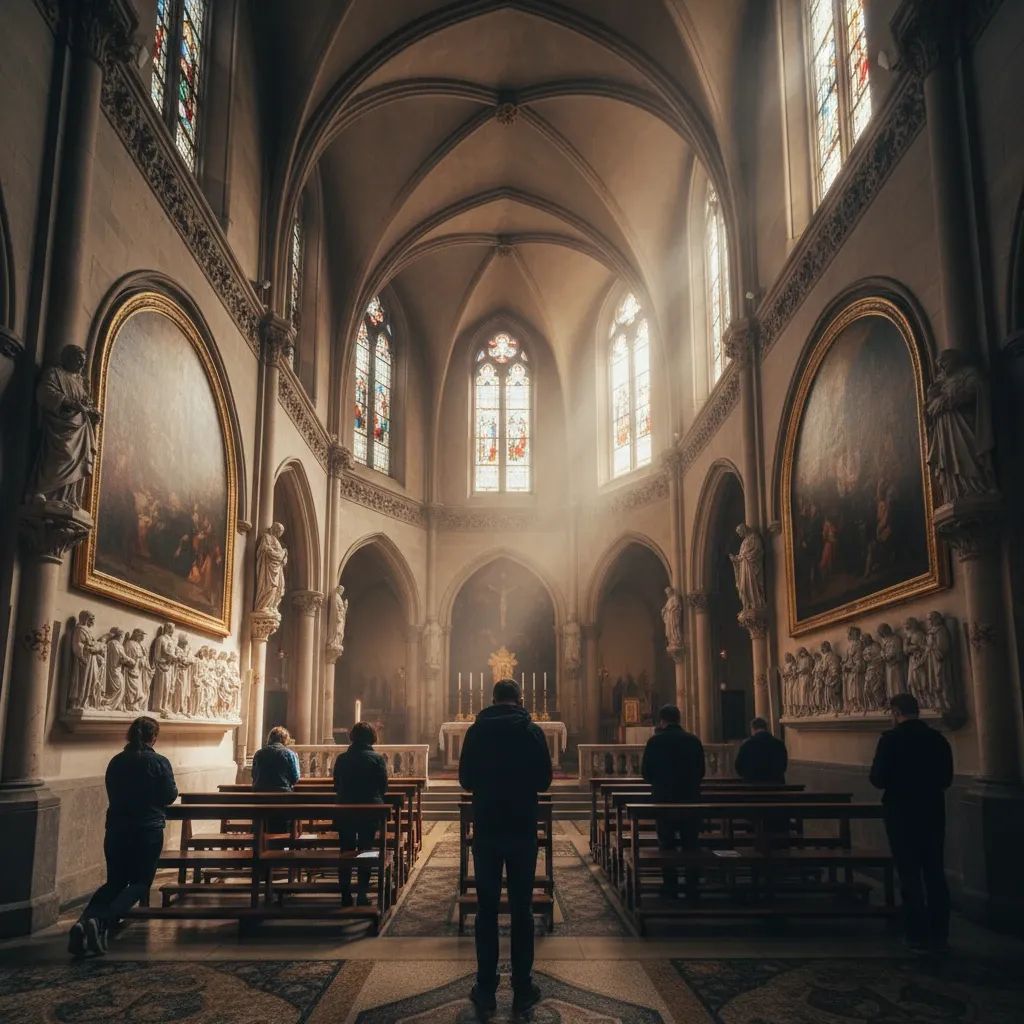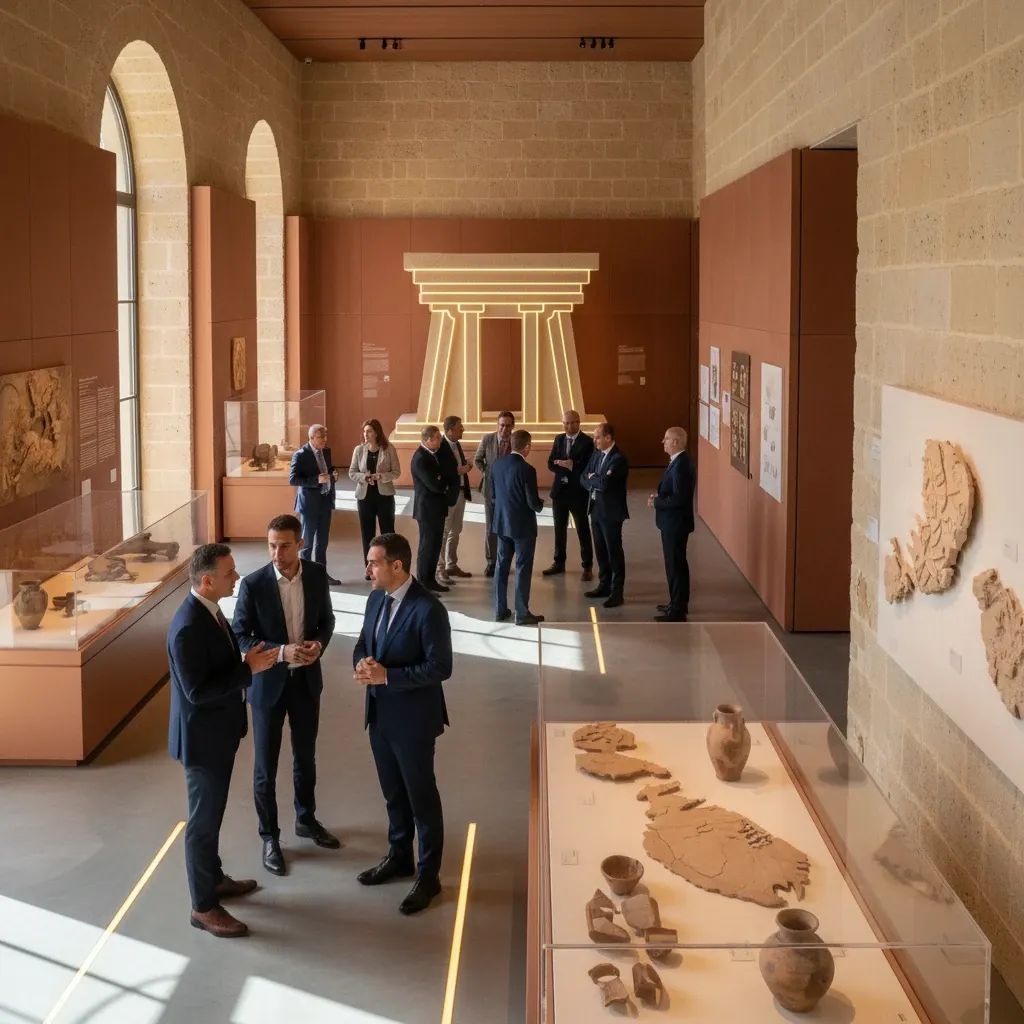
St John's Co-Cathedral is organizing an interdisciplinary gathering on narrative and heritage for May 6, bringing together museologists, playwrights, and cultural strategists to address how institutions can remain relevant in a digitally saturated world. The day-long seminar at the King's Own Band Club in Valletta will target professionals, academics, and anyone involved in presenting Malta's cultural assets to audiences that increasingly expect personalization, interactivity, and emotional resonance.
Interested professionals should contact St John's Co-Cathedral directly for registration information, as these details were not publicly available at time of publication.
Why This Matters
• Cultural professionals working in Malta's heritage sector will gain frameworks for digital-age storytelling
• The event features Dr. Caroline Wilson-Barnao, whose research on algorithmic museum curation shapes global best practices
• Detailed program and registration details will be released closer to the event date—attendees are advised to check directly with organizers
• Refreshments and lunch are included
The Core Question: Narrative as Infrastructure
Titled "Where Stories Live | Narrative in an Evolving Experience," the seminar will operate from the premise that storytelling is no longer decorative but structural—a utility layer connecting physical heritage to digital platforms, visitor psychology, and long-term institutional survival. For Malta's 350+ churches, dozens of state-run museums, and private galleries competing for tourist and local attention, the stakes are significant. Heritage Malta and similar bodies increasingly recognize that preservation divorced from narrative risks irrelevance, especially as younger demographics expect immersive, screen-mediated experiences before setting foot in a gallery.
The event's architecture—keynote, panels, workshops—suggests a shift from passive lectures to working sessions. While specific panel themes remain to be disclosed, the speaker roster indicates focus areas: digital platform logic, neuroscience of visitor engagement, motivational communication techniques, theatrical narrative construction, and theological dimensions of cultural meaning. This breadth reflects Malta's dual identity as both a deeply Catholic society and a digitally connected economy, where a single heritage site might need to speak simultaneously to pilgrims, cruise passengers, and Instagram audiences.
Who's Leading the Conversation
Dr. Caroline Wilson-Barnao anchors the program. Her 2022 book Museums as Platforms and her 2025 co-authored work Collecting Social Media: From Object to Content dissect how cultural institutions function in ecosystems dominated by recommendation algorithms, user-generated content, and attention economies. Her research on digitisation, personalization, and algorithmic cultural recommendation directly addresses challenges Malta's institutions face: how to balance curatorial authority with audience co-creation, and whether "democratizing" heritage dilutes or enriches its transmission.
Dr. Sandro Debono, a Malta-based museum advisor and executive board member of the Network of European Museum Organisations (NEMO), leads NEMO's Think Tank for Museum Futures. His involvement signals the seminar's ambition to position Malta not as a provincial case study but as a laboratory for broader European museum policy. Debono's work on future-oriented museum models aligns with Malta's ongoing efforts to transform sites like the National Museum of Archaeology and Ħal Saflieni Hypogeum into digitally integrated experiences without sacrificing scholarly rigor.
Dr. Annalisa Banzi, an art historian from the University of Milan, brings neuroscience and psychology to visitor experience design. Her research explores how spatial layout, lighting, and narrative sequencing trigger cognitive and emotional responses—insights critical for Malta's Baroque churches, where sensory overload can either enchant or overwhelm. Her participation suggests the seminar will address embodied cognition and the limits of screen-based interpretation.
John Mallia, a trainer specializing in motivational communication and workplace effectiveness, represents the operational dimension: how frontline staff—guides, docents, receptionists—actually deliver narrative in real-time interactions. His presence underscores a pragmatic focus on implementation, not just theory.
Simone Spiteri, award-winning playwright and founder of theatre company Dù, injects performative narrative into the mix. Her work demonstrates how live storytelling can activate heritage spaces beyond static displays. Malta's experiment with immersive projects like "Tales of The Silent City" in Mdina—blending theatre, history, and legend—offers a template Spiteri's insights could expand.
Alex Zammit rounds out the panel with interdisciplinary work connecting theology, psychology, art, and cultural engagement. In a nation where religious identity remains central to social fabric, Zammit's focus on how art functions as both cultural mirror and meaning-making vehicle addresses a uniquely Maltese tension: preserving sacred narrative in an increasingly secular, tourist-driven heritage economy.
What This Means for Cultural Workers
For Malta's cultural sector employees—from Heritage Malta curators to private tour operators—the seminar will offer a rare convergence of strategic thinking and practical tools. The island's heritage economy relies heavily on physical visitation, making it vulnerable to shifting travel patterns, climate impacts on stone conservation, and competition from virtual experiences. Institutions that master narrative frameworks can diversify revenue through digital products, licensing content, and building membership communities that extend beyond one-time ticketed visits.
The seminar also arrives amid ongoing debates over Malta's cultural policy direction. Recent initiatives by Arts Council Malta emphasize digital-age storytelling and multidisciplinary collaboration, sometimes clashing with traditionalist preservation models. The King's Own Band Club venue itself—a historic social institution—symbolizes this tension: heritage spaces must function as both archives and living platforms for new cultural production.
The Broader Context: Heritage Under Pressure
Malta's heritage faces compounding pressures. Physical sites suffer from mass tourism and inadequate maintenance funding. Digital platforms like Google Arts & Culture and TikTok compete for attention with professionally curated experiences. Younger Maltese audiences often engage more deeply with global pop culture than local traditions. Meanwhile, the island's screen tourism potential—leveraging Malta's film location history—remains underdeveloped compared to competitors like Dubrovnik or Seville.
The seminar's timing, just weeks before peak tourist season, positions it as a strategic planning moment. Insights gained could inform summer programming at major sites like St John's Co-Cathedral itself, where the Caravaggio paintings remain the primary draw but where narrative context often gets lost in crowd management logistics.
Long-Term Implications
If executed well, this seminar could seed a Maltese school of heritage narrative practice—an exportable model for small-nation cultural economies balancing preservation with innovation. Malta's scale allows rapid prototyping of ideas that larger countries implement slowly. A successful framework developed here could influence NEMO policy, EU cultural funding priorities, and partnerships with tech platforms seeking cultural content.
The success of the May 6 gathering at the King's Own Band Club will be measured by whether it translates into practical applications for Malta's cultural institutions and catalyzes new collaborations in how stories live beyond the walls that house them. For attendees, the value will depend on whether the discussions yield concrete tools and strategies applicable to their daily work in Malta's cultural sector.