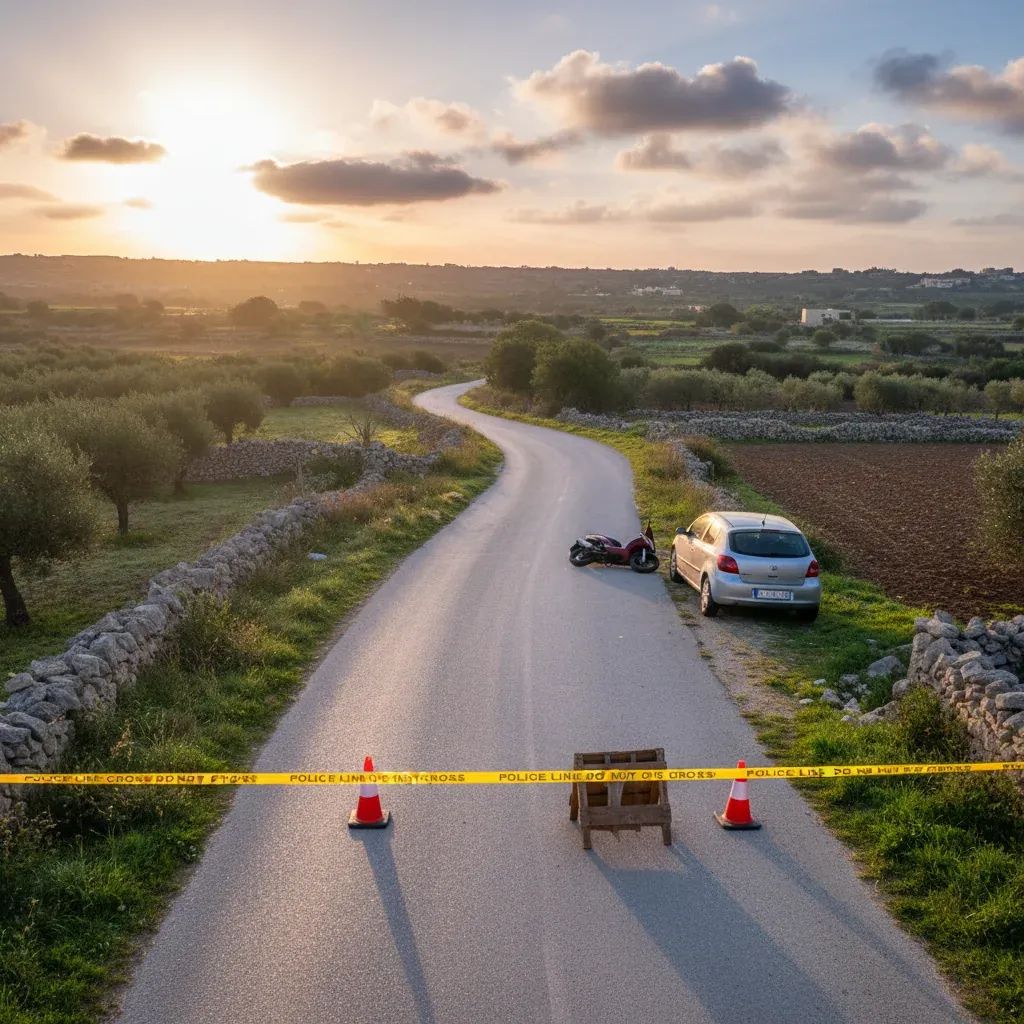
A man from Nadur, aged 64, was rushed to Gozo General Hospital this morning after his Daihatsu Terios flipped into a field between Victoria and Nadur, marking the third serious crash in the area within 18 days. The single-vehicle accident occurred at approximately 7am near the Lidl supermarket, with authorities yet to release details on the driver's medical status or what caused the vehicle to overturn.
Why This Matters
• Third major crash since early April: Gozo has recorded three grievous-injury accidents since April 3rd, all concentrated in the Victoria-Nadur corridor.
• Rising accident trend: Gozo saw a 20% surge in traffic collisions in Q4 2025, making it the only region in Malta reporting increased crash rates during that period.
• Infrastructure overhaul underway: The Ministry for Gozo is implementing a 100-road upgrade project, but key arterial routes remain problematic.
The incident adds to mounting evidence that Gozo's road network is struggling to keep pace with traffic demands, despite ongoing infrastructure investments totaling millions of euros. This latest crash comes barely 24 hours after two people suffered grievous injuries in a quad bike collision on Triq Daħlet Qorrot in Nadur on April 20, and 18 days after a 58-year-old motorcyclist was critically hurt when his bike collided with a car on Triq ir-Rabat on April 3.
Pattern of Escalating Accidents
Traffic data paints a troubling picture for Gozo's smaller road system. While the island accounts for a fraction of Malta's total traffic volume, accident frequencies have climbed dramatically. In Q4 2025 (October-December), total collisions rose significantly, but injury accidents showed a particularly steep increase compared to the same period in 2024. Gozo was the sole region to report such an increase during that quarter.
The Victoria-Nadur area consistently emerges as a high-risk zone. Victoria logged substantial accident figures in recent quarters, making it Gozo's undisputed blackspot. Nadur has also recorded multiple collisions. The road connecting these two localities has long been flagged by residents and local councils for inadequate safety measures, with repeated calls for speed cameras and traffic calming infrastructure going largely unheeded.
Emergency responders have noted that the 7am timeframe—when today's crash occurred—coincides with peak commuter hours, when drivers rushing to catch the ferry or reach workplaces in Victoria are more prone to risky behavior. Driver error, speeding, and distracted driving remain the primary culprits behind Gozo's accident surge, mirroring national trends but playing out on narrower, more poorly maintained roads.
Infrastructure Under Scrutiny
The Ministry for Gozo and Planning has launched an ambitious 100-road infrastructure overhaul intended to modernize utilities, improve drainage, and resurface aging routes. Recent completions include Triq il-Wied in Victoria and Triq l-Emigranti in Nadur, with work now underway on Triq it-Tigrija. Yet the scale of the challenge is immense, and some projects have been mired in controversy.
The arterial road linking Nadur to Għajnsielem, known as Triq l-Imġarr, has been labeled "one of Gozo's deadliest roads." A major reconstruction effort on this stretch drew scathing criticism from the National Audit Office (NAO) for poor planning, budget overruns, and management failures. Costs ballooned to €17M by December 2023, far exceeding initial estimates, with allegations of financial mismanagement and potential conflicts of interest raised by opposition politicians.
Older infrastructure reports from 2019 documented severe pothole damage and structural deficiencies on the route to Nadur, but repair timelines have consistently lagged behind accident rates. Residents near the Lidl supermarket—where today's crash occurred—have long complained about inadequate signage, poor road conditions, and the absence of barriers separating the roadway from adjacent fields.
What This Means for Residents
For anyone living in or commuting through Gozo's central corridor, the message is clear: exercise heightened caution, especially during morning and evening rush hours. The Victoria-Nadur route demands particular vigilance given its status as the island's most accident-prone stretch.
Gozo General Hospital remains the sole acute care facility on the island, equipped with a 24/7 Accident & Emergency Department, Intensive Care Unit, and 121 acute care beds. For life-threatening cases requiring specialized intervention, the air ambulance service—now operating a modern Airbus EC135 helicopter—provides rapid transfers to Mater Dei Hospital in Malta. This service has significantly reduced transfer times for critically injured patients, though the frequency of its deployment underscores the severity of Gozo's road safety crisis.
Vulnerable road users—motorcyclists, cyclists, and pedestrians—face disproportionate risk. Motorcyclists account for a substantial percentage of Gozo's injury and fatality statistics, with collisions often resulting in grievous harm. The quad bike crash on April 20 and the motorcycle collision on April 3 illustrate how two-wheeled vehicles fare poorly in Gozo's infrastructure environment.
Emergency Response Capacity
Gozo's emergency protocols are robust but increasingly strained. Dialing 112 connects callers to ambulance, fire, and police services around the clock. Ambulance teams—both public and private—operate continuously, though response times can vary depending on location and simultaneous incidents.
The air ambulance, permanently based in Gozo, has become an essential lifeline. Clinical teams accompany patients directly from Gozo General Hospital to Malta's tertiary care center, bypassing the slower sea ferry route. A backup aircraft ensures service continuity, though the system's reliance on air transport highlights the limits of Gozo's on-island medical capacity.
The hospital's contingency plan for mass casualty incidents remains active, a sobering reminder that Gozo's compact geography and limited road network could turn a major accident into a healthcare crisis. With 322 total beds and a catchment population exceeding 30,000 residents plus tourists, Gozo General Hospital operates with little margin for error during peak periods.
Broader Safety Trends
Gozo's accident statistics reveal a troubling divergence from national trends. While Malta as a whole has seen modest improvements in certain safety metrics, Gozo's numbers have moved in the opposite direction. The increased accident figures in recent quarters suggest systemic issues beyond individual driver behavior.
Various localities across Gozo report significant accident numbers, though some villages consistently report fewer incidents, underscoring how crash patterns correlate with traffic volume and road conditions. The absence of fatalities during certain reporting periods offers a sliver of good news, but the rise in grievous injury incidents—like the three recorded since early April—indicates that luck, rather than improved safety, may be keeping the death toll at zero. Medical experts note that modern trauma care, including rapid air transport, is likely saving lives that would have been lost a decade ago.
As infrastructure projects inch forward and accident rates climb, residents face a sobering reality: Gozo's roads are becoming more dangerous, not less. Until speed enforcement, road engineering, and driver behavior align, mornings like today—when a 64-year-old man's routine drive ends in a field—will remain all too common.