
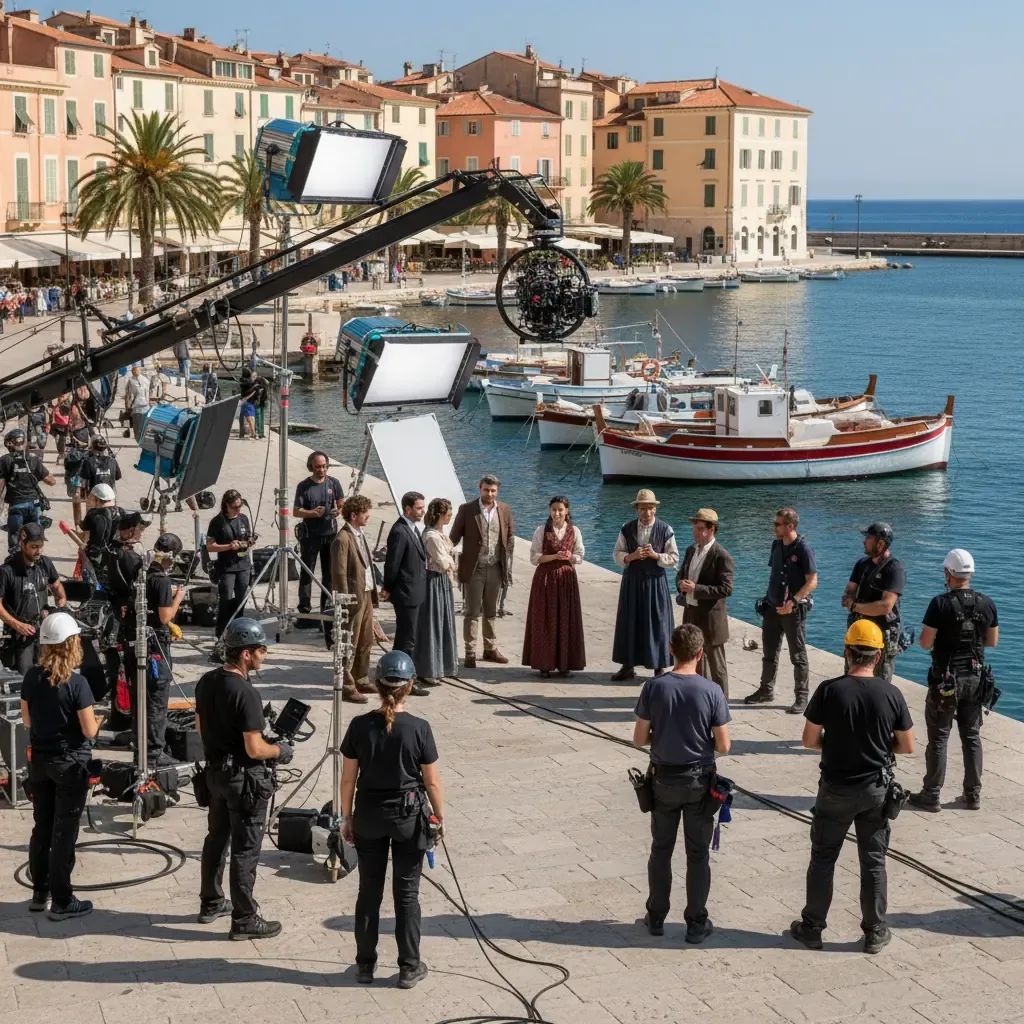
Malta's film sector just welcomed another major Hollywood production, signaling the island's deepening role as a competitive European shooting destination. Guy Ritchie's production of Viva La Madness is currently underway in Valletta, with Jason Statham leading a high-profile ensemble cast. The week-long shoot represents routine business for what has evolved into a year-round economic engine supporting thousands of Maltese workers and hundreds of local enterprises.
Why This Matters
• Immediate economic activity: The production will spend an estimated €2–4 million locally across accommodation, catering, equipment rental, and specialized services—triggering income for hospitality and transport sectors within days.
• Rebate returns real revenue: The Malta government will recapture approximately €600,000–€1.2 million in tax revenue from the production's local spending, thanks to a 30% rebate mechanism that generates €3 in total economic benefit for every euro invested.
• Sustained employment model: The production's presence reinforces job security for 1,800 year-round Maltese crew members—cinematographers, gaffers, and production designers—who now expect consistent work rather than seasonal peaks.
The Current Shoot: Logistics and Timeline
Footage circulating on social media shows Statham, dressed in a tailored brown suit, rehearsing scenes overlooking Valletta's harbor and moving between production trailers on Tuesday. Ritchie was present on set, directing key sequences. The entire Malta segment is scheduled to conclude by the weekend, representing a compressed but concentrated burst of commercial activity for the island.
The production commenced in London during February 2026 and is utilizing Malta as a location hub for plot-critical scenes. According to industry sources, the shoot involves key personnel from cast and crew. This scale generates immediate demand across hospitality chains, rental agencies, security firms, and transportation services. Hotels near Valletta report elevated bookings for the period. Local equipment rental companies have mobilized lighting rigs, grip trucks, and technical infrastructure. Catering firms are contracted to feed the cast and crew throughout the week-long engagement.
The production's compressed timeline is typical of modern film logistics: key exterior sequences are captured in one location, then production moves to the next setting. For Malta, this means intense, concentrated economic activity followed by rapid demobilization.
What Viva La Madness Actually Is
The film is based on J.J. Connolly's 2011 novel, which itself served as a literary sequel to his original Layer Cake book. However, the current film adaptation operates as a standalone feature rather than a direct cinematic sequel to the 2004 Layer Cake film that launched Daniel Craig toward his James Bond franchise. Ritchie and Connolly jointly authored the screenplay, crafting a narrative centered on an unnamed London criminal operator ("X") who relocates to the Caribbean following a high-stakes operation, only to be reclaimed by the capital's criminal underworld.
Statham carries the lead role, marking his third collaboration with Ritchie spanning three decades. Their earlier work together—Lock, Stock and Two Smoking Barrels (1998) and Snatch (2000)—established Statham as an action-capable performer while cementing Ritchie's directorial signature: rapid-fire editing, ensemble plotting, and violent humor.
The ensemble cast is substantial: Vinnie Jones (actor and former professional footballer), Jason Isaacs, Ben Foster, Camila Mendes, Jonny Lee Miller, Babs Olusanmokun, and Puerto Rican artist Raúl Alejandro. Jones, Olusanmokun, and Miller are Ritchie regulars, having worked with him across multiple projects. Mendes takes on the role of a gangster's associate.
Black Bear is handling North American distribution, while Amazon MGM controls international territories. Neither distributor has announced a release date, though industry observers anticipate a 2027 premiere. The production involves Jason Statham's Punch Palace Productions, Thomas Benski's Lumina Studios, Ritchie and Ivan Atkinson's Toff Guy Films, and John Friedberg's Black Bear. Statham's involvement as producer reflects his expanding influence in project development and creative oversight—a trajectory beginning with his breakthrough performances in Ritchie's early gangster films.
The Economics of Location Shooting: Why The Numbers Matter for Malta
When productions like Viva La Madness operate in Malta, they inject capital across multiple sectors simultaneously. The overall spending of €2–4 million locally spans accommodation, catering, equipment rental, security, transportation, and other specialized services. This direct local spending creates immediate economic ripple effects across hospitality, transport, retail, and technical sectors.
The Malta Revenue Department and Malta Film Commission have structured financial incentives to capture this spending systematically. The cash rebate scheme offers productions a base rebate of 30% on all qualifying local expenditures, with the rebate rising to 40% for projects that incorporate Maltese cultural content, portray Malta as itself, or shoot at Malta Film Studios. Qualifying productions must spend a minimum of €100,000 locally and maintain an overall budget exceeding €200,000. The scheme remains active through October 2028.
The rebate model demonstrates strong return on investment for the government: for every euro invested in rebates, the film sector generates economic multiplier effects and significant tax revenue recapture. This means the government's rebate expenditure functions as a profit-generating investment, not a subsidy.
The film sector has become increasingly significant for Malta's economy. The sector has generated substantial value for the national economy, secured multiple major productions, and sustained thousands of jobs. Over recent years, productions like this have consistently demonstrated the sector's role as a permanent economic component.
What This Means for Residents
For most Valletta residents, the presence of Statham, Ritchie, and their crews generates momentary disruption and curiosity. Traffic congestion around shooting locations, equipment trucks lining streets, security cordons, and temporary street closures alter daily rhythm. By week's end, normalcy returns.
But structurally, each production landing in Malta reinforces an economic model that has proven durable across political administrations. The rebate system, the expanding Maltese crew base, and the island's geographic and climatic versatility create a self-reinforcing cycle: productions choose Malta because of established infrastructure and predictable incentives; their spending expands the local supply chain and workforce; future productions arrive with greater confidence; the sector matures.
For workers in hospitality, transport, retail, and technical services, productions like Viva La Madness represent immediate short-term income supplementation. When production demands hotel accommodations for extended periods, hoteliers activate additional staff. When catering companies feed production crews, food suppliers see purchasing spikes. Transport companies deploy available vehicle inventory. Security firms mobilize personnel. This pattern repeats across multiple productions operating across the island throughout the year.
The broader employment story is more significant: Malta's film crew base has expanded significantly over recent years, growing from smaller numbers to over 1,800 year-round professionals today. These aren't casual laborers; they're cinematographers, production designers, gaffers, sound engineers, and post-production specialists commanding competitive salaries and year-round or semi-permanent employment. Hundreds of Maltese businesses have participated in the film sector, spanning hospitality, transport, retail, equipment rental, and post-production services.
Ritchie's Recurring Relationship with Malta
Ritchie's return to Malta for Viva La Madness after previously filming Swept Away (2002) on Comino underscores the deepening relationship between established directors and the island's production ecosystem. Filmmakers develop institutional knowledge: they know which locations work, whom to hire, which service providers deliver reliable results, which post-production houses offer competitive rates. This familiarity drives repeat engagement, stabilizing revenues for both the government (through rebates recaptured as tax revenue) and private businesses dependent on production cycles.
Scaling the Model: From Location Shooting to Year-Round Production
Malta's evolution as a production hub extends beyond location shooting. The infrastructure supporting productions creates pathways for post-production and specialized work—higher-margin activities requiring year-round, skilled labor. This structural shift moves the sector beyond episodic exterior filming toward more comprehensive production services.
Regional competitors—Hungary, Ireland, Croatia, Morocco—offer analogous incentives, but Malta's combination of reliable Mediterranean weather, diverse topography accommodating urban and rural aesthetics, English-speaking workforce, and EU legal framework remains defensible. The government's commitment to maintaining rebate levels through October 2028 signals confidence in the model's sustainability and competitiveness.
The Invisible Economy After the Trucks Depart
Once Ritchie's production leaves Valletta by week's end, the visible infrastructure—catering tents, grip trucks, production trailers—vanishes. But the economic footprint persists in tax receipts, employment payments, and inventory turnover. Hotels retain revenue. Equipment rental companies collect fees. Transport providers capture fuel and mileage charges. These transactions ripple through the economy as workers spend wages, businesses pay suppliers, and the government collects taxes.
The cumulative effect demonstrates that the film sector has transformed from a seasonal anomaly into a permanent economic component for Malta.
For Malta's economic planners, Viva La Madness represents validation of a strategic bet: that a small Mediterranean nation could architect itself into a globally competitive production hub. The data—consistent growth in production activity, expanding crew base, and increasing international producer confidence—suggests the strategy is paying off and likely to persist well beyond 2028.


