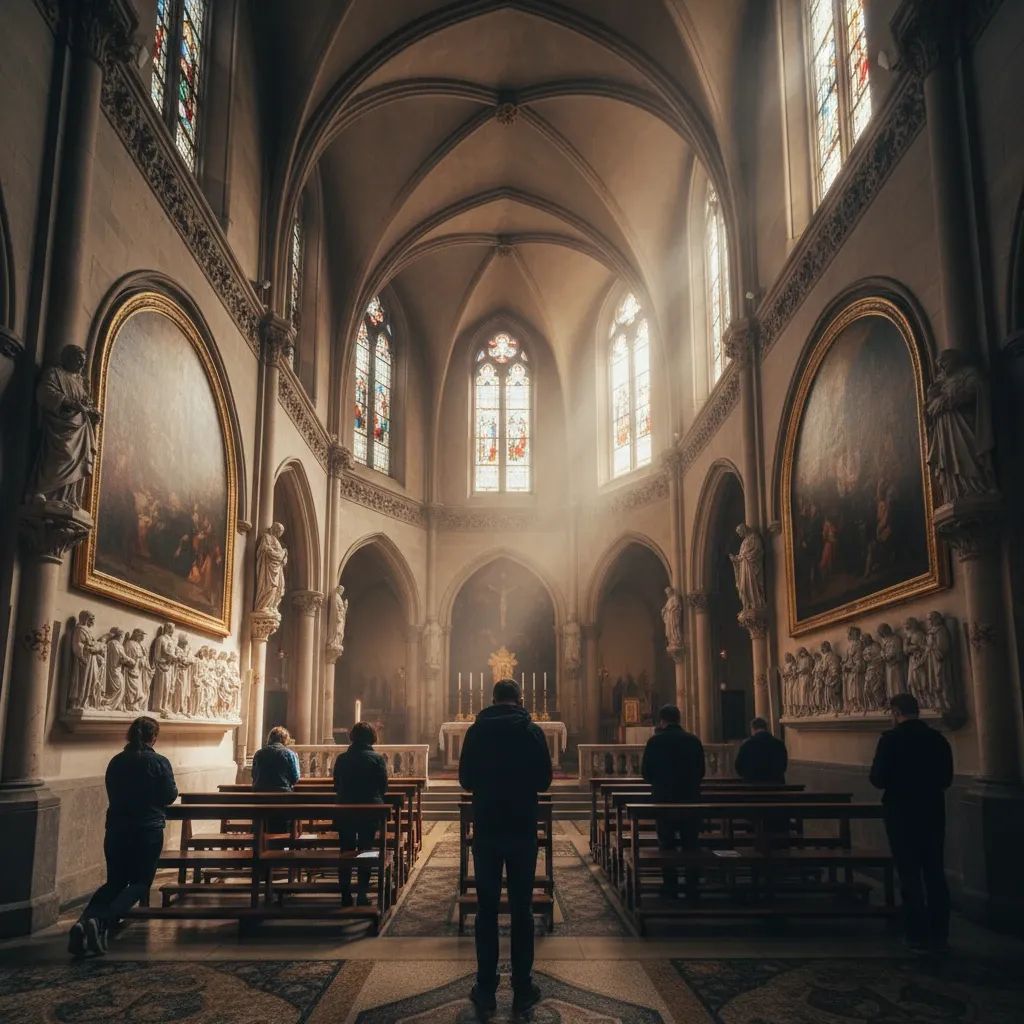
Malta's post-war postcard industry carved a unique niche in the Mediterranean by embracing artist-driven watercolour illustrations at a time when photography was sweeping the market elsewhere. While photographic postcards dominated globally, a handful of Malta-based artists and publishers pursued a more painterly approach, transforming local landscapes and baroque architecture into delicate watercolour souvenirs that resonated with tourists and residents alike.
Why This Matters:
• Cultural legacy: These postcards documented Malta's post-1945 transformation, capturing a bygone era before modern tourism and technology reshaped island life.
• Artistic shift: Artists like Mark Mallia and firms such as Stephen Formosa Ltd. moved production in-house, ending decades of reliance on foreign printers.
• Collectible market: Original post-war watercolour postcards now offer a tangible link to Malta's mid-century visual identity, blending art with postal history.
From Foreign Dependence to Local Production
Before World War II, Malta's postcard market relied almost entirely on overseas printers in Italy, the UK, Germany, and Switzerland. Artists such as Edward Caruana Dingli, Vincenzo d'Esposito, and Luigi Maria Galea created watercolour compositions, but publishers abroad controlled production and rarely credited the painters.
The post-war period brought a fundamental change. Advances in local colour printing technology enabled Malta-based publishers to print postcards themselves, cutting costs and shortening turnaround times. Artists began self-publishing or collaborating directly with small firms, a departure from the pre-war model where third-party editors held the reins. This localized production meant Malta's visual narrative was increasingly shaped by those who lived on the islands, rather than foreign intermediaries interpreting the landscape from afar.
Among the earliest pioneers was Ralph Laver, who issued the first post-war map postcard of Malta, praised for its elegant graphics and precision. Publishers such as Perfecta, the Cathedral Library in Sliema, the ABC Library in Valletta, Joseph Calleja, the Import and Export House, and Alfred Galea Zammit joined the market, producing sets that showcased colourful, striking graphics alongside traditional photographic views.
The Artists Behind the Postcards
Malta's watercolourists adhered largely to a traditional "Italianate vedutisti" style, depicting realistic, pleasant landscapes that appealed to both tourists seeking souvenirs and locals commemorating familiar scenes. This aesthetic choice reflected Malta's colonial heritage and preference for documentary realism, which left little room for European avant-garde movements like Art Nouveau.
Mark Mallia (1965–2024) stood out in the 1980s for his transparent, feathery, ethereal landscapes, often self-published or included in his "Spheres" sets. His approach contrasted with the more straightforward realism of his contemporaries, offering a lighter, almost dreamlike interpretation of Maltese scenery.
From the 1980s onward, two names dominated the market: 'Angelo' and Stephen Formosa Ltd. Their watercolour landscapes, often signed with unclear initials or monograms, depicted iconic sites like the Grand Harbour, Msida Creek, and St Paul's Bay. These images became ubiquitous in souvenir shops and bookstores, serving as the visual shorthand for Malta in the minds of thousands of visitors.
Other contributors included Captain J.B. Oakley, known for the charming 'Life in Malta' postcard set, and lesser-documented artists like Anton E. Mercieca and 'Riccobaldi', whose watercolour views illustrated select Maltese postcards. Bonavia Printers produced specific niche subjects, such as a watercolour depicting the Sliema Sea Water Distilling Apparatus, reflecting the practical side of island infrastructure alongside scenic beauty.
A Regional Outlier in the Mediterranean
While Malta sustained its watercolour niche, other Mediterranean nations followed different trajectories. Italy saw a post-war economic boom that fueled mass tourism and a wave of commercially driven photographic postcards, many veering into kitsch. Pre-war illustrators like Aurelio Bertiglia had popularized watercolour art, but the post-war era favored photography for speed and volume.
In Greece, postcards emphasized the country's role as the "cradle of Western civilization," with photographic images of ancient ruins, mythology, and coastal scenery. Spain experienced a transition where detailed drawings of regional costumes gave way to colourful photographs of flamenco dancers, while embroidered postcards remained popular until the 1980s. France, after a "Golden Age" before World War I, saw postcard usage decline post-war, with hand-coloured images surviving mainly as collectibles.
Malta's sustained artist-driven production set it apart, reflecting a smaller, more intimate market where local painters could self-publish and maintain direct relationships with buyers. The traditional style favored by Maltese watercolourists aligned with tourist expectations, ensuring commercial viability even as photography became cheaper and faster.
What This Means for Collectors and Cultural Heritage
For collectors, original post-war watercolour postcards from Malta represent a tangible link to the island's mid-century visual identity. These cards served dual purposes: as functional mail sent by British servicemen, tourists, and locals, and as artistic souvenirs capturing a period of transition. The muted colours and vintage aesthetic of early post-war cards, such as a 1945 example showing the interior of a Maltese church, evoke the atmosphere of recovery and rebuilding.
The failure to credit artists by many publishers remains a frustration for historians and collectors. While firms like Perfecta and Stephen Formosa Ltd. are well-documented, individual painters often remain anonymous, their work attributed generically to the publisher. This omission complicates efforts to trace artistic lineages and assess individual contributions to Malta's postcard heritage.
Today, as digital communication has rendered postcards largely obsolete, these watercolour illustrations offer a window into pre-digital Malta. They document streets before traffic congestion, harbours before marina developments, and village squares before renovation projects. For residents interested in local history, these postcards are not mere curiosities but ephemeral snapshots of identity, commemorating a time when the postal system carried both messages and artistic expression.
The Legacy of a Niche Market
The post-war watercolour postcard industry in Malta thrived because it balanced artistic ambition with commercial pragmatism. Artists like Mark Mallia, Stephen Formosa, and Ralph Laver understood that tourists wanted recognizable scenes, not abstract experimentation. Their work followed a formula—pleasant, realistic, and traditional—but within that framework, they captured the light, colour, and texture of Malta with genuine skill.
The shift from foreign printing to local production also reflected broader economic changes. As Malta's economy modernized and tourism grew, the postcard industry became a microcosm of the island's evolving relationship with its own image. By controlling production, Malta-based publishers ensured that the visual representation of the islands aligned with local priorities and sensibilities, rather than foreign stereotypes.
For contemporary artists and cultural institutions, the post-war watercolour postcard serves as a reminder of how commercial art can intersect with cultural documentation. These cards were not high art, but they were accessible, affordable, and widely circulated, reaching audiences that galleries and museums never could. In an era where digital images dominate, the tactile, hand-painted quality of these postcards offers a counterpoint—a slower, more deliberate mode of visual communication that defined an entire generation's understanding of Malta's identity.