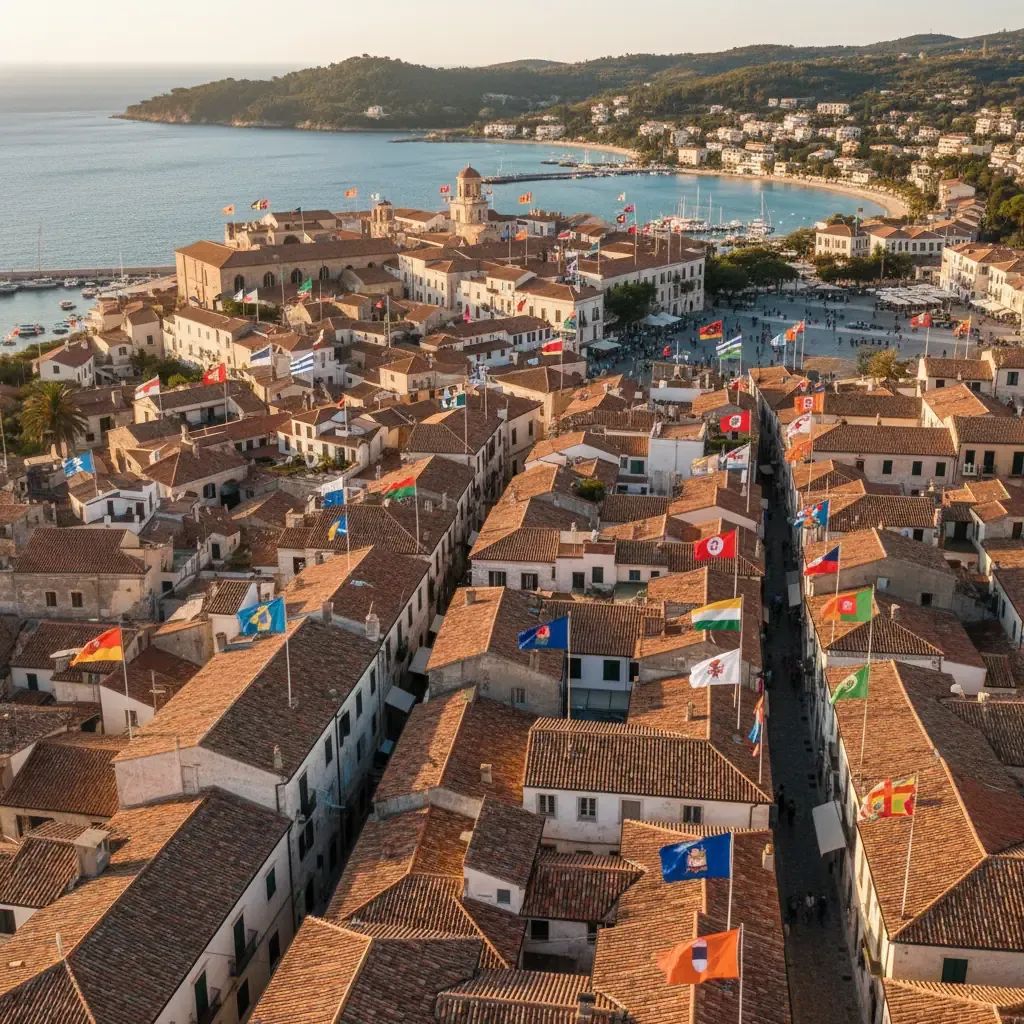
Calypso Radio 101.8 has launched an ambitious weekend initiative designed to transform Malta's rooftops and public spaces into a coordinated flag display, with Sunday, April 19, marking the date when residents, clubs, schools, and businesses will simultaneously hoist flags in a bid to establish a new national record. What began as a creative community engagement idea has already attracted over 200 advance registrations, suggesting genuine appetite for participatory civic moments in the archipelago.
Why This Matters
• Simple entry: Any flag type (national, regional, or organizational), any location with a mast—participation requires only a photo posted to Facebook before the counting period closes on April 19.
• Official verification happening live: Malta Records will monitor the dedicated Facebook thread throughout the day, using a real-time tallying method to authenticate submissions as they arrive.
• National baseline established April 21: Calypso Radio will broadcast the verified count at 7:30 AM, formally cementing this inaugural achievement as Malta's official record for mast-displayed flags.
Understanding Malta's Record Landscape
The global context provides useful perspective. In August 2022, the Federation of Indian Associations and State Bank of India coordinated 826 different flags flown simultaneously in New York—a feat involving institutional coordination and substantial logistical planning. Malta's approach diverges significantly in philosophy and scale. Rather than pursuing international benchmarking or strict uniformity requirements, The National Flag Record embraces inclusive participation. A Maltese flag counts the same as a band club's colors or a school's institutional banner. This deliberately open framework prioritizes breadth of engagement over competitive stricture.
The distinction matters for understanding what Calypso Radio is actually attempting. This is fundamentally a measurement of community activation, not a test of organizational prowess. The station has positioned itself as a facilitator rather than orchestrator, emphasizing that genuine record-breakers will be the hundreds of individuals climbing onto rooftops and schoolyards across the islands.
How Participation Works—And Why It Matters Procedurally
The mechanics depend almost entirely on social media as both infrastructure and verification mechanism. On the morning of April 19, Calypso Radio publishes a dedicated Facebook post. From that moment forward, participants photograph their flying flag and upload the image to the comment thread, including their name and locality. Malta Records monitors these submissions in real time, validating entries based on basic criteria: visible flag, confirmed location, legitimate contributor identity.
This crowdsourced model creates both opportunity and friction. The opportunity: anyone with internet access and a smartphone can participate remotely. No registration fees, no appointment windows, no bureaucratic gatekeeping. The friction: online verification is inherently open to ambiguity. What prevents someone from submitting multiple photos of the same mast? How will Malta Records distinguish between genuine simultaneous displays and submissions timed across different hours? The organization has not publicly detailed its moderation protocols, though their track record managing previous national records suggests institutional rigor behind the scenes.
For residents considering participation, the practical pathway is clear. No advance registration is mandatory, though the Calypso Radio website accepts optional pre-registration for those wanting updates. On Sunday morning, simply hoist your flag, photograph it (ensuring the mast and flag are clearly visible), and post the image with your name and locality to the official thread. Weather permitting—a meaningful caveat in April when Mediterranean winds can be unpredictable—the flag should remain airborne throughout the day to maintain legitimacy.
What This Means for Residents
The event fundamentally asks: How many households, organizations, and institutions across the archipelago will coordinate their actions for a single day? For band clubs, participation aligns naturally with existing festive traditions. These organizations already maintain masts and regularly fly club colors during celebrations and matches. The Calypso initiative essentially piggybacks on established rituals, asking them to standardize their efforts to a predetermined date.
Schools face lower barriers. Most Maltese schools maintain flagpoles and regularly display the national flag. Requesting students and staff to photograph the flag on a specific morning requires minimal disruption to the academic calendar. Local councils, which coordinate community life in each locality, could amplify participation by publicizing the event through existing communication channels.
Individual households represent the wildcard. Malta's population of roughly 520,000 residents spread across just over 300 square kilometers creates dense neighborhoods where rooftop flags are visible from street level. In localities where community identity runs deep—and in Malta, this encompasses most villages and towns—visible coordinated action carries cultural weight. Whether suburban households, apartment complex residents, and business proprietors will perceive sufficient value in climbing to their roofs for a photograph remains the genuine test of the event's resonance.
Timing and Cultural Alignment
The April 19 date positions the initiative during a favorable window in Malta's social calendar. Easter celebrations have recently concluded, energy levels remain elevated, and many localities are entering the preparatory phase for their annual festa celebrations scheduled throughout the summer. Flag displays are already embedded in these traditions. The initiative doesn't introduce a novel ritual; it coordinates an existing one.
Additionally, weekend timing minimizes workplace scheduling conflicts. Sunday participation avoids the employment and school commitments that might suppress weekday turnout. Calypso Radio has chosen deliberately to maximize accessibility across demographic and professional segments.
The Role of Malta Records in Legitimacy
Malta Records brings institutional credibility to what could otherwise be dismissed as a social media novelty. This organization has verified diverse local records—from culinary achievements to costume assemblies—and brings documented methodology to verification. Their presence transforms April 21's announcement from a radio station congratulating itself into an officially recognized national achievement with archival permanence.
The announcement broadcast will likely extend beyond a simple numerical reveal. Expect highlights showcasing participating organizations, geographic breakdowns revealing which localities achieved highest participation, and recognitions of particularly creative flag displays. This retrospective element reinforces the celebratory rather than purely competitive framing that Calypso Radio has consistently emphasized.
Realistic Assessment of Success Variables
Several factors will determine whether participation meets, exceeds, or disappoints expectations. Weather is critical. April in Malta typically brings moderate conditions, but spring winds and occasional rain can discourage rooftop activity. A rainy Sunday morning would materially reduce participation without requiring any messaging failure on Calypso Radio's part.
Social media visibility will substantially influence turnout. If the official Facebook thread gains algorithmic prominence and reaches participants across diverse networks, participation likely expands. If the post underperforms algorithmically, grassroots sharing becomes essential. Community leaders, band club administrators, and school coordinators will effectively determine reach through their own networks.
Competitive local identity cuts both ways. In Malta, neighborhood and organizational rivalries run deep. If localities perceive the event as an opportunity to demonstrate collective pride—to visually assert their place on the national stage for a day—participation could exceed expectations. Conversely, if the initiative feels imposed or alien to existing community traditions, engagement may plateau.
Broader Implications for Community Coordination
The flag record attempt models a low-cost, scalable method for generating synchronized civic participation. Unlike infrastructure projects or legislative initiatives, coordinating visual displays requires minimal resource investment. No permits, no construction, no taxpayer expenditure. Just smartphones, social media, and existing masts.
For small island nations or communities with limited budgets, this approach offers templates for fostering collective action around heritage and identity. The precedent set by Malta could influence similar initiatives elsewhere—communities seeking accessible mechanisms for public coordination without heavyweight organizational machinery.
What Happens After April 21
Once the record is established, the question becomes whether it becomes a recurring annual event or a one-time spectacle. If participation substantially exceeds expectations—if the count reaches several thousand flags—the achievement gains staying power. Future record-breaking attempts would need to surpass this baseline, creating natural competitive incentive for continued annual participation.
Alternatively, if participation falls short of Calypso Radio's informal expectations, the event may fade into archival memory rather than become a sustained tradition. Either outcome carries legitimate value. A successful inaugural attempt validates community enthusiasm for coordinated public expression. A modest initial result establishes a foundation upon which larger future efforts can build.
The real measure of the initiative's success extends beyond the numerical count on April 21. It reflects whether Malta's residents perceive value in synchronized, visible, coordinated action—whether the islands' deep community identities can momentarily align behind a shared objective that costs nothing except willingness to climb a ladder and take a photograph.