
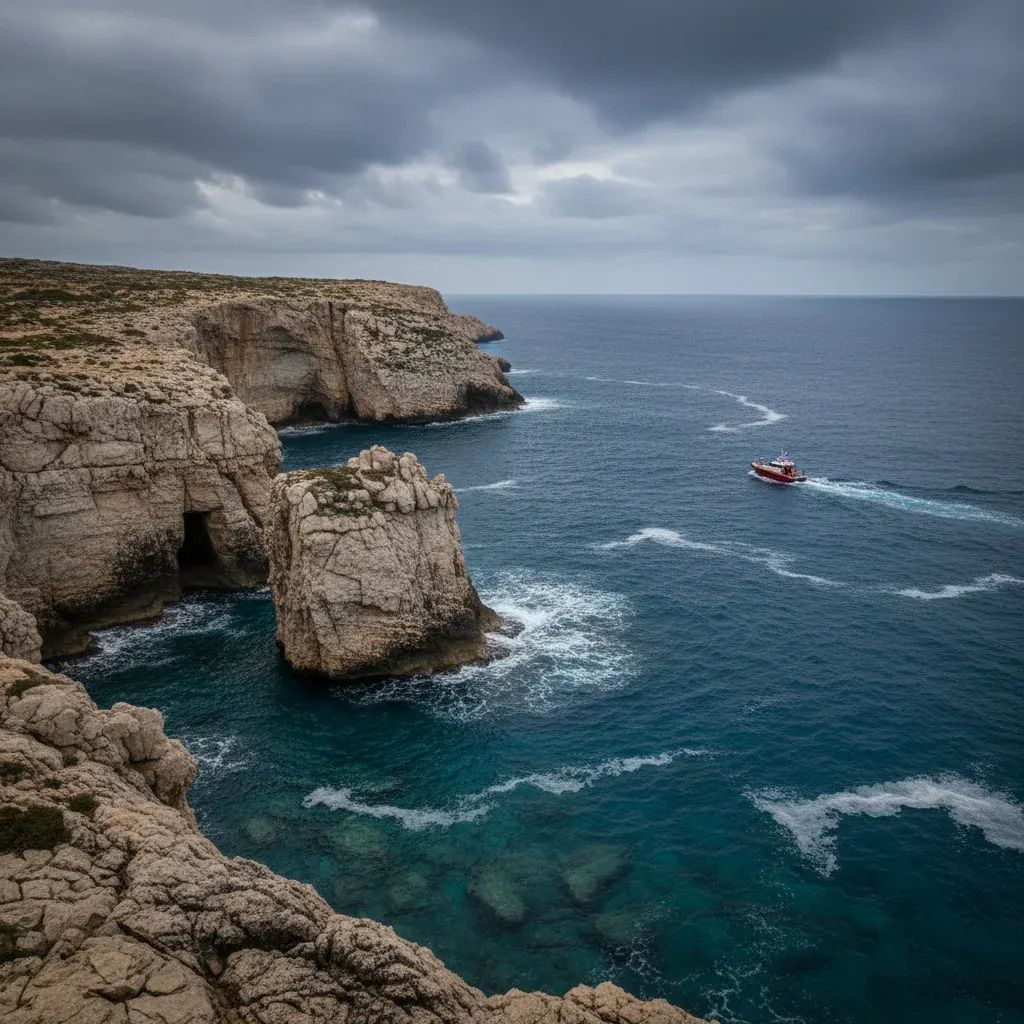
A loggerhead turtle named Red-X narrowly escaped death at Little Armier this weekend after volunteers hauled the animal—and a 2-meter wooden log—from the Mediterranean surf in what rescue crews described as one of the most hazardous retrieval operations of the season. The turtle had swallowed fishing tackle, with nylon line protruding from its mouth and snagged on the drifting timber, preventing it from diving or feeding.
Why This Matters
• According to Mediterranean marine conservation data, over 124,000 sea turtles are caught as bycatch annually in the Mediterranean, with 33,000 to 39,000 dying from entanglement or hook ingestion.
• Nature Trust Malta has documented rising plastic and fishing-debris incidents in Maltese waters, including a 2020 rescue where 28 grams of plastic was found inside a turtle.
• Rough sea conditions required coordinated support from both the Malta Red Cross Coast Lifeguard Rescue Service and Nature Trust's Wildlife Rescue Team, highlighting the growing need for multi-agency marine-animal response.
• Veterinary assessment will determine whether Red-X requires surgical hook removal before release.
The Rescue
Members of the Malta Red Cross first spotted the turtle struggling offshore Saturday afternoon. High waves and strong wind made visual tracking difficult, but lifeguards maintained line-of-sight while radioing Nature Trust Malta's Wildlife Rescue Team, which operates under 24-hour standby with permits from the Environment and Resources Authority (ERA).
A Nature Trust volunteer, trained in protected-wildlife handling, entered the water wearing a flotation harness. Lifeguards positioned a dedicated sea rescue vessel nearby, ready to intervene if the volunteer was swept beyond the surf zone. Once the turtle was secured, the team discovered the entangled log—adding roughly 20 kilograms of drag that would have exhausted the animal within hours.
The coordinated effort reflects protocols refined since Malta's turtle rehabilitation program began in 1999. Lifeguards are internationally certified by the International Life Saving Federation (ILSF) for open-water emergencies, while Nature Trust volunteers include divers, biologists, and marine mammal medics who train specifically for wildlife scenarios.
What This Means for Marine Conservation
Red-X is now at a rehabilitation center in Xrobb l-Għaġin, where veterinarians will use endoscopy to check for internal hooks. If the line entered the esophagus or stomach, surgery may be required; otherwise, the turtle could be released within weeks once the external tackle is removed and the animal demonstrates normal feeding behavior.
Fishing debris has become the leading cause of turtle injury in Maltese waters over the past five years. Between 2015 and 2019, abandoned nets and longline gear accounted for the majority of loggerhead rescues handled by Nature Trust. In 2021, the organization recorded its highest annual caseload since its founding in 2001, with plastic bags and discarded tackle cited as primary culprits.
The problem is systemic across the Mediterranean basin. Loggerheads mistake translucent plastic for jellyfish, their staple prey, and ingest fragments that cause intestinal blockages, starvation, and toxic phthalate absorption. Ghost gear—nets and lines lost or abandoned by commercial fleets—drifts for years, entangling turtles, seabirds, and marine mammals. According to international marine conservation estimates, approximately 150,000 sea turtles are caught annually as bycatch in Mediterranean fisheries, with one in four dying before crews can release them.
Impact on Coastal Communities
For Malta, the intersection of busy shipping lanes, recreational boating, and artisanal fishing creates persistent hazards. The island's limited nesting habitat means every rescued turtle contributes to regional population stability. According to Nature Trust Malta, more than 140 loggerheads have been rehabilitated and released from Maltese facilities since 1999, yet annual rescues continue to climb as microplastics and marine litter accumulate in coastal zones.
Nature Trust Malta recommends that anglers and recreational boaters carry line-cutting tools and report lost gear to the ERA's marine litter hotline. According to the organization, discarded tackle should be disposed of in designated bins at harbors and slipways, not tossed overboard. The organization also notes that divers can participate in underwater cleanup dives, which remove ghost nets before animals become entangled.
Broader Threats
Beyond fishing debris, Malta's turtles contend with boat strikes, habitat degradation, and climate change. Rising sea temperatures alter sand conditions on Mediterranean nesting beaches, skewing hatchling sex ratios toward females and threatening long-term reproductive balance. Coastal development amplifies light pollution, disorienting hatchlings that navigate by moonlight and leading juveniles inland rather than to the surf.
Artificial lighting near beaches is regulated under ERA guidelines, but enforcement remains inconsistent. Marine biologists have documented hatchlings circling parking lots and hotel courtyards in Mellieħa and Għadira, mistaking streetlights for the horizon. The Malta Environment and Planning Authority (MEPA) has proposed stricter zoning for beachfront construction, but the draft regulation awaits parliamentary review.
Volunteer Training and Permits
Nature Trust Malta's Wildlife Rescue Team comprises roughly 30 active volunteers, each holding ERA-issued wildlife-handling permits. Training includes marine mammal first aid, rope-work for entangled animals, and oiled-wildlife protocols. The group is contracted by the Environment Agency to respond to petroleum spills, a role that became critical after a reported 2023 tanker leak in Marsaxlokk Bay coated dozens of seabirds and two loggerheads in bunker fuel.
Lifeguards from the Malta Red Cross complete separate certification in rapid water rescue and vessel handling, with annual refreshers in emergency medical response. Their rapid response vehicles patrol 18 designated beaches during summer months, and crews maintain radio contact with Nature Trust dispatch to coordinate wildlife incidents.
Prognosis and Release
If Red-X passes veterinary clearance without surgery, the turtle will spend two to three weeks in a monitored pool, building strength and demonstrating consistent appetite. Biologists will tag the animal with a passive integrated transponder (PIT) before release, allowing future sightings to be logged in the Mediterranean Sea Turtle Database, a regional repository managed by the International Union for Conservation of Nature (IUCN).
Previous releases have shown that Malta-rehabilitated turtles migrate as far as Libya, Tunisia, and the Aegean Sea, contributing to genetic diversity across nesting populations. Satellite telemetry data from 2022 releases revealed that juveniles spend several years in Maltese coastal waters before dispersing, underscoring the archipelago's role as a critical developmental habitat.
How Organizations Support Marine Animal Protection
Nature Trust Malta operates a 24-hour hotline for marine-animal emergencies. The organization states that residents who spot injured turtles, entangled seabirds, or stranded dolphins should call immediately rather than attempt solo rescues, which can stress animals and endanger untrained handlers. According to the organization, the Wildlife Rescue Team welcomes volunteer applications, with intake sessions held periodically throughout the year.
Meanwhile, beach users can reduce litter by participating in monthly coastal cleanups organized by local councils. The Mellieħa Local Council and Birżebbuġa Environmental Network both host Saturday-morning collections, providing gloves, bags, and data cards to log debris types—information that feeds into EU marine-strategy assessments.
For anglers, Nature Trust Malta notes that switching to biodegradable fishing line and barbless hooks minimizes long-term harm if tackle is lost. Several Maltese tackle shops now stock these alternatives, though uptake remains modest. The Malta Federation of Aquaculture Producers has proposed a gear buy-back scheme to retire older nets and lines, but funding negotiations with the Ministry for Agriculture, Fisheries, and Animal Rights are ongoing.
Red-X's rescue underscores that Malta's coastal ecosystem depends on vigilance from both professionals and the public. Every discarded line, every unreported sighting, and every delayed call reduces the odds for animals already navigating a sea crowded with hazards.


