
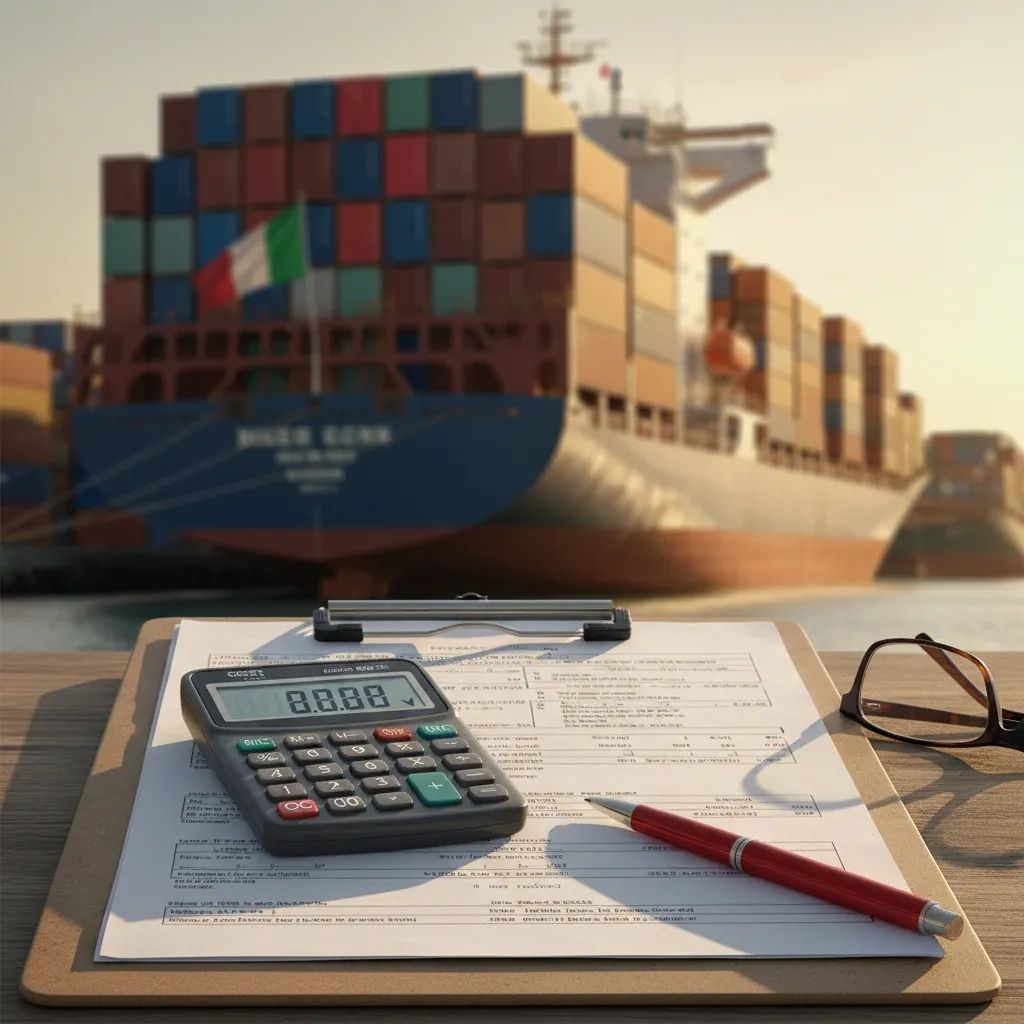
The Malta Association of Tractor and Trailer Operators (ATTO) has calculated that Maltese households and businesses now absorb an additional €654,000 per week in freight surcharges—an annual burden approaching €16.5M—as full implementation of the EU's Emissions Trading System (EU ETS) converges with surging bunker fuel costs. Industry representatives are urging Brussels to suspend ETS obligations on island-bound cargo, warning that the island's geographic isolation transforms the carbon-pricing mechanism into what they describe as a structural penalty on Malta's entire supply chain.
Why This Matters:
• Price pass-through is inevitable: Weekly trailer volumes connecting Malta to mainland Italy now carry an extra €1,006 per round trip, money that flows directly into retail prices.
• Full emissions coverage began January 1, 2026: Shipping lines must now surrender allowances for 100% of verified CO₂ emissions, up from 70% in 2025, plus newly regulated methane and nitrous oxide.
• Consumer inflation projection: The Central Bank of Malta estimates the ETS will lift overall prices by 0.11% to 0.25%, with sectors reliant on imported goods hit hardest.
• Competitiveness concerns: ATTO argues the policy penalizes islands that lack overland freight alternatives, eroding Malta's ability to compete with better-connected EU markets.
The Anatomy of a €1,006 Surcharge
For a single tractor-trailer completing the Genoa–Malta–Genoa circuit—the artery for much of the island's food, industrial goods, and consumer products—operators now invoice an additional €734 purely for EU ETS compliance and €272 for escalating bunker prices. Across the 650 trailers that traverse this route weekly, the cumulative first-quarter increase totals €653,900 every seven days.
To put this in perspective, Genoa, in northern Italy, serves as Malta's primary freight gateway, approximately 1,000 nautical miles away. This geographic distance means every container of food, construction material, and imported good destined for Malta must travel this entire route under ETS coverage, with no alternative overland options available to logistics operators.
Shipping giants such as Hapag-Lloyd have signaled that their ETS surcharges will climb approximately 45% this year compared to 2025, reflecting both the jump to full emissions coverage and the higher auction prices for carbon allowances. Industry data shows EU ETS-related costs per metric tonne of very-low-sulfur fuel oil (VLSFO) on intra-EU voyages rose from $185.04 in 2025 to $319.30 in 2026, a 42.9% year-on-year increase.
Malta's reliance on 54,500 annual trailer journeys across four primary roll-on/roll-off (Ro-Ro) routes—Genoa, Livorno, Salerno, and Catania—magnifies the exposure. Unlike continental neighbors that can reroute freight by rail or road, Malta's insularity means every pallet, every refrigerated container, and every vehicle faced the full ETS levy immediately when 2026 began.
What This Means for Residents
The €16.5M annual cost increase does not vanish into balance sheets; it reappears on supermarket shelves, in hardware stores, and in the invoices of manufacturers who import raw materials. Retailers working on thin margins will adjust prices to preserve profitability, while industries dependent on just-in-time delivery face higher working-capital requirements.
What will get more expensive first? Refrigerated goods—dairy, meat, and fresh produce—face the fastest price increases because these products have the highest per-kilogram transportation costs. Construction materials, vehicles, and imported furniture will also see rapid increases, as these sectors depend heavily on containerized freight. Electronics and packaged goods will follow, with impacts typically reaching supermarket shelves within 4-8 weeks as retailers replenish inventory at new contract rates.
When will you notice it? Expect visible price increases on grocery receipts by late February to March 2026, particularly on imported fresh products and branded goods. Retailers are already signaling price adjustments for Q1 2026 inventory purchases, so the impact will accelerate as current stock from late 2025 is depleted.
Government relief measures: The Maltese government has not yet announced dedicated ETS relief packages, though the Social Climate Fund—a European mechanism still under negotiation—may eventually provide targeted support to vulnerable households. Industry groups, including ATTO, have urged local officials to engage the European Commission on potential exemptions or transitional relief for island economies, similar to carve-outs granted to Greek island ferry routes.
The Central Bank of Malta's modeled inflation range—0.11% to 0.25%—may seem modest, but it compounds existing cost-of-living pressures. A household spending €500 per month on goods sensitive to shipping costs could see an additional €6 to €15 in annual expenses from ETS pass-through alone. When combined with parallel hikes in electricity tariffs, VAT-inclusive fuel, and the forthcoming ETS2 extension to road transport fuels in 2028, the cumulative burden on disposable income becomes more pronounced.
Small and medium enterprises—particularly those in hospitality, retail, and light manufacturing—face a double bind: absorbing surcharges risks eroding already narrow margins, while passing them on may deter price-sensitive customers or prompt buyers to source from cheaper, non-EU suppliers not subject to the same carbon-pricing regime.
Mediterranean Ripple Effects and Regional Comparisons
Malta is not alone in facing these pressures. Across the Mediterranean, island and peripheral economies are absorbing disproportionate ETS costs. Greek ferry operators anticipate ticket increases of 10% to 20% on most routes from May 2025, with connections to Crete and the Adriatic potentially surging 40% to 50%. Greece secured temporary exemptions for island routes serving populations under 200,000, a carve-out not extended to Malta. In Cyprus, low-income households could face cost-of-living increases exceeding 1.4% once the broader ETS2 encompassing heating and road-transport fuels takes effect. This regional pattern underscores how the ETS's design, while environmentally sound, creates disparate impacts across Europe's geography.
The Phase-In Timeline and Expanded Scope
The maritime sector entered the EU ETS on January 1, 2024, covering 40% of verified emissions. That share rose to 70% in 2025 before reaching the current 100% threshold. Starting this year, the system also captures methane (CH₄) and nitrous oxide (N₂O), a change that disproportionately affects vessels powered by liquefied natural gas (LNG), which emit significant methane slip during combustion.
Every ship calling at an EU or European Economic Area (EEA) port must monitor, report, and surrender allowances for emissions generated on the entire voyage, including legs that occur outside EU waters. For Malta-bound freight, this encompasses the journey from Italian terminals, where operators purchase or draw down allowances at prevailing market rates. Volatile allowance prices—driven by industrial demand, energy-market fluctuations, and geopolitical shocks—introduce unpredictability into freight-rate setting, complicating long-term contracts and procurement planning.
Calls for Suspension and Policy Reconsideration
ATTO has demanded an "immediate suspension" of ETS obligations on Malta-bound maritime freight until the European Commission develops a mechanism that accounts for the operational realities of island economies. The association contends that applying a uniform carbon price to jurisdictions with zero overland alternatives transforms climate policy into a de facto geographic tax, one that mainland member states with diversified logistics networks can mitigate through modal shifts to rail or intermodal hubs.
"We are not opposing decarbonization," an ATTO representative emphasized in recent statements. "But the current design treats Malta as if it had the same freight optionality as Bavaria or the Benelux. It doesn't, and that structural difference demands tailored instruments."
The European Commission's Position
Brussels acknowledges the disproportionate burden on islands and has allocated additional free allowances to support maritime decarbonization projects in affected member states. The Commission's 2024 impact assessment cited the Central Bank of Malta's inflation estimate as evidence that price effects remain "modest and manageable" within the broader context of EU climate goals.
Officials argue that the ETS creates a price signal strong enough to accelerate investment in alternative fuels, slow steaming, shore power, and vessel retrofits—technologies that will, over time, lower both emissions and operating costs. The Commission also points to the planned Social Climate Fund, financed by ETS2 revenues, as a mechanism to cushion vulnerable households and small businesses against transitional shocks.
Yet the fund's design and disbursement timelines remain under negotiation, and industry groups question whether targeted rebates can fully offset the regressive impact on geographically isolated economies.
Broader Strategic Implications
Malta's predicament illuminates a broader tension within EU climate architecture: the challenge of designing market-based instruments that are both environmentally effective and economically equitable across 27 member states with vastly different geographies, infrastructure endowments, and trade dependencies.
Shipping lines are already pivoting toward biofuels, LNG, and slow-steaming protocols to reduce allowance purchases, while logistics firms integrate carbon-accounting tools into contract negotiations to price ETS exposure transparently. Some operators are exploring short-sea shipping and rail intermodal solutions for mainland routes, but these options remain largely unavailable to Malta-bound cargo.
The €654,000 weekly surcharge is not merely a line item on a freight invoice; it is a harbinger of the cost structures that will shape Malta's import-dependent economy for the remainder of the decade. How policymakers in Valletta and Brussels reconcile the island's decarbonization obligations with its logistical constraints will determine whether the ETS accelerates a fair energy transition—or becomes a persistent drag on competitiveness and living standards.


