
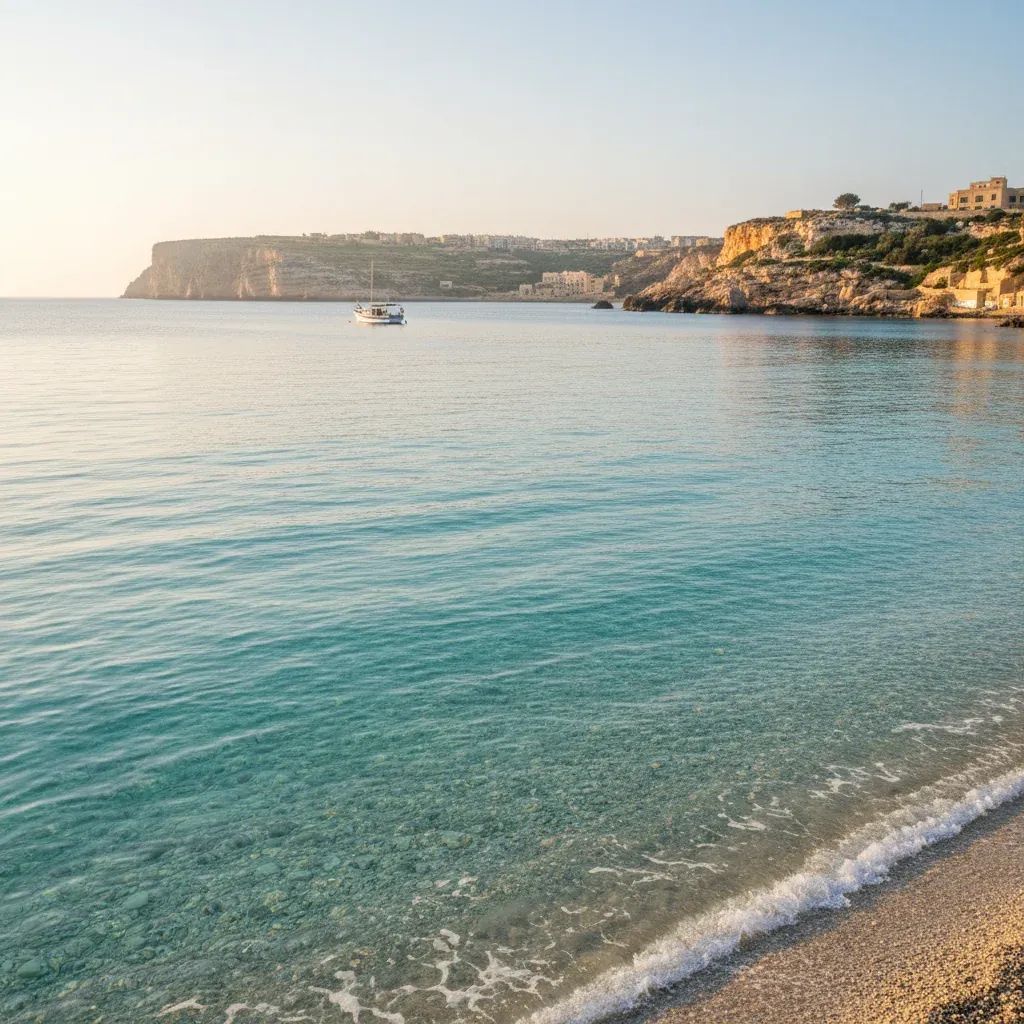
The waters off Comino are clear again. Transport Malta concluded a salvage operation this week, pulling a grounded vessel from Santa Marija Bay and lifting associated debris from the seafloor—three months of residual chaos from January 2026 finally resolved. The removal matters more than routine maintenance; it signals that Malta's maritime recovery machinery is functioning, even as the archipelago faces a reckoning about its vulnerability to the kind of extreme weather that keeps getting worse.
Why This Matters
• Summer readiness: A major navigational hazard in one of Malta's busiest bays disappears before the tourist season accelerates, reducing collision risk.
• Unfinished business: Dozens of other wrecks, sunken fishing boats, and scattered debris remain buried or beached across Maltese waters, requiring private owners to fund their own salvage operations.
• Climate warning signals: The storm exposed that Malta lacks the coastal defenses, insurance coverage, and adaptation infrastructure to weather intensifying Mediterranean weather patterns.
When Storm Harry struck on January 20, 2026, it did something rare: it unified scientific consensus and public experience into undeniable fact. Wind gusts exceeded 100 kph. The sea rose beyond historical norms. Infrastructure designed for calmer epochs simply could not hold. A boat washed into Santa Marija Bay and stayed there, a visible reminder of Malta's vulnerability to extreme weather.
Transport Malta deployed specialist divers and two support vessels—Sea Express and Sea Express II—over a four-day window starting Tuesday. After issuing advance notices to mariners, crews tackled both the grounded craft and surrounding debris. The operation concluded Thursday. Straightforward work, competently executed. Yet the backdrop deserves examination: why did this take three months? Why, when the operation ran so smoothly, do dozens of other maritime casualties remain in Maltese territorial waters?
The Real Toll Still Being Calculated
The official insured damage from Storm Harry topped €12 million—primarily water intrusion into homes and commercial premises across coastal towns. Għar Lapsi bay was reshaped, sections of the Sliema Chalet vanished into the sea, a fragment of Filfla the nature reserve broke away, and Valletta's Ta' Ġieżu church flooded with seawater that damaged centuries-old religious artwork. Road crews removed approximately 460 tonnes of debris within 48 hours; Marsaskala alone contributed 370 tonnes of that total.
But the real financial impact occurred where insurance barely penetrates. The aquaculture sector absorbed €5 million-plus in losses as fish farms faced equipment failure and contamination. Farmers, mostly uninsured, tallied hundreds of thousands in damage as polytunnels shredded, greenhouses collapsed, and the strawberry season teetered on collapse. Fishing vessels, catering establishments, marinas—each sector carried losses measured in individual catastrophes rather than aggregate reporting. The true aggregate remains fragmentary because Malta's economy runs on islands of uninsured vulnerability.
The Maltese government responded with directed relief: €1 million for private property claims up to €5,000 each, distributed through Transport Malta and the Ministry for Transport, Infrastructure, and Public Works, though the fund excludes damage to solar panels, fish farms, and greenhouses. Sixty voluntary organizations shared €330,000 on a tiered basis, full reimbursement up to €10,000, then capped payouts of €30,000 at 60-80% recovery rates for larger losses. Applications for the private property fund closed February 9.
The Agriculture Ministry tasked farmers with documenting field damage via the Biedja Cam geotagged photo platform, layering evidence for potential EU-backed financial assistance eventually. It was reactive crisis management overlaid with the hope that European funding machinery would eventually compensate what local budgets could not.
Infrastructure Remains Fractured
By early April 2026, three months post-storm, significant portions of Malta's coastal infrastructure remained cordoned off or under repair. The Valletta fast ferry terminal, which authorities described as having suffered "devastating repercussions," neared operational status after intensive refurbishment. Yet the Marsaskala promenade still bore visible gaps; the Żebbuġ-Mdina rural road remained closed through March with repairs extending potentially longer. Restoring Għar Lapsi bay alone carried a €2 million price tag—a sum reflecting coastal reconstruction at scale.
For residents and businesses: Most coastal access restrictions are expected to fully lift by June 2026, though certain areas may remain under review. Check with your local council for site-specific reopening timelines. Additionally, insurers are reviewing storm-related claims and may adjust premiums for properties in high-risk coastal zones in the coming renewal cycle—contact your provider for updated coverage details.
Residents' advocacy networks in affected towns pushed back against what they termed "quick-fix" solutions, demanding science-based, long-term coastal protection that accounts for rising sea levels and the Mediterranean's shifting climate patterns. Their message was neither radical nor unreasonable: we cannot rebuild what was destroyed only to watch it break again when the next cyclone arrives. That position aligned with emerging governmental thinking, though policy response remained cautious and incremental.
What Remains Underwater
The Comino wreck removal revealed no shortage of vessels still requiring salvage. Yachts washed ashore in Birżebbuġa. Fishing boats littered roads in Marsaxlokk. Mġarr Marina sustained structural damage both above and below the waterline, with repairs continuing into spring. The non-governmental organization Żibel conducted repeated beach clean-ups, extracting tonnes of plastics, glass, wood, and polystyrene—evidence that storm debris continues circulating in nearshore zones and shallow anchorages.
Navigation alerts remain active for several areas where submerged debris persists. Recreational boaters should avoid uncharted approaches to Birżebbuġa, Marsaxlokk, and Mġarr Marina until clearance operations conclude. Transport Malta publishes weekly updates on hazard zones; check their marine notices before departure.
No public inventory exists cataloging all remaining submerged or beached vessels. The €1 million government fund for uninsured boat damage hints at numerous private craft requiring owner-funded salvage; some damage may never be formally reported. Transport Malta's success with Santa Marija Bay demonstrates technical capability, yet the sheer volume of maritime casualties means certain debris will languish in less-trafficked inlets for months ahead.
Seeking Storm Compensation: A Resident's Guide
If your claim remains pending: The government's private property relief fund closed February 9, but supplementary EU funding may become available through the Agriculture Ministry (for farm damage) and regional development programmes. Contact your local Member of Parliament or municipal office for guidance on alternative compensation channels. The Malta Hotels and Restaurants Association (MHRA) and sector-specific chambers maintain assistance programmes for affected business owners—reach out directly if your claim stalled.
If you received partial compensation: Document all remaining repairs with photographs and quotations. Additional EU funding tranches may support second-phase restoration—retain all receipts and official storm-damage assessments.
Building Something That Lasts
Malta's Climate Action Authority initiated preliminary consultation toward a National Climate Adaptation Plan, recognizing that reactive crisis management cannot indefinitely substitute for structural resilience. Malta Vision 2050, the government's long-range strategic framework, mandates that by 2030 all critical infrastructure operators—energy, transport, water, telecommunications—develop formal climate adaptation plans detailing vulnerability assessment, risk analysis, and swift response protocols.
The Malta Hotels and Restaurants Association (MHRA) called publicly for a systematic post-mortem on Storm Harry, advocating for cross-sector collaboration and concrete preparedness measures. Proposals included implementing a mobile alert system delivering real-time guidance during severe weather, addressing communication failures that left residents uncertain about school closures and workplace decisions during the tempest's peak hours.
Infrastructure projects moving forward will incorporate elevated sea levels and intensified storm patterns into design specifications. Low-lying coastal zones are being reassessed for improved drainage, physical barriers, and road layouts engineered to withstand storm surge without catastrophic failure. Yet funding constraints, bureaucratic inertia, and the sheer scale of required adaptation mean implementation will span years rather than months.
The Santa Marija Bay clearance represents tangible progress in Malta's protracted recovery. Yet summer tourism approaches, climate scientists warn of intensifying Mediterranean volatility, and countless vessels still rest on Maltese seafloors awaiting removal. For coastal residents and businesses still totaling losses, the wreck's removal offers modest reassurance. The harder work—fortifying infrastructure to survive the next inevitable storm—remains mostly incomplete.


