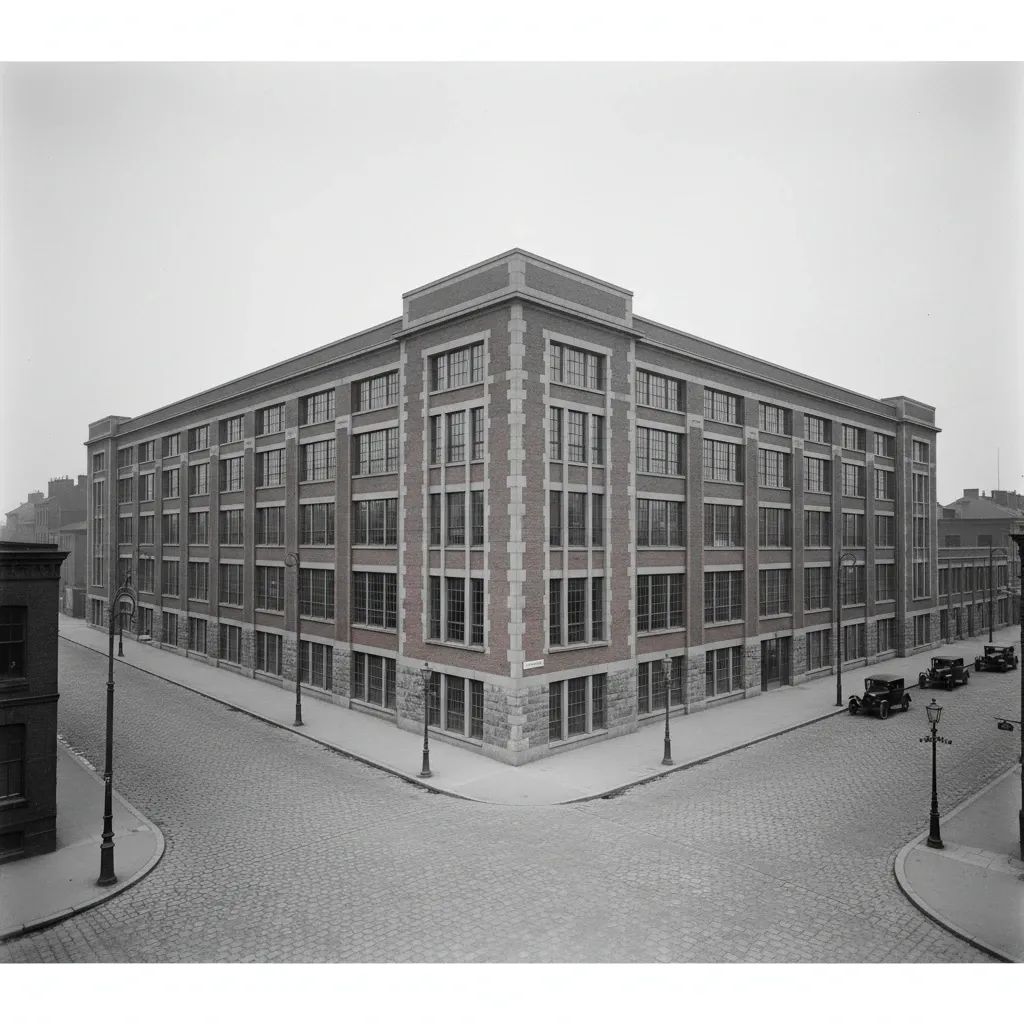
The Macaroni Premier pasta factory—a landmark at the Lija-Birkirkara-Balzan junction—was demolished in early March 2026 despite fierce objections from heritage authorities. The rare interwar industrial building made way for a five-storey mixed-use complex, spotlighting Malta's struggle to protect industrial sites against developer pressure. The incident underscores a deeper tension: while Maltese organizations are mounting unprecedented preservation efforts, economic pressure and developer appetite continue to erase irreplaceable structures faster than protective frameworks can catch up.
Recent demolitions tell the story. The Macaroni Premier factory and warehouses at the former Farsons Brewery have been lost in the past four years, even as heritage advocates pushed for adaptive reuse. Meanwhile, the Malta Industrial Heritage Association (MIHA), founded in 2022, is restoring sites like the 1907 machine-shop at Conservatorio Vincenzo Bugeja and the historic Ruston engine at Buskett Pumping Station. Simultaneously, a four-phase Grand Harbour Regeneration Plan launched in February 2026 aims to transform former industrial waterfront sites—including the old Marsa power station—into mixed-use zones while safeguarding maritime heritage.
Grand Harbour Plan: Malta's Test Case for Industrial Reuse
The Grand Harbour Regeneration Plan, unveiled in February 2026, represents the most ambitious industrial heritage initiative on the island. The four-phase strategy envisions converting the Marsa waterfront and the former Marsa power station into mixed residential, commercial, and cultural zones. For neighborhoods around Marsa, Paola, and Cospicua, the regeneration could redraw the urban landscape—potentially increasing residential density, retail footprint, and traffic demand in already congested areas.
Yet the plan also offers a second chance for adaptive reuse. If executed with the rigor seen in Madrid's Matadero complex (a former slaughterhouse now a sprawling cultural district) or Istanbul's Santralistanbul (a disused power plant converted into a science and culture complex), Marsa could gain cultural venues, green corridors, and employment within preserved industrial structures. If mishandled, it risks repeating the Farsons Brewery pattern: façade retention theater masking wholesale demolition.
Public consultations are open, and the Malta Planning Authority is accepting submissions through [specific deadline—check MPA portal]. Residents in Marsa, Paola, and Cospicua councils are holding town-hall sessions throughout March 2026 to address regeneration details. Heritage groups are encouraging citizen feedback to demand binding commitments—not vague "heritage considerations"—in any approved masterplan.
Why Developer Pressure Outpaces Protection
For neighborhoods across Malta, the Macaroni Premier demolition signals a critical gap: statutory protection remains patchy. Developer Joseph Portelli proceeded with the teardown before formal planning amendments were approved, showing that even Superintendence of Cultural Heritage objections can be overridden by commercial momentum. The result: 29 residential units, two penthouses, and basement parking at a congested junction—where adaptive reuse might have preserved historical fabric while adding density with less overall height.
This pattern is not unique. A historic property in Żejtun (Nos. 31, 33, and 35 Triq Marsaxlokk), containing an early 20th-century milling mechanism and kiln remnants, faced demolition threats in late 2025. The Superintendence of Cultural Heritage objected to proposals retaining only the façade and relocating equipment, arguing that stripping fabric destroys heritage value. As of today, the outcome remains unconfirmed. Similar standoffs have delayed projects in Mrieħel, Birkirkara, and along the waterfront.
Industrial machinery poses particular challenges. Unlike stone fortifications or ecclesiastical art, pumps, looms, and conveyors deteriorate rapidly when exposed to the elements. Steel corrodes, concrete spalls, and specialist restoration knowledge is scarce. MIHA and the University of Malta's Industrial Heritage Platform are documenting oral histories from dockyard workers and mill operators, racing against time before first-hand memory fades. Yet documentation alone cannot replace the encounter of standing inside a functioning machine shop or hearing a century-old Ruston engine rumble to life.
Rising Efforts to Preserve What Remains
MIHA and the University of Malta's Industrial Heritage Platform represent a generational shift in preservation activism. Founded in 2022, MIHA is salvaging at-risk machinery and buildings through hands-on restoration, with current projects including the historic Ruston engine at Buskett and Mercury House (1903), an early telecommunications facility. The university platform, established in 2015, has organized national conferences and now participates in international Mediterranean heritage networks.
Heritage Malta, the national agency overseeing 90-plus museums and landmarks, updated its legal notice in April 2025 to formalize responsibilities for industrial sites. The Farsons Visitors' Centre (launched in 2014 by Heritage Malta, The Farsons Foundation, and Simonds Farsons Cisk plc) demonstrates how private foundations and public agencies can pool resources to make industrial collections accessible. These initiatives are expanding public awareness and setting restoration benchmarks.
The most tangible success is Trident Park, built on the former Farsons Brewery site. This mixed-use business park preserves historical façades and context while delivering jobs and green space—proof that old industrial structures can house new economies without wholesale demolition. However, such projects remain exceptions rather than the rule, constrained by limited funding and fragmented policy.
Strengthening Protections: What Other Mediterranean Countries Do
Malta's approach trails the integrated strategies seen in neighboring countries. Italy reimagined Milan's Bovisa district—once a grimy factory zone—into campuses and cultural centers with statutory protections embedded into planning law. Greece began systematic industrial heritage protection in the 1980s; Volos and Athens converted abandoned factories into public facilities through multi-year regeneration plans with dedicated funding and binding community consultation. Spain offers exemplars: Madrid's Matadero, a former slaughterhouse, became a sprawling cultural district developed through phased, multi-architect approaches; Istanbul's Çubuklu oil silos are being reborn as a digital art museum and public waterfront, while the Silahtarağa Power Plant became Santralistanbul, a science and culture complex housing an energy museum.
These Mediterranean neighbors share three principles largely absent from Malta's regulatory framework: multi-year urban regeneration plans with statutory teeth, dedicated funding streams for restoration (often via EU programs), and community consultation built into project timelines. In Malta, NGOs like Din l-Art Ħelwa and Fondazzjoni Wirt Artna have filled gaps left by fragmented policy, but voluntary action cannot substitute for binding law.
What's Next for Malta's Industrial Landscape
Strengthening statutory protection is urgent. The Superintendence of Cultural Heritage can object, but without power to halt demolition pending appeal, developers can bulldoze first and negotiate fines later. Automatically scheduling all pre-1950 industrial structures pending assessment—aligned with Greek and Italian practice—would establish enforceable protection and give restoration advocates time to mobilize.
MIHA's next restoration project timeline and updates on the Żejtun milling property decision will signal whether momentum is building or stalling. The Grand Harbour Regeneration Plan public consultation (accepting feedback through [specific deadline at planning.gov.mt]) and March 2026 town halls in Marsa, Paola, and Cospicua councils (check local council websites for specific dates and times) are critical moments for residents to influence outcomes.
For Malta's residents, the choice is practical: adaptive reuse generates jobs, cultural amenities, and distinctive urban character rooted in local history. Demolition yields generic apartments and retail boxes that could exist anywhere. The Macaroni Premier factory is gone. Whether the Marsa power station, the Żejtun milling property, and the dozens of unlisted industrial sites still standing will follow—or whether Malta will finally write a preservation playbook as robust as its Mediterranean neighbors—depends on the decisions being made now.