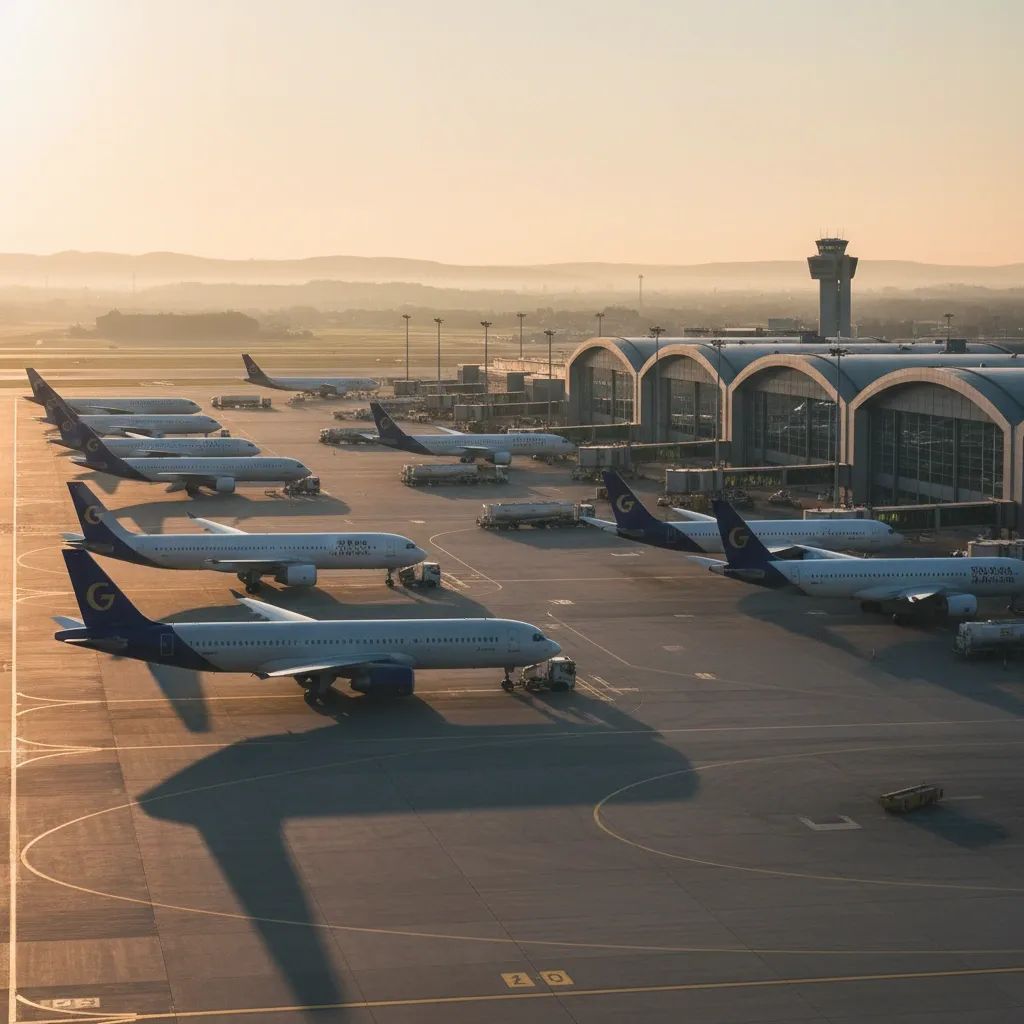
The European Union is monitoring a potential jet fuel shortage that could materialize within weeks, a supply squeeze that may ground flights, spike ticket prices, and disrupt summer travel across the continent. The Airports Council International (ACI) Europe has warned EU Transport Commissioner Apostolos Tzitzikostas and EU Energy Commissioner Dan Jorgensen that a "systemic" jet fuel shortage could materialize in as little as three weeks unless maritime traffic through the Strait of Hormuz is restored to stable levels.
Current Status
As of now, no confirmed shortages have materialized across Europe. However, industry groups and EU officials warn that if conditions deteriorate, supply constraints could escalate rapidly within weeks. The warnings are based on projections and current market trends rather than an immediate crisis.
Why This Matters
• Price spike already underway: Jet fuel prices in Europe have more than doubled since late February, outpacing crude oil gains and driving up airfares across the continent.
• Summer travel could be at risk: The International Energy Agency (IEA) projects potential physical shortages by June if Europe can only replace half its normal Middle East supplies, with stocks potentially hitting critical lows by August.
• Immediate impact visible: Some Italian airports have already introduced fuel restrictions, and airlines are cutting routes and imposing surcharges in response to tightening supply.
The Strait of Hormuz Bottleneck
Europe's jet fuel lifeline runs through the Strait of Hormuz, a narrow maritime corridor linking the Persian Gulf to global markets. Approximately 40% to 50% of Europe's jet fuel imports normally transit this route, carrying refined fuel from Gulf refineries that have historically supplied around 75% of Europe's net jet fuel imports.
The ongoing Iran war has choked this critical artery. Blockades and restrictions have slashed the flow of tankers, cutting off a supply stream that European airports depend on to keep aircraft fueled. Unlike regions with robust domestic refining capacity, Europe's exposure to global maritime disruptions is acute, and the continent lacks the ability to quickly pivot to alternative sources.
The European Commission has acknowledged the risk, describing jet fuel supply issues as a "primary concern" that could materialize in the near future. While officials say there is no immediate shortage, the trajectory is worrying. Around one-fifth of worldwide jet fuel shipments typically pass through the Strait of Hormuz, and its prolonged closure threatens to unravel Europe's aviation fuel ecosystem.
Europe's Structural Vulnerability
The current situation exposes deeper weaknesses in Europe's fuel supply architecture. The continent is a net importer of jet fuel, with imports accounting for roughly 30% of regional demand. That reliance has grown as domestic refining capacity has steadily declined, with older, uncompetitive refineries shutting down across the region.
The Amsterdam-Rotterdam-Antwerp (ARA) hub serves as the primary entry point for imported jet fuel, feeding distribution networks that rely on pipelines like the NATO Central European Pipeline System (CEPS) and coastal import terminals. But regions lacking robust connectivity to these systems are particularly vulnerable to supply shocks.
Europe's dependence on Middle Eastern refineries creates a double exposure: not only do disruptions to the Strait of Hormuz cut off direct shipments, but they also impact crude oil supplies that European refineries process into jet fuel. In tight markets, refineries often prioritize diesel production over jet fuel due to wider profit margins and broader distribution channels, further constraining aviation fuel availability.
Unlike diesel or gasoline, jet fuel cannot be stockpiled indefinitely. Stringent quality and safety standards limit long-term storage, meaning airports operate with relatively tight inventories that can be exhausted quickly during supply disruptions.
What This Means for Malta Residents
For anyone living in or traveling from Malta, the implications could be direct if shortages materialize. Malta International Airport depends entirely on imported jet fuel, making the island particularly exposed to any Europe-wide shortage. If supply constraints escalate, travelers could face:
• Higher ticket prices: Airlines are already imposing fuel surcharges and raising base fares to offset skyrocketing jet fuel costs.
• Reduced flight frequency: Carriers could cut routes and consolidate flights, which may limit direct connections to and from Malta, particularly on secondary routes.
• Booking uncertainty: If shortages worsen, airlines may cancel flights on short notice or implement stricter refueling protocols that prioritize high-traffic routes over smaller markets.
Currently, Malta International Airport has not issued any public statements regarding preparatory measures, though aviation stakeholders are monitoring the situation closely. The Malta Tourism Authority and local aviation bodies are tracking developments, as the island's economy is heavily reliant on air connectivity for tourism, business travel, and cargo. Any prolonged disruption to jet fuel availability could ripple through hospitality, retail, and logistics sectors.
Industry Calls for Emergency Action
The aviation industry is urging the European Commission to act swiftly. Airlines for Europe (A4E), which represents major carriers, has called for a package of emergency interventions ahead of the Commission's anticipated proposal on April 22. Their recommendations include:
• EU-level monitoring of jet fuel supplies to provide real-time visibility across the continent.
• Temporary suspension of the EU's carbon market for aviation to reduce cost pressures on carriers.
• Joint EU purchasing of kerosene to leverage collective bargaining power and secure alternative supplies.
• Modification of strategic reserve rules, specifically to require that member states' mandatory 90-day emergency oil reserves explicitly cover jet fuel.
ACI Europe has proposed additional measures, including lifting import restrictions and clarifying the EU Methane Emissions Regulation, which industry groups say is deterring third-country fuel suppliers from entering European markets. The organization also advocates for mandatory production quotas for refiners and the development of an EU-wide mapping system to track jet fuel production and availability.
Alternative Supply Routes and Long-Term Solutions
Europe is exploring alternative sources. The US Gulf Coast and West African refineries, including the massive Dangote refinery, represent potential near-term options. However, logistical constraints and limited spare export capacity mean these sources may not fully replace Middle Eastern supply.
India's Jamnagar refinery could serve as another relief valve, but EU sanctions related to Russian crude continue to deter buyers. Industry analysts argue that relaxing or clarifying rules around these imports could significantly reduce supply pressure.
The Amsterdam-Rotterdam-Antwerp hub remains Europe's primary import gateway, but diversification of entry points and expansion of pipeline networks are critical to reducing reliance on single chokepoints. Investment in storage infrastructure and competitive import terminals outside the ARA region could enhance resilience.
Longer-term, the ReFuelEU Aviation Initiative, which came into force in early 2025, mandates that jet fuel suppliers blend increasing proportions of Sustainable Aviation Fuel (SAF) into deliveries to EU airports, starting at 2% in 2025 and rising to 70% by 2050. While the SAF industry is still nascent, potential capacity could reach 2.3 million tonnes if existing biofuel facilities in Europe are optimized. The EU Commission's Sustainable Transport Investment Plan aims to mobilize around €2 billion for alternative fuel infrastructure in 2026-2027.
The Road Ahead
The European Commission's package, expected later this month, will be closely watched by airlines, airports, and travelers alike. Whether it includes specific provisions for jet fuel remains uncertain, but the urgency is clear. Some Asian countries have already begun rationing jet fuel, and the risk of a potential supply crisis across Europe cannot be dismissed.
For Malta, the stakes are particularly high. The island's geographic isolation and total reliance on imported fuel mean that any disruption to European supply chains will be felt acutely. Residents and businesses should monitor developments closely as the situation unfolds and prepare for potential volatility in flight schedules and prices.