
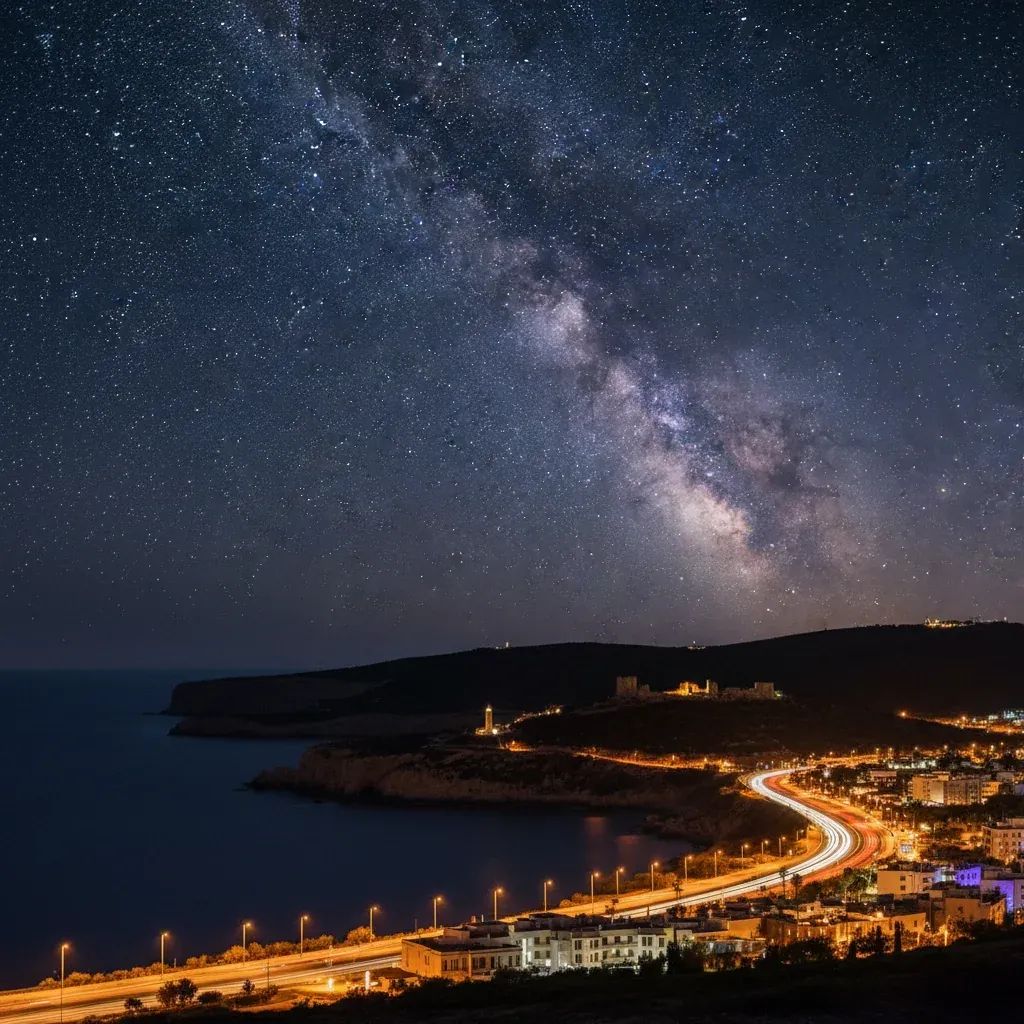
Malta is ignoring EU requirements to protect its night sky even as light pollution grows 10% annually—faster than global averages—and new regulations in California, Oregon, and Germany prove the solution is both affordable and effective.
What This Means for Malta
For residents living across the archipelago, light pollution represents a convergence of environmental, economic, and cultural threats that remain largely invisible in policy discussions. Here's what you need to know:
Who's responsible: The Environment and Resources Authority (ERA) and local councils hold primary responsibility, yet no coordinated dark-sky protection strategy exists. The government has not announced a timeline for compliance with EU Nature Restoration Action Plan requirements, leaving Malta exposed to potential EU enforcement actions.
What you can do: Contact your local councilors and parliamentary representatives demanding light-pollution standards be included in the 2026 legislative agenda. Participate in citizen-science monitoring through initiatives like Globe at Night. Support advocacy efforts led by environmentalists like Antoine Grima, who has been pressing the case publicly for formal night-sky protection.
Where it affects you: Valletta's harbours at Grand Harbour and Marsaxlokk, inland commercial districts, and residential areas across Mdina, Sliema, and St. Julians are major sources of atmospheric brightening. If you live in these regions or rely on tourism revenue, this directly impacts your environment and livelihood.
Energy and your bills: Adaptive lighting systems that dim when areas are unoccupied reduce municipal electricity consumption by up to 30%. For Malta, where energy costs remain a fiscal pressure, even a 15% reduction across public outdoor lighting would translate to meaningful budget relief annually—savings that could offset household utility bills or fund other essential services.
Why This Matters
• Darkness is disappearing fast. Light pollution across the archipelago grows by approximately 10% annually, outpacing even global averages and eroding habitats that have taken millennia to establish.
• Regulatory frameworks now exist internationally. From the US state of Oregon to German regional governments, enforceable lighting standards prove the concept is politically and technically feasible—and often surprisingly cost-effective.
• The reversal works unusually well. Unlike carbon sequestration or habitat restoration, artificial light can be dialled back rapidly; ecosystems often recover within months of responsible intervention.
• Economic stakes are real. Dark-sky certified locations attract growing astrotourism revenue, while intelligent lighting cuts municipal electricity expenses by up to 30%.
A Call from Within Malta's Environmental Movement
Antoine Grima, who has spent years documenting the archipelago's ecological pressures, recently made an argument that stands on its own merits: Malta's night sky ought to carry formal protection identical to the legal weight granted cultural monuments and biodiversity reserves. The reasoning isn't romantic nostalgia. It's rooted in measurable environmental disruption, lost scientific capacity, and wildlife mortality that occurs silently every evening across the island's 316 square kilometres.
This classification would bind future administrations to active conservation measures. It would establish accountability. And it would signal that Valletta, Gozo, and the outlying islands recognise something essential: that darkness itself is infrastructure—as valuable to a functioning ecosystem as water systems or road networks.
What's Changed in the Last Twelve Months
The scientific landscape shifted noticeably between 2024 and early 2026. A November 2025 study in Nature Climate Change quantified something counterintuitive: artificial night light accelerates the carbon dioxide released by plants and animals—ecosystem respiration—without triggering a corresponding increase in photosynthesis. In practical terms: illuminated landscapes store less carbon. For an island already confronting Mediterranean climate pressures, this finding carries direct policy implications.
Simultaneously, the biodiversity crisis sharpened. Research from August 2025 documented that urban birds remain active up to 50 minutes longer daily than their rural counterparts, driven by artificial lighting. The consequence: immune systems deteriorate. Atlantic puffin fledglings, when given a choice between illuminated and dark pathways, chose light in 100% of trials—a finding with immediate relevance for Malta's breeding populations along the southern cliffs, where artificial lights inland often divert hatchlings from the sea.
The astronomical picture darkened as well. A December 2025 analysis in Nature reported that approximately 96% of images from certain low Earth orbit observatories face potential degradation within a decade, as satellite constellations expanded from roughly 2,000 units in 2019 to 15,000 by the end of 2025. Ground-based telescopes contend with compounding glare from both municipal infrastructure and satellite reflection—a reality particularly acute for researchers operating near Mediterranean shipping lanes where night lighting remains intense.
The Regulatory Precedent Elsewhere
By February 2026, concrete regulatory models exist that Malta could adapt almost immediately. Palo Alto, California implemented updated lighting ordinances effective February 20, 2026, mandating warm-colored light at no more than 2,700 Kelvin (which produces soft, amber light instead of harsh blue-white) with automatic shut-off by 11 p.m. This standard matters for Malta residents because it costs no more to implement but dramatically reduces wildlife disruption and cuts energy consumption. Deschutes County, Oregon made similar rules effective December 23, 2025. Maine drafted legislation requiring municipalities to enforce strict brightness and shielding standards for all public outdoor fixtures installed or replaced after October 1, 2026—a framework replicable in Malta's compact administrative structure.
Germany is preparing a national light-pollution decree for 2025. Bavaria already has one. The European Union now mandates that member states address light pollution through Nature Restoration Action Plans—a requirement Malta has not yet honoured, leaving the archipelago exposed to potential EU enforcement actions.
What makes these precedents valuable for Malta is not their severity but their feasibility. They prove that residential density and economic development needn't preclude darkness. They demonstrate that retrofitting works. And crucially, they show that municipalities save money while reducing ecological harm—a rarity in environmental regulation.
Impact on Malta's Economy and Infrastructure
The tourism sector has much to gain. DarkSky International, the global authority on nocturnal habitat certification, has designated 250 sites worldwide since 1988, protecting more than 196,000 square kilometres. These locations consistently report increases in ecotourism revenue—attracting stargazing enthusiasts and researchers willing to travel for authentic dark-sky experiences. The organisation launched a "DarkSky Approved Port Marine Terminal Lighting program" in 2025, designed specifically for maritime infrastructure. Malta's harbours at Valletta and Marsaxlokk—major drivers of skyglow radiating across the central island—would be immediate candidates for retrofitting under such a program, potentially unlocking new tourism revenue streams.
Energy economics favour action as well. Adaptive lighting systems that dim when areas are unoccupied reduce municipal electricity consumption by up to 30% according to industry estimates. For Malta, where energy costs remain a fiscal pressure, even a 15% reduction across public outdoor lighting would translate to meaningful budget relief annually.
Private property adds another layer of opportunity. A 2025 citizen-science initiative revealed that residential and commercial lighting—not streetlights alone—are significant contributors to skylight and atmospheric brightness. This finding suggests that regulatory frameworks must extend beyond public utilities to encompass private development. Building codes that incentivise warm-spectrum, downward-directed fixtures would shift market behaviour without heavy-handed enforcement.
Scientific Research and Maritime Operations
Malta's geographic position creates both vulnerability and opportunity. The island sits near major Mediterranean shipping corridors where intensive artificial lighting persists for safety reasons. Yet this same position offers strategic value for ground-based astronomical research if darkness can be preserved. Certain locations—Dingli Cliffs, for instance—could host dark-sky certified research facilities, attracting academic partnerships and positioning Malta as a Mediterranean hub for nocturnal science.
The National Park Service in the United States operates a Night Skies Team that monitors celestial brightness in protected areas as though darkness were a quantifiable natural resource—because it is. Malta's Environment and Resources Authority could adopt comparable protocols, establishing baseline measurements and tracking recovery as interventions take hold. Transparency in monitoring would also hold stakeholders accountable.
Cultural and Indigenous Dimensions
The ancient Neolithic temples dotting Malta suggest that ancestors tracked celestial events and patterns. Modern Maltese have largely lost access to this heritage as artificial light erased the starscape these monuments were oriented toward. This represents a form of cultural disconnection, albeit a subtle one. Many residents under 30 have likely never seen the Milky Way from their home island.
Duane Hamacher, a scholar of Indigenous astronomical knowledge, has argued that light-pollution expansion constitutes "arguably a continuation of cultural genocide—a concept often described as 'slow violence.'" Many Indigenous and traditional societies map ancestral narratives into constellations, rely on stellar patterns for navigation and seasonal forecasting, and preserve knowledge systems encoded in the night sky. When artificial illumination renders stars invisible, entire epistemologies become inaccessible.
The Bath Preservation Trust issued a position statement in July 2020 advocating for dark-sky protection within UNESCO World Heritage Sites. Malta could adapt this model for Valletta and the Megalithic Temples, weaving night-sky conservation into heritage management frameworks already endorsed internationally.
Reversibility: A Singular Advantage
Light pollution possesses an unusual characteristic: it can be switched off. Unlike many ecological crises, reversal often occurs within months. Conservation efforts using turtle-friendly lighting on Malta's southern beaches have already demonstrated measurable success. Motion-activated LED systems reduce bat exposure to artificial light. Coral reef experiments showed that eliminating nighttime illumination allows predator-prey relationships to rebalance.
The DesignLights Consortium, a standards body for the lighting industry, expanded eligibility for non-white and amber LEDs in 2025 and updated technical requirements with the explicit goal of equipping municipalities with practical guidance by 2026. Proven technologies exist. Implementation is a policy choice, not an engineering problem.
International Legal Architecture
No single binding global treaty dedicates itself to night-sky protection. However, a constellation of declarations and resolutions creates a framework Malta can leverage. The 2007 Declaration in Defence of the Night Sky and the Right to Starlight, endorsed by UNESCO, the International Astronomical Union, and the Council of Europe, recognises unpolluted darkness as a right. The Kunming-Montreal Global Biodiversity Framework (2022) targets pollution reduction to levels not harmful to biodiversity, implicitly encompassing light.
The Convention on the Conservation of Migratory Species of Wild Animals adopted Resolution 13.5 in 2020, providing non-binding but authoritative guidelines for light-pollution mitigation. The International Institute of Space Law concluded in 2023 that while satellite-related light pollution remains globally unregulated, existing domestic frameworks can support dark-sky protections. Germany and France have already enacted national legislation addressing terrestrial light pollution.
Malta's status as an EU member state creates both obligation and opportunity. EU directives on nature restoration now require member states to address light pollution. Compliance is not optional. Yet Malta could exceed minimum requirements, framing dark-sky protection as a signature environmental commitment—positioning the island as a Mediterranean exemplar rather than a reluctant regulator.
A Scalable Pathway
Malta's compact size—316 square kilometres—makes comprehensive lighting reform plausible in ways that larger jurisdictions cannot achieve. A coordinated strategy could unfold in stages:
Phase One: Immediate regulatory action. Amend building codes to require downward-directed, warm-spectrum lighting (2,700 Kelvin or lower) for all new installations and replacements. Mandate motion controls or automatic dimming for non-essential public lighting after 11 p.m. These measures mirror existing ordinances in Oregon, California, and Maine, requiring no novel engineering.
Phase Two: Certification and monitoring. Designate at least one protected area—Dingli Cliffs or Filfla Island—as a candidate for DarkSky International certification. Establish baseline sky-brightness monitoring in partnership with the IAU Centre for the Protection of the Dark and Quiet Sky. Transparent data drives accountability and attracts research funding.
Phase Three: Community engagement. Align public awareness campaigns with International Dark Sky Week (April 21–28 annually). Integrate citizen-science projects like Globe at Night into school curricula. Create economic incentives—tax breaks for businesses adopting responsible lighting, grants for heritage-site retrofitting.
Phase Four: Legislative embedding. Formalise night-sky protection in heritage law, environmental legislation, and EU nature restoration compliance documents. Make darkness a recognised, legally protected resource.
The Unfinished Agenda
As of February 2026, the Maltese Government has not announced a timeline for dark-sky protection or signalled whether it will prioritise the issue in legislative sessions. The regulatory vacuum persists despite accelerating international mandates and mounting scientific evidence. Advocates like Grima remain largely alone in pressing the case publicly.
Yet the convergence of EU directives, peer-nation regulation, and reversible ecological damage removes any claim that action is premature. The tools exist. The models are proven. The economic case is sound. What remains is political will—and that begins with recognising that a starlit sky is not luxury or nostalgia, but essential infrastructure for a functioning island ecosystem and for a population's connection to its own cultural heritage.


