
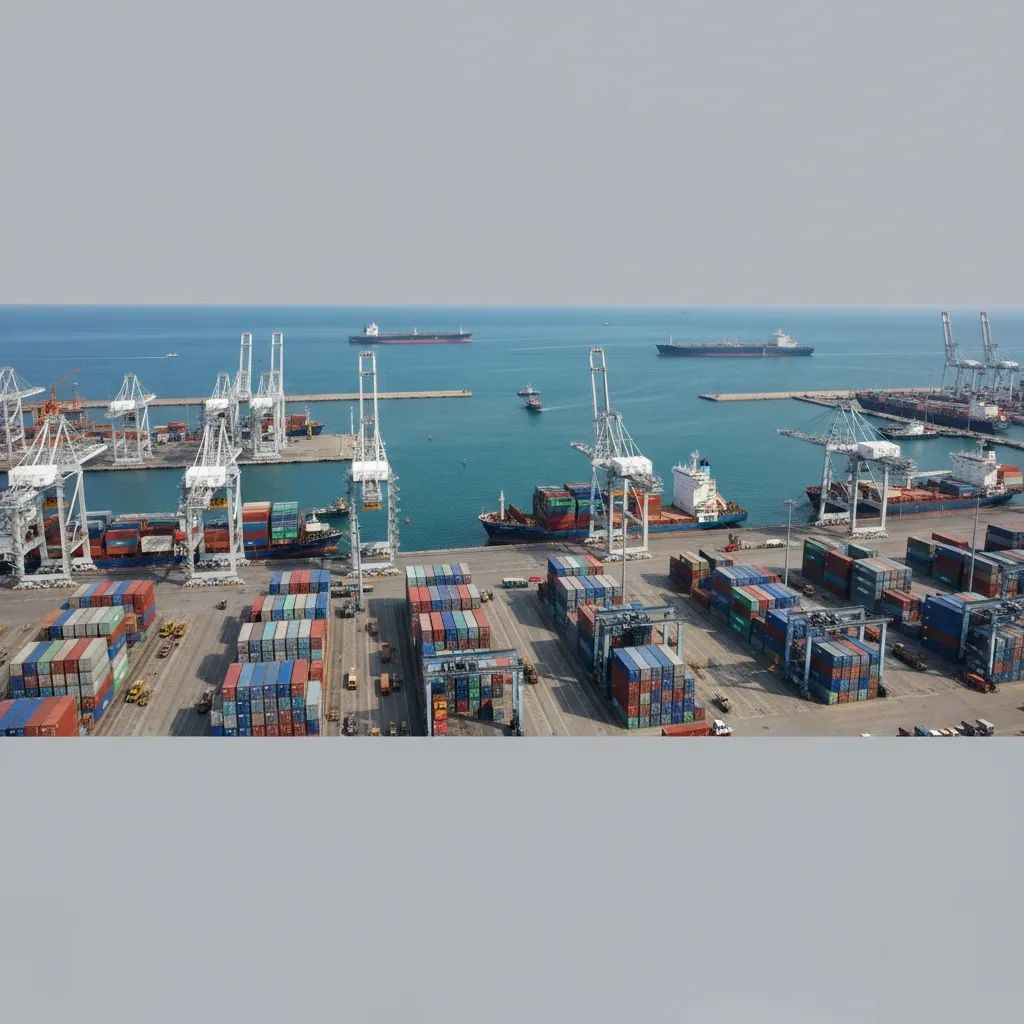
The Maltese Foreign Affairs Ministry has welcomed a tentative US-Iran ceasefire agreement as a crucial step toward broader Middle East stability, while simultaneously pressing the European Union to intensify enforcement operations against Russia's aging tanker fleet operating in the Mediterranean—a flotilla that Maltese officials warn presents escalating environmental and security hazards to the island nation's maritime economy.
Why This Matters:
• Peace dividend: A formal US-Iran agreement, slated for signature in Switzerland on June 19, could reopen the Strait of Hormuz—a critical global shipping chokepoint that has faced closure threats due to regional tensions—and lift threats to Malta's substantial shipping registry with thousands of vessels flying the Maltese flag.
• Shadow fleet crackdown: Malta has joined Italy, Greece, Cyprus, and Spain in demanding EU-wide mechanisms to inspect and intercept aging Russian oil tankers that circumvent sanctions, several of which have already been struck by drones in Maltese search-and-rescue zones.
• Neutrality in practice: Malta's constitutional neutrality bars military involvement but positions the country as a mediator and advocate for diplomatic solutions in conflicts spanning from Gaza to the Gulf.
Strait Reopening Tied to 60-Day Pause
The US Administration and Iranian government are finalizing a memorandum of understanding that establishes a 60-day cessation of hostilities and commits both sides to resume negotiations over Tehran's nuclear program, according to statements released in early June. The Strait of Hormuz, which handles roughly 30% of global seaborne oil, has faced closure threats amid escalating regional tensions. US President Donald Trump confirmed the framework is "close to finalization" and indicated the strait would reopen under ceasefire protocols, allowing unimpeded passage for the thousands of international vessels that depend on this vital shipping lane.
Speaking at the Foreign Affairs Council in Luxembourg, Maltese Foreign Minister Chris Fearne welcomed the memorandum and emphasized Malta's direct interest in regional stability. More than 10,000 vessels are registered under the Malta flag, many of which transit Gulf shipping lanes. A prolonged closure of the strait would significantly impact insurance premiums, fuel costs, and delivery schedules for goods arriving in Malta—particularly important given that maritime services represent a substantial portion of Malta's economy.
Fearne also called for deeper European Union involvement in Palestinian state-building efforts, reiterating Malta's long-standing advocacy for a two-state solution. Malta officially recognized the State of Palestine in September 2025 and has served as rapporteur of the UN Committee on the Exercise of the Inalienable Rights of the Palestinian People since 1975, a role that underscores the island's historical commitment to multilateral peace frameworks.
Shadow Fleet Incident Exposes Risks in Central Mediterranean
Parallel to diplomatic developments in the Gulf, Malta has been managing a more immediate maritime crisis closer to home. In March 2026, the Russian-flagged LNG carrier Arctic Metagaz—believed to be part of Moscow's sanctions-evasion network—was struck by drones in the central Mediterranean, triggering explosions and fire that forced the crew to abandon ship. Maltese rescue authorities dispatched salvage teams to monitor the drifting vessel, which carried both liquefied natural gas and diesel, highlighting the environmental risks posed by aging tankers operating in Maltese waters.
The incident prompted Malta to draft a joint letter on behalf of the MED5 group—Malta, Italy, Greece, Cyprus, and Spain—demanding the European Commission activate the bloc's civil protection mechanism and establish faster-response protocols for similar emergencies. The letter highlighted that shadow fleet vessels often sail with outdated hulls, minimal insurance coverage, and falsified documentation, dramatically increasing the likelihood of collisions, spills, or mechanical failures that could devastate fisheries and coastal tourism sectors across the Mediterranean.
EU Expands Operation IRINI Mandate
In June 2026, the EU Council broadened the scope of Operation IRINI, the naval mission headquartered in Rome that initially focused on enforcing the UN arms embargo on Libya. Naval vessels from member states are now authorized to board and physically inspect foreign-flagged tankers when there are reasonable grounds to suspect sanction violations, deceptive practices, or substandard safety compliance.
On June 1, EU forces conducted the mission's first physical inspection under the new mandate, targeting the sanctioned tanker MV Oneiroi. Russia condemned the expansion, but Maltese officials have defended the measure as essential to protecting both economic security and the marine environment. Deputy Prime Minister Ian Borg, who also holds the foreign affairs portfolio, stressed that "robust enforcement against deceptive maritime practices" is necessary given Malta's dependence on seaborne trade and the concentration of vessel traffic around the island.
Malta Launches Monitoring Centre in Valletta
To complement EU-level enforcement, Malta inaugurated the Global Centre for Maritime Sanctions Monitoring in Valletta. The facility aggregates data on vessel ownership structures, cargo manifests, and Automatic Identification System (AIS) compliance, subjecting high-risk patterns and jurisdictions to intensified scrutiny. Ships approaching Maltese territorial waters can be flagged for due diligence checks, and patterns such as AIS blackouts or frequent flag changes trigger alerts shared with European and international partners.
The centre aims to dismantle the financial architecture that sustains the shadow fleet by making it harder for front companies to obscure beneficial ownership and by coordinating intelligence with insurers, port authorities, and classification societies. Malta's investment in screening infrastructure reflects the reality that the island's geographic position—midway between North Africa and southern Europe—places it at the nexus of both legitimate commerce and illicit maritime traffic.
What This Means for Residents
For Maltese households and businesses, the dual maritime challenges carry significant implications. Regional stability in the Gulf could help moderate fuel prices and shipping costs—key concerns for an island economy dependent on seaborne imports for energy, food, and manufactured goods. Malta imports the vast majority of its fuel needs from Gulf suppliers, making Strait of Hormuz stability directly relevant to household energy costs.
Conversely, every aging tanker drifting through Maltese waters without adequate insurance and safety standards elevates environmental risk to the island. A major spill could damage fisheries, restrict beach access, and trigger cascading costs for maritime industries and tourism—sectors that collectively employ thousands of Maltese residents. The shadow fleet crisis is not distant geopolitics; it represents an immediate environmental and economic threat to communities surrounding Malta's coastlines.
Malta's neutrality doctrine, enshrined in the constitution since 1980, prohibits direct military involvement but does not preclude active diplomacy or participation in civilian maritime enforcement missions. Prime Minister Robert Abela reiterated in March 2026 that neutrality functions as a shield against entanglement in foreign wars, yet also as a platform for mediation services that can enhance Malta's diplomatic clout and open channels for dialogue in conflicts where larger powers face credibility deficits.
Gulf Solidarity and European Coordination
Throughout 2026, Malta has balanced expressions of solidarity with Gulf partners affected by Iranian strikes with calls for restraint and diplomatic engagement. In March, Abela condemned attacks on civilian infrastructure while urging all parties to prioritize negotiation over escalation. That stance reflects Malta's dual identity as a European Union member state and a Mediterranean crossroads with historical and economic ties to the Arab world.
The forthcoming signature of the US-Iran memorandum in Switzerland offers a test case for whether diplomacy can deliver concrete security dividends. If the 60-day pause holds and nuclear talks resume in earnest, Malta's advocacy for dialogue will gain additional credibility. If the ceasefire collapses, the island will face renewed pressure to manage the fallout—potentially higher insurance premiums for Maltese-flagged vessels, heightened energy costs, and intensified scrutiny from EU partners expecting Malta to enforce sanctions rigorously despite its limited naval resources.
Enforcement Challenges and Next Steps
Despite new EU mandates and national monitoring centres, shadow fleet operations remain difficult to disrupt. Tankers can switch flags in days, obscure ownership through shell companies registered in secrecy jurisdictions, and rely on non-Western insurers indifferent to EU sanctions. Physical inspections at sea are resource-intensive and risk diplomatic friction if conducted in disputed or ambiguous maritime zones.
Malta's strategy hinges on multilateral coordination: the more EU member states share intelligence and harmonize enforcement protocols, the harder it becomes for illicit operators to exploit jurisdictional gaps. The MED5 group's joint letter in March demonstrated that smaller coastal states can leverage collective bargaining to secure faster Commission action, a model that could be replicated for other transnational maritime threats, from human trafficking to illegal fishing.
As the June 19 signing ceremony in Switzerland approaches, Maltese diplomats will be watching not only for progress on Iran's nuclear file but also for signals that major powers are willing to integrate maritime security concerns—like the shadow fleet challenge—into broader peace frameworks. For an island economy built on shipping, financial services, and tourism, the distinction between high politics and everyday commerce is often academic. Stability in distant seas directly shapes the price of fuel, the cost of imported goods, and the health of coastal waters that define Malta's identity and economic future.


