
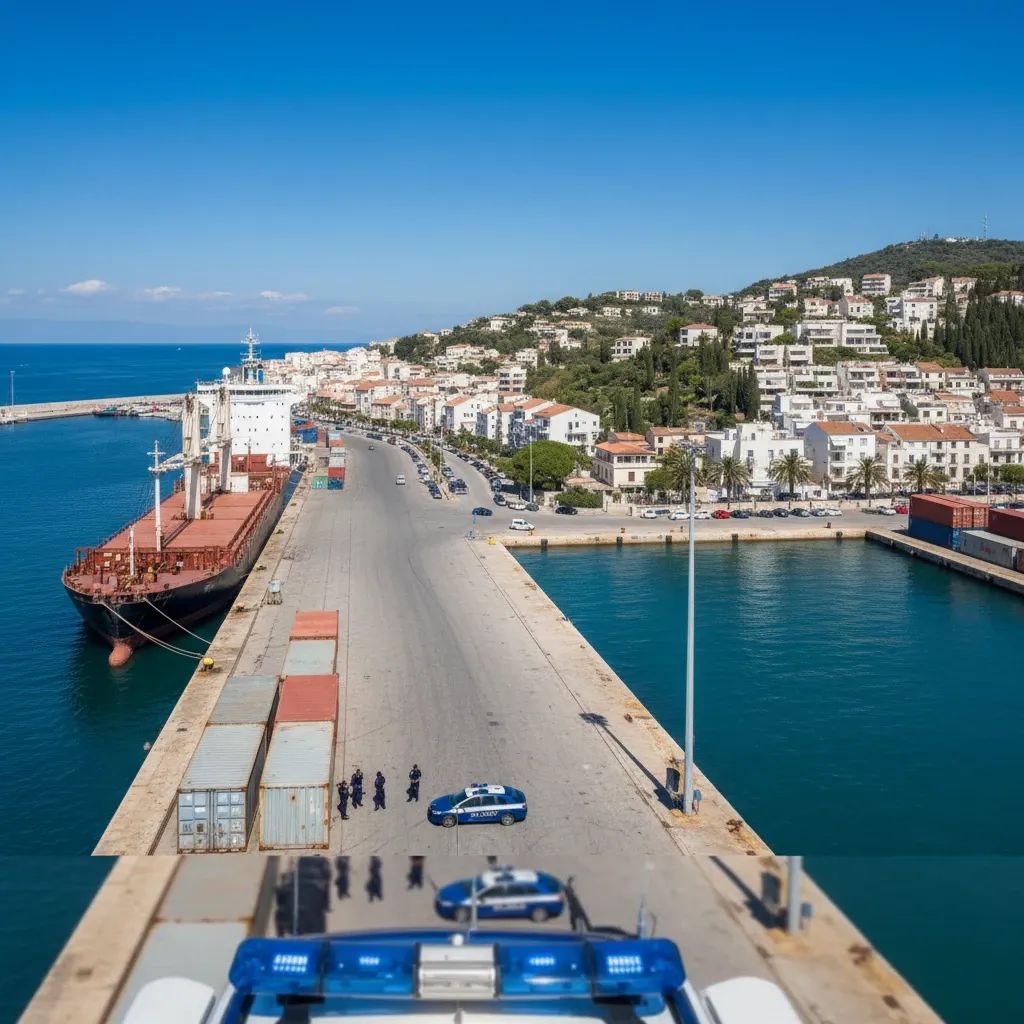
The Malta Police Force has initiated disciplinary review procedures against one of its inspectors following a controversial Facebook post that displayed visible faces of individuals during an arrest operation in Marsa, a move that legal experts warn breaches fundamental privacy rights and undermines the presumption of innocence enshrined in Maltese law.
Why This Matters:
• Presumption of innocence violated: The public display of arrestees' faces before conviction directly contravenes constitutional rights.
• Discrimination complaint filed: Human rights advocates argue the post, depicting Black men, could fuel stigma against already marginalized communities.
• Police ethics code in focus: The incident tests the 2024 Code of Ethics requiring officers to use social media "responsibly and safely."
Complaint Triggers Internal Review
Lawyer Neil Falzon, representing the human rights NGO Aditus, lodged a formal complaint with the Malta Police Force after Inspector Matthew Attard shared photographs from a Tuesday morning operation. The images showed individuals being rounded up and questioned in Marsa, accompanied only by vague assurances about efforts to "keep the locality more secure and better for everyone."
Falzon condemned what he termed "0-level ethical approach to policing" in his complaint, arguing that the public exhibition of suspects constitutes a "flagrant breach of their privacy and of an entire set of rights." The lawyer emphasized that such displays carry a "dehumanising and criminalising effect," particularly when the individuals shown are identifiably from communities already facing discrimination.
The complaint centers on a troubling dynamic: by posting unblurred photographs of Black men alongside generic crime-prevention rhetoric, the post risks reinforcing harmful stereotypes that paint entire communities as "dangerous criminals," according to Falzon's submission. This approach, he contended, could fuel hatred toward demographic groups that statistical data shows face disproportionate scrutiny and marginalization within Malta.
Police Force Responds with Partial Removal
Following the complaint, the Malta Police Force removed one of the disputed images from its social media channels and confirmed that the matter would be addressed directly with the officer involved. Officials indicated that further action remains under consideration, pending internal review procedures.
In their response, police leadership rejected suggestions that the post was intended to incite hatred or discrimination. They pointed to standing policy guidelines that discourage mentioning nationalities in official communications specifically to prevent racist or discriminatory commentary from members of the public.
The force also noted that Inspector Attard serves within the Community Cohesion Team, a unit explicitly tasked with fostering dialogue and integration among Malta's diverse resident populations. This detail adds complexity to the case, as the officer's official role centers on bridging divides that his social media conduct allegedly deepened.
What Malta's Police Ethics Code Actually Requires
The incident comes approximately 18 months after the Malta Police Force updated its Code of Ethics in December 2024. That document explicitly mandates that all officers "use social media responsibly and safely, ensuring that nothing published online can reasonably be perceived by the public or other members of the police to be discriminatory, abusive, oppressive, harassing, bullying, victimizing, offensive or otherwise incompatible with policing principles."
The code also prohibits officers from taking "an active part in partisan politics on social media" and establishes clear boundaries around content that could compromise dignity and privacy of individuals encountered during police operations.
Enforcement of these standards falls to the Professional Standards Office, the body empowered to investigate public complaints about officer conduct. Disciplinary outcomes vary by severity, ranging from documented counseling to suspension or termination, depending on the nature and gravity of the breach.
The 2024 code represented an evolution from earlier iterations, which had generated controversy in 2021 when officers faced scrutiny from the Board of Professional Standards simply for "liking" or commenting on political profiles. The Police Officers' Union at that time pressed then-Commissioner Angelo Gafà to revise policies they considered overly restrictive.
Legal Framework for Posting Suspect Images
Malta's approach aligns with broader European Union principles on police accountability and adherence to the European Code of Police Ethics, which emphasizes respect for fundamental human rights and responsible conduct. Across the EU, member states increasingly scrutinize social media misuse by law enforcement as a distinct category of ethical violation, with several jurisdictions implementing statute-level restrictions on posting booking photos or arrest images without clear public safety justification.
Malta's legal framework does not yet include comprehensive statute-level restrictions on police social media conduct of this nature, leaving enforcement primarily to internal disciplinary mechanisms and constitutional protections around privacy and due process.
Impact on Residents and Community Relations
For Malta's migrant and minority communities, the incident underscores persistent friction between law enforcement practices and human rights safeguards. Marsa, where the arrests occurred, is a working-class neighborhood with a significant population of African migrants and asylum seekers, many of whom report heightened police scrutiny compared to other demographic groups. The area has historically served as a primary settlement point for newly arriving migrants to the island.
Public health and integration experts have long warned that criminalising imagery shared by official police accounts can entrench social marginalization, making it harder for communities to access housing, employment, and services even when no criminal charges result or convictions are secured.
The timing of the complaint also coincides with broader European debate about algorithmic policing and racial profiling, with civil liberties organizations pressing for stronger oversight of law enforcement social media strategies that disproportionately target minority populations.
Your Rights if Photographed During Police Operations
Malta residents should be aware of their fundamental privacy rights during police encounters. If you are photographed or filmed during a police operation, you have the right to know how that imagery may be used. Under Maltese data protection and constitutional law, your image should not be published or shared publicly without proper legal justification, particularly before any criminal conviction. If you believe your privacy has been breached through unauthorized publication of your photograph by police, you can file a formal complaint with the Professional Standards Office through your lawyer or directly, and may also seek remedies through the Data Protection Authority.
Accountability Mechanisms Under Scrutiny
The case will test whether Malta's current oversight structures provide adequate deterrence and accountability. Unlike some EU member states with robust external police complaints bodies, Malta's system relies heavily on internal review through the Professional Standards Office, with limited transparency around outcomes.
Falzon and Aditus have called for systemic reform to ensure that officers understand the legal and ethical boundaries governing public communications about suspects. They argue that without clear consequences and mandatory training, similar breaches will recur, eroding public trust in law enforcement institutions.
The Malta Police Force has not provided a timeline for completing its internal review or specified what disciplinary measures, if any, might be imposed. Inspector Attard has not publicly commented on the complaint or the removed post.
As Malta continues to navigate its role as a Mediterranean gateway with growing diversity, the intersection of police communications, constitutional rights, and community relations will likely remain a flashpoint requiring both legal clarity and cultural sensitivity from law enforcement leadership.


