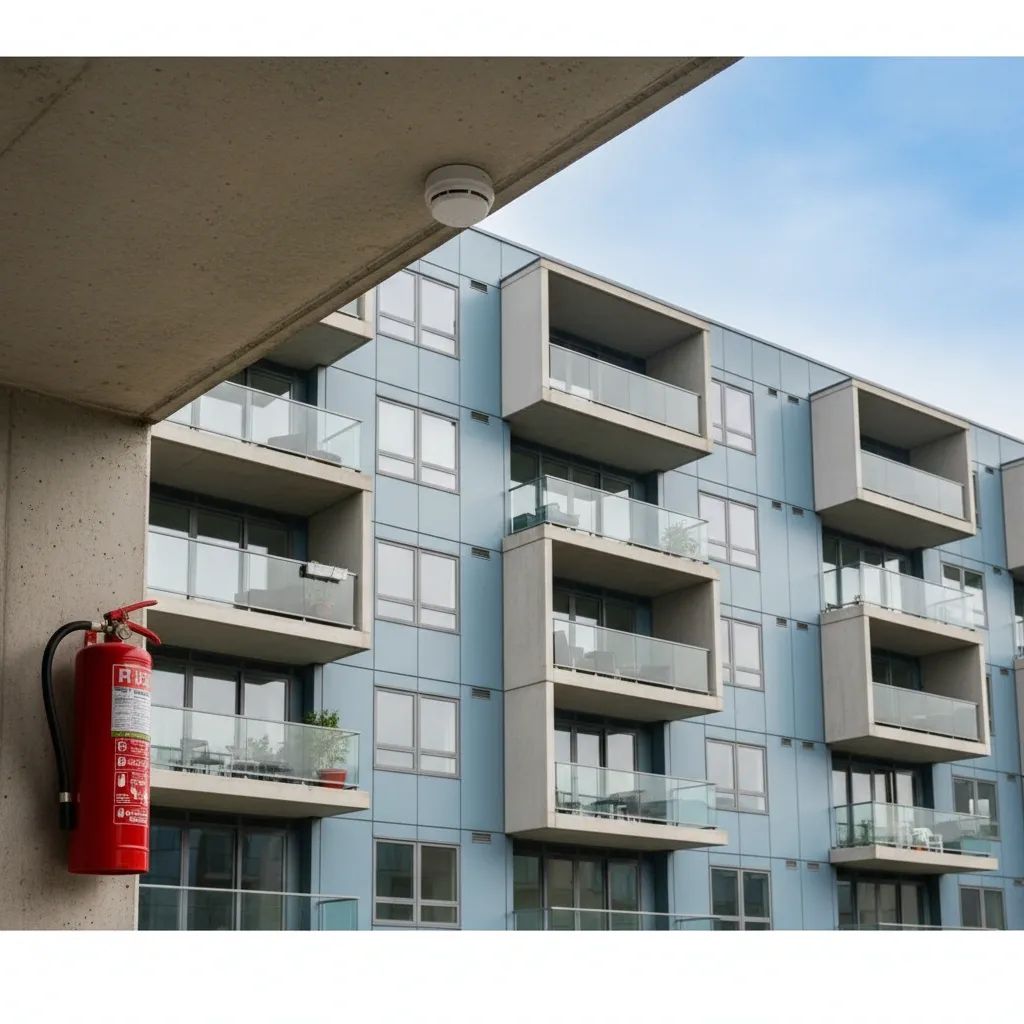
The Malta Planning Authority has authorized the transformation of a 17,455 m² valley site in Swatar into 12 residential blocks, overriding objections from residents, local councils, and politicians across party lines who warned the decision will eliminate the area's last green corridor and worsen chronic flooding.
Why This Matters
• Flood risk escalates: The valley currently absorbs rainwater naturally; developers must now build 7,400 m³ reservoirs to compensate—a tacit admission the site plays a critical drainage role.
• Traffic pressure mounts: New housing will add vehicle movements to roads already strained by proximity to Mater Dei Hospital and the University of Malta.
• Precedent solidifies: The approval reinforces the controversial 2006 "rationalization" exercise that rezoned rural pockets for development, a policy environmentalists say continues to erode Malta's remaining open spaces.
• Political promises tested: Cross-party opposition failed to stop the project, raising questions about whether parliamentary rhetoric on green preservation translates into regulatory action.
The Approval Timeline
The Planning Authority's executive council green-lit application PC/00013/17 on Tuesday, filed nearly a decade ago in March 2017 by developer David Grech. The tract lies off Valley Road in the Ta' Fuq il-Wied area, wedged into the heavily urbanized Swatar-Msida corridor. The scheme arranges the blocks in a grid pattern, each rising three official floors—though critics note that semi-basements and the valley's slope could push effective height to seven storeys when viewed from lower vantage points.
The approval hinges on a "3D volumetric interpretation" of the site's original 2006 conditions, which stipulated low-density detached buildings on the lower 50% of the parcel and open space on the remainder. Malta's Planning Authority contends that topography permits greater flexibility in density calculations, a reasoning that residents argue undermines the parliamentary intent behind the 2006 rezoning.
Flood Mitigation Mandate
One condition stands out: on-site reservoirs with a minimum 7,400 cubic meter capacity must be constructed to handle stormwater. Architect and former ADPD chair Carmel Cacopardo has questioned whether this figure adequately accounts for the valley's natural absorption across its full surface, warning that calculations may underestimate actual runoff volumes during heavy rain events.
The valley's current role as a natural sponge for the neighborhood is well-documented by residents, who report frequent flooding even before any development. Converting permeable land to concrete and asphalt will accelerate runoff, channeling water into municipal drainage systems already operating near capacity in this part of Msida and Swatar. The Environment and Resources Authority (ERA) recommended generic conditions—sustainable urban drainage systems and public green space—but raised no major environmental red flags, citing the site's location within the Development Zone.
Cross-Party Opposition That Failed
The approval landed despite rare political consensus against it. Msida Local Council, led by the Nationalist Party, formally objected. Labour Party President Alex Sciberras recalled his own tenure as Msida mayor fighting to preserve the area. District MPs Rebecca Buttigieg, Clint Azzopardi Flores, and Yana Borg Debono Grech—all from the governing Labour Party—voiced concerns about climate resilience and flash floods. The Nationalist Party's Msida committee echoed opposition.
Yet no parliamentary motion materialized to block the project. Civil society organization Momentum escalated pressure on Prime Minister Robert Abela to intervene, accusing both major parties of hollow rhetoric. "Government promises to protect natural open spaces ring hollow when the Planning Authority sides with developers over environmental protection and residents' quality of life," Momentum stated.
Residents organized a parliamentary petition, but the Planning Authority's case officer recommended approval, and the executive council followed that advice. The decision underscores a persistent dynamic in Maltese planning: parliamentary declarations of environmental concern rarely translate into binding regulatory constraints once development applications reach the technical review stage.
What This Means for Residents
For homeowners and renters in the immediate vicinity, the project signals several tangible shifts:
• Utility strain: Electricity grids, water mains, and waste collection routes will absorb the load from dozens of new units. Residents have flagged existing capacity shortfalls, particularly during summer peaks when Mater Dei and university operations compound demand.
• Property values: Proximity to new construction may temporarily depress prices due to noise and dust, though finished blocks could eventually lift values if the area is perceived as "upgraded." Conversely, flood risk and traffic congestion could dampen long-term appreciation.
• "Public open space" illusion: Critics argue much of the designated public space will function as building frontages and access roads—essentially a conventional street network rather than preserved green lung. Residents scouting the plans note that grid layouts prioritize vehicular circulation over pedestrian amenity.
The 2006 Rationalization Legacy
The Swatar approval is the latest manifestation of the 2006 rationalization exercise, a parliamentary decision that brought previously Outside Development Zone (ODZ) land into development boundaries. Proponents, including the Malta Developers Association, insist landowners who invested based on that rezoning must see returns. Environmentalists counter that the exercise fueled speculation and continues to erode Malta's diminishing countryside.
Similar battles have played out in Għeriexem Valley, where multiple applications for agricultural stores and reservoirs have been approved despite NGO warnings of "unjustified formalization of the rural area." In Wied Għomor, the Environment and Resources Authority appealed approval of a farmhouse and pool, arguing it set a damaging precedent in an ecologically sensitive zone. A separate 10-storey mixed-use complex proposed near Msida Valley Road prompted the Superintendence of Cultural Heritage to warn the project would "erase a surviving tract of valley landscape and destroy traces of agricultural activity and vernacular structures."
Malta's Strategic Plan for Environment and Development (SPED), approved in 2015, aims to limit urban sprawl and prioritize redevelopment of existing sites. Yet the Planning Authority's decisions on 2006 rationalization parcels suggest strong deference to past parliamentary approvals, even when those conflict with SPED's environmental protection goals.
Accountability and Transparency Gaps
Although Maltese planning law stipulates each application be judged on its own merits, the concept of precedent operates de facto. Developers routinely cite prior approvals to justify new projects, creating a ratchet effect that makes refusal politically and legally fraught. Residents in Swatar argue this dynamic has produced a system where technical case officers wield more influence than elected officials or public consultation.
No mechanism exists for residents to compel a parliamentary debate once an application reaches the Planning Authority. Petitions and council objections carry advisory weight but lack binding force. The result: a planning process that residents describe as opaque and developer-friendly, insulated from the political accountability that opposition MPs invoke during campaign season but rarely leverage through legislative action.
Comparative Context
Malta's valley development pressure is not unique in the Mediterranean, but the island's small footprint and dense population—over 1,600 people per square kilometer—amplify the stakes. Each parcel converted from permeable to impervious surface has outsized hydrological consequences. The 7,400 m³ reservoir mandate in Swatar represents one of the larger on-site stormwater requirements imposed in recent years, reflecting both the valley's drainage role and the Planning Authority's awareness of flood risk.
Restoration projects are underway in Wied Blandun, Wied il-Qlejgħa, and Wied il-Għasel, signaling a dual approach: development in rezoned pockets, rehabilitation in protected corridors. Whether this balancing act proves sustainable hinges on enforcement of reservoir construction, maintenance of drainage infrastructure, and the Planning Authority's willingness to impose stricter conditions on future applications within the 2006 rationalization inventory.
For now, Swatar residents face a construction phase that will test local infrastructure and reshape the neighborhood's character. The reservoirs, if built to specification and maintained over decades, may avert the worst flood scenarios. If not, the valley's transformation from green buffer to residential grid will serve as a case study in the risks of prioritizing development over hydrology in a climate-stressed Mediterranean island.