
The Malta Labour Party has committed €30M to a new restaurant investment fund, but the move has ignited fierce opposition from resident groups and environmental advocates who say it rewards businesses at the expense of people already dealing with persistent noise issues, lost parking, and illegal expansions.
Why This Matters
• €300,000 grants will be available to independent restaurant operators for renovations, training, and quality upgrades—no implementation timeline confirmed yet.
• Resident associations argue the fund subsidizes a sector already eroding quality of life through pavement takeovers, light pollution, and unenforced violations.
• ADPD – The Green Party called it "adding insult to injury," urging that the money be redirected toward enforcement and livability improvements in residential tourist zones.
The Fund's Stated Purpose
Deputy Prime Minister and Tourism Minister Ian Borg announced the scheme as a tool to keep Malta's restaurant sector competitive and diverse. Eligible operators can access up to €300,000 each for premises renovation, staff training, and customer experience enhancements. The Association of Catering Establishments (ACE) welcomed the pledge, calling government support for restaurants long overdue.
Industry backers argue the fund addresses modernization gaps in a sector vital to Malta's tourism economy, which relies on food and beverage offerings to differentiate the island from Mediterranean competitors. The proposal remains in the planning stage—described as an "electoral promise"—with no confirmed launch date or application window.
What Residents Say Is Really Happening
For neighborhood coalitions and NGOs, the announcement reads less like economic development and more like a subsidy for behavior they've been fighting to curtail. Their list of grievances is specific and operational:
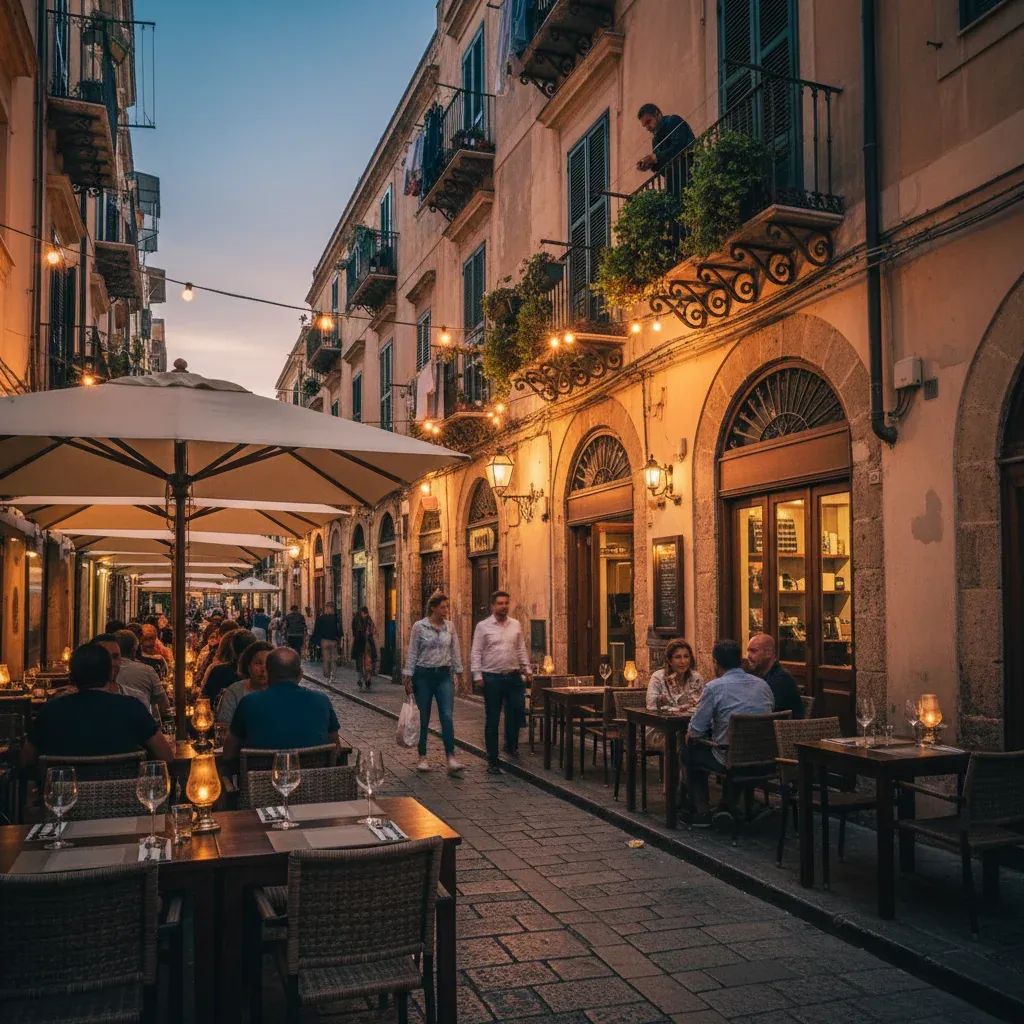
Pavement and public space occupation has become normalized. Tables and chairs spill onto sidewalks, forcing pedestrians into traffic or narrow corridors. What was once public domain is now de facto commercial real estate, often without proper permits.
Car parking disappears as restaurants expand into residential streets. In dense urban cores where parking is already scarce, the loss of even a handful of spaces creates cascading inconvenience for families, elderly residents, and shift workers.
Noise and light pollution shatter the evening quiet. Outdoor dining areas operate late into the night, with amplified music, clinking glassware, and patron chatter audible through closed windows. Floodlights aimed at facades or outdoor seating bleed into bedrooms, disrupting sleep.
Odours and air pollution from kitchen exhausts—especially from establishments retrofitted into older buildings without proper ventilation—linger in alleys and courtyards, a constant low-grade irritant.
Enforcement is almost non-existent. Violations of operating hours, decibel limits, and spatial boundaries go unchecked. Fines, when issued, are too small to deter repeat offenses. Illegal structures remain standing for months, sometimes years.
The "Insult to Injury" Argument
ADPD – The Green Party distilled the frustration into a phrase: the fund "adds insult to injury." In their view, channeling €30M of taxpayer money—collected from the very residents suffering the externalities—into a sector that routinely flouts the rules is a profound misallocation. They proposed an alternative: redirect the funding toward enforcement mechanisms and livability programs in tourist-heavy neighborhoods, where the friction between commercial activity and residential life is most acute.
The political optics are stark. Residents see a government willing to write large checks for business expansion but unwilling to deploy the regulatory muscle needed to protect their right to peaceful enjoyment of their homes. The fund, in this reading, signals that business interests outweigh citizen welfare in the hierarchy of policy priorities.
Economic Development vs. Livability
The tension here is not unique to Malta, but it plays out with particular intensity on a small island where space is finite and tourism density is high. Governments everywhere face the trade-off between economic growth—jobs, tax revenue, sectoral competitiveness—and residential quality of life. The usual justification is that prosperity generated by business activity eventually benefits all, funding public services and infrastructure.
Critics counter that this "trickle-down" logic fails when the costs are borne hyperlocally. A restaurant that employs 15 people and generates tax revenue also imposes sleepless nights, lost parking, and reduced property desirability on the 50 households within earshot. The benefits are diffuse; the harms are concentrated.
What This Means for Residents
If the fund moves forward without accompanying enforcement reform, Malta residents in tourist zones and mixed-use neighborhoods can expect more of the same: expansion subsidized by their own taxes, with little recourse when violations occur.
Resident associations are demanding tangible assurances: stricter operating hour enforcement, meaningful fines for illegal structures, faster response times to noise complaints, and a formal seat at the table when new licenses are reviewed. Without those commitments, the €30M pledge looks less like economic policy and more like a transfer payment to an already powerful lobby.
For expats and new arrivals, the dispute offers a window into Malta's broader governance culture, where informal arrangements and selective enforcement often trump formal regulation. Understanding this dynamic is essential for anyone choosing where to live or invest property capital.
The Path Forward
The Malta government has not yet issued a detailed response to the resident coalition's criticisms. Whether the fund will include conditions—such as compliance audits, noise mitigation requirements, or penalties for repeated violations—remains unclear. Industry groups like ACE argue that responsible operators should not be punished for the misbehavior of a minority, and that investment in quality and training will naturally elevate standards.
Residents counter that without enforcement teeth, good intentions are irrelevant. They want action before funding: a crackdown on existing violations, a public audit of which establishments are operating outside the law, and a commitment that no grants will flow to businesses with unresolved enforcement issues.
The debate will likely intensify as the 2026 electoral season approaches, with quality of life becoming a flashpoint in urban constituencies where the restaurant sector's footprint is largest. For now, the €30M pledge stands as a symbol of competing visions: one that sees hospitality investment as economic necessity, and another that sees it as a subsidy for erosion.


