
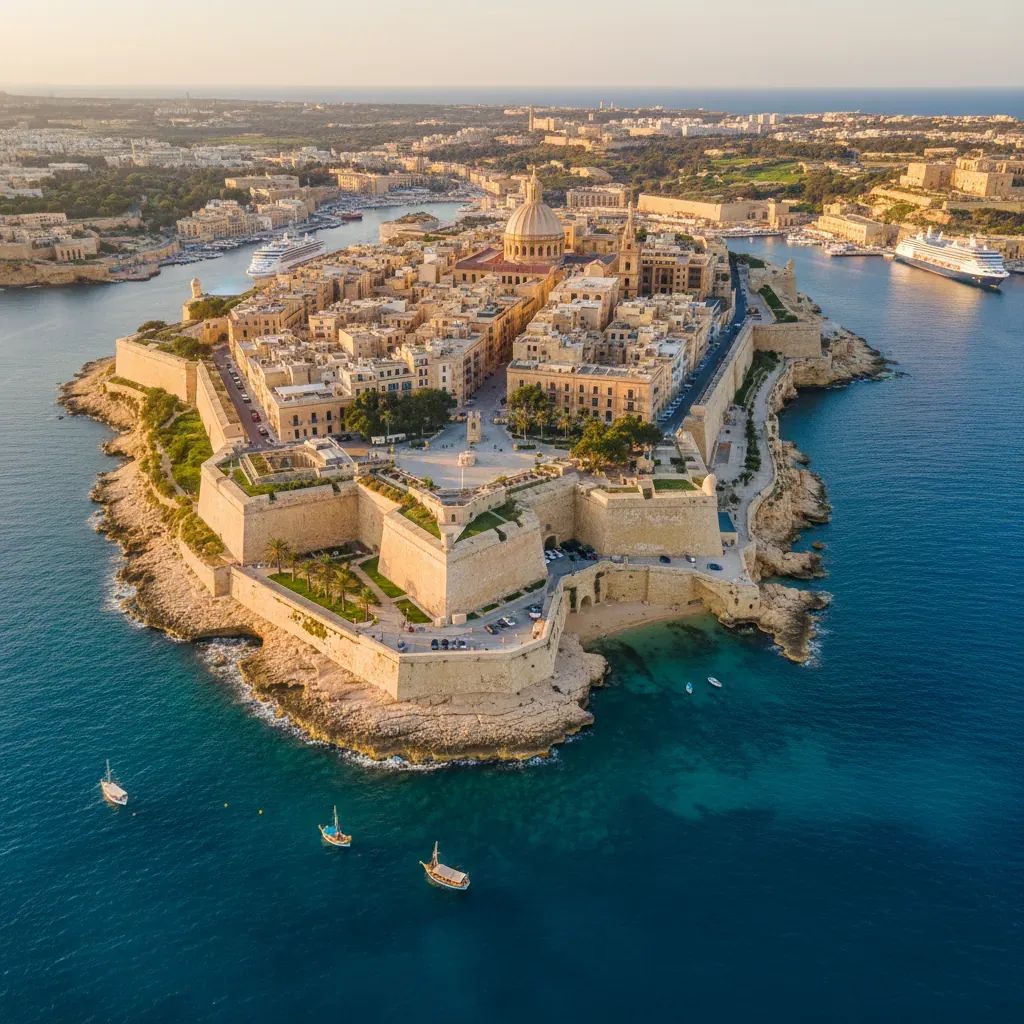
Malta's Lands Minister Owen Bonnici has broken ranks with Prime Minister Robert Abela by conceding that the Labour Party shares blame for the original 2000 Manoel Island concession, a rare admission that challenges the government's longstanding narrative pinning the controversial deal entirely on the Nationalist Party.
Why This Matters:
• Historic concession finally ended: Malta spent €43M in taxpayer funds to reclaim Manoel Island and Fort Tigné after 26 years of private control.
• Cross-party accountability: Bonnici acknowledges Labour's complicity in the 2000 deal, contradicting Abela's positioning.
• National park planned: Heritage Malta will transform the site into public green space once MIDI completes internal procedures.
Labour's Earlier Role Under Scrutiny
Bonnici's statement marks a significant departure from the Abela administration's typical framing of the issue. While the 99-year emphyteutical grant was formally executed by a Nationalist administration in June 2000, the Malta Labour Party under then-opposition leader Alfred Sant gave its blessing to the project, allowing it to pass parliament unanimously. Sant himself later described accepting the deal as "one of his worst political decisions", admitting he was swayed by MIDI chairman Albert Mizzi's assurances that the development would be modest in scale.
The former Labour leader expressed regret after observing the Tigné Point high-rises from Valletta, recognizing the project's true magnitude. Sant also criticized his own party for failing to appoint a magistrate to investigate the concession as promised, acknowledging that what seemed reasonable on paper—transforming underutilized prime waterfront into revenue-generating development—proved disastrous in execution. He concluded the project would "compound the disaster at Tigné" due to developers maximizing retail and residential density while downplaying visual, environmental, and infrastructure impacts.
The €43M Settlement: Ending a Quarter-Century Concession
In March 2026, the Malta Parliament unanimously approved a resolution tabled by Bonnici to terminate the MIDI Consortium's grip on Manoel Island and Fort Tigné. The agreement, finalized after "long and delicate negotiations" according to Bonnici, will cost taxpayers €43M—roughly half what MIDI initially demanded. The consortium had sought €78M to cover expenses incurred during its tenure, but the government successfully negotiated the figure down.
Bonnici emphasized that the compensation covers verified expenses rather than land value, ensuring no payment was made for the property's inherent worth. MIDI shareholders approved the deal on 28 April 2026, clearing the path for Heritage Malta to assume possession once internal corporate procedures conclude. The government's stated goal is to convert Manoel Island into a national park prioritizing public access, heritage preservation, and open spaces.
From "Unthinkable" Concession to Public Pressure
Bonnici's acknowledgment that "both parties were wrong" and that such a deal would be "unthinkable today" reflects how dramatically Malta's political and public discourse has shifted over two decades. The original 2000 concession was greeted with "remarkably little resistance", with then-Nationalist Environment Minister Francis Zammit Dimech calling the project a "national dream." Labour's sole objection at the time centered on a clause exempting MIDI from stamp duty on the land transfer—a narrow fiscal concern rather than a broader challenge to privatizing heritage sites.
By 2025, however, public sentiment had evolved decisively. A petition demanding Manoel Island's return garnered over 29,000 signatures—roughly 5% of Malta's population—forcing both major parties to recalibrate. Prime Minister Abela initially resisted, warning that reclaiming the island could cost "hundreds of millions" and questioning whether such spending was responsible. Yet as environmental activism intensified, his government reversed course.
In September 2025, the Malta Government served MIDI with a judicial letter, alleging the consortium had failed to meet contractual obligations, specifically the March 2026 deadline for substantial completion. The notice invoked a rescission clause from the original deed, threatening to cancel the entire concession. MIDI rejected the allegations, arguing it was entitled to extensions due to permit processing delays and archaeological investigations beyond its control.
What This Means for Residents
For Malta's population, the deal represents a rare reclamation of prime coastal real estate from private developers—but at significant public expense. The €43M payout, widely criticized as a "taxpayer-funded bailout," comes as MIDI faced a €50M bond repayment deadline in July 2026. Critics argue the government effectively rescued the consortium from imminent insolvency using public funds, while MIDI contends that the government's legal threats paralyzed apartment sales at Tigné Point, forcing the company to accept unfavorable terms.
The Nationalist Party in opposition criticized Abela's handling of the announcement, accusing him of prioritizing "PR over process" by revealing the deal before presenting its terms to parliament. The PN demanded full transparency and parliamentary scrutiny, though it supported the principle of returning the sites to public ownership.
Historical Context: A Deal Born in the 1990s
The Manoel Island saga began when a Nationalist government in 1992 issued a development brief for the island and Tigné Point. MIDI was selected as the preferred bidder in 1993, and discussions continued even during the 1996–1998 Labour government interlude. The 99-year concession was finalized under a re-elected PN administration, with Labour's support ensuring smooth parliamentary passage.
While Tigné Point development largely proceeded, Manoel Island remained undeveloped for decades, fueling public frustration. A 2019 development permit was revoked in 2020 by the Environment and Planning Review Tribunal due to conflict of interest in the environmental impact assessment. A revised masterplan finally gained approval in September 2021, but the March 2023 deadline for substantial completion passed without fulfillment, though the Labour government granted a three-year extension against a penalty.
Political Realignment and Public Sentiment
Both major parties have repositioned themselves dramatically since 2000. Opposition Leader Bernard Grech declared that "the national interest must come before private profit," advocating for the national park designation. Meanwhile, Abela himself previously characterized the original concession as "public property theft" and claimed private investors "paid peanuts." Labour's environment minister, Miriam Dalli, and party president, Alex Sciberras, hailed the March 2026 settlement as a "historic day," while continuing to criticize the Nationalists for the original deal.
The PN countered that the government's ability to reclaim the island resulted from public pressure and opposition persistence, not Labour's initiative. The party accused the administration of reactive governance rather than proactive leadership.
Outlook: A National Park in the Making
Once the final contract is signed, Heritage Malta will begin the transformation of Manoel Island. The vision calls for public green space, restored fortifications, and unrestricted access to the foreshore—a stark departure from the luxury residential and retail complex originally envisioned. For many Maltese and Gozitan families, the agreement represents a hard-won victory after a quarter-century battle over the island's future, though the €43M price tag will remain a point of contention for years to come.
Bonnici's candid acknowledgment of Labour's historical complicity suggests a broader reckoning with Malta's development policies of the 1990s and early 2000s, when bipartisan consensus favored privatization of heritage sites with minimal public scrutiny. Whether this introspection translates into stricter safeguards for future concessions remains to be seen, but the Manoel Island episode has undeniably reshaped how Malta balances economic development with heritage preservation and public access.


