
The Malta government is steering toward reclaiming Manoel Island within weeks to establish a public national park, yet construction crews are simultaneously racing to complete a commercial padel facility on the same site—a timing that has exposed a fundamental tension between stated policy and ground-level reality.
Why This Matters
• Permit opacity: At least 6 padel courts are under construction with no identifiable valid planning authorization visible in public records, despite MIDI's 2023 application being rejected.
• Timeline pressure: A government-MIDI deal is expected to conclude within weeks, but core planning decisions about the island's future remain unresolved.
• Public green space at risk: The piecemeal development could predetermine land use before the formal national park masterplan is finalized through community consultation.
The Construction Puzzle
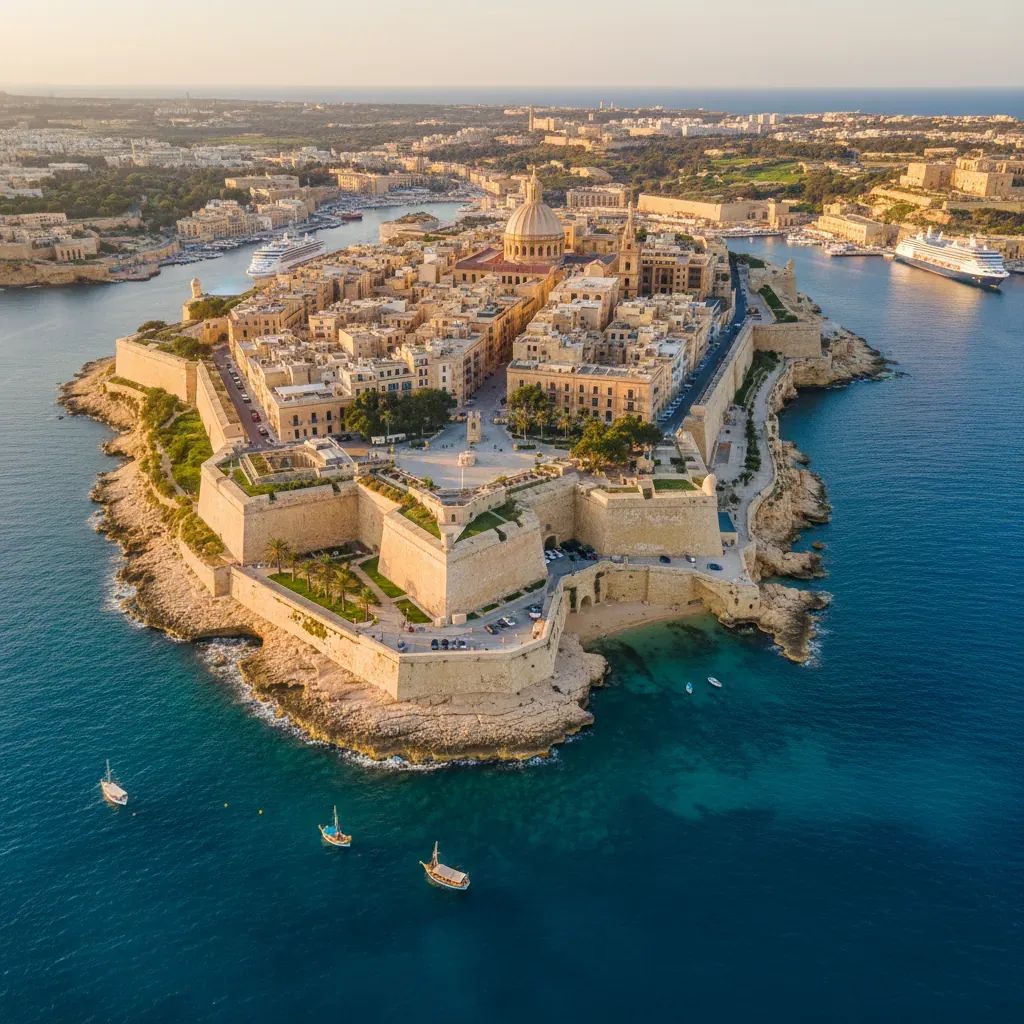
Residents of Sliema, Gzira, and Msida are watching an unusual situation unfold across the harbor. While Prime Minister Robert Abela announced that negotiations with MIDI consortium could wrap up within weeks, construction activity on Manoel Island tells a different story—one where commercial sports infrastructure is being installed precisely as the government promises to convert the island into a public recreational amenity.
The Manoel Island: Post Għalina campaign and the opposition party Momentum have spent weeks combing through planning records. What they've discovered is significant: MIDI submitted a permit application in 2023 that included padel court provisions, but that application was never approved. No subsequent formal permit application has surfaced in the Planning Authority's public channels. Yet the courts continue to rise.
When environmental activists asked MIDI about the works, the consortium's response raised questions about the project's authorization. MIDI stated that it does not own the specific land where the courts are being built and bears no responsibility for construction. This raises important questions: if MIDI isn't behind this project, who is financing and operating it? The answer has proved difficult to trace through standard corporate registries and planning documents.
This opacity matters. It suggests that either regulatory oversight mechanisms designed to protect public interest have been circumvented, or the approval process has moved outside standard channels entirely. Either scenario undermines the credibility of transparent governance—particularly as the island transitions to public ownership.
The Contractual Backdrop
To understand how Manoel Island reached this crossroads, the governance history is essential. MIDI has held development rights since 2000, when it signed a 99-year emphyteutic deed—a long-term lease arrangement common in Mediterranean property law that granted substantial control over the island's future. Over two decades, the relationship deteriorated. The Malta government argues that MIDI failed to advance the project meaningfully, missing a March 2023 completion deadline. A termination clause expires this month—the contractual deadline approaches.
MIDI contests these breach allegations, asserting that archaeological investigations mandated by heritage authorities and permitting delays triggered automatic contract extensions. The legal arguments are secondary now. Political reality has shifted. Prime Minister Abela has signaled that MIDI should not anticipate additional profit from Manoel Island, especially given the substantial commercial success already achieved through Tigné Point, a harbor-area development that generated significant returns for the consortium.
Yet Abela has acknowledged a practical constraint: many MIDI bondholders are retirees who purchased development bonds as pension investments. Any buyout or takeover arrangement must balance public interest with fairness to these investors. The negotiations, sources suggest, are calibrating precisely this tension.
A Different Vision for Public Space
The emerging masterplan for Manoel Island differs sharply from MIDI's original mixed-use proposal, which would have included residential towers, a full-size football pitch for Gzira United FC, swimming facilities, and retail space. The Malta government and the Manoel Island: Post Għalina campaign have championed a fundamentally different trajectory focused on public access and community benefit.
The national park concept prioritizes extensive walking trails, heritage interpretation facilities, and landscaped areas designed for residents regardless of income. Community workshops have affirmed that recreation matters locally. However, activists have consistently emphasized that such facilities should emerge from a comprehensive masterplan validated through democratic consultation—not inserted piecemeal by commercial interests before public input concludes.
The Planning Authority is currently conducting a consultation on aligning local plans with Malta's Commercialisation of Sports Facilities Regulations (S.L. 455.12). These regulations generally permit sports organizations to operate retail, catering, and office services, provided at least 60% of floor space remains dedicated to actual sporting use and commercial elements do not exceed 40%.
For Manoel Island, however, the prevailing government direction points toward something stricter. A non-commercial identity is the stated objective. Any commercial presence would be minimal, carefully bounded, and required to reinvest revenue into maintenance and public access rather than private profit.
Regulatory Approaches from Mediterranean Examples
Mediterranean countries managing public islands as national parks offer instructive models for addressing the Manoel Island situation. Their experience demonstrates that strict zoning discipline and community enforcement are essential to protect public interest from commercial pressures.
Several countries employ tiered regulatory frameworks. France's Port-Cros National Park enforces robust prohibitions in core protected zones, while Croatia's Brijuni National Park has upgraded tourism infrastructure through concession agreements that regulate commercial activities. Greece's newer National Marine Parks explicitly balance environmental protection with nature-focused economic activity such as guided trails and diving services.
The common approach across the Mediterranean is deliberate tiered zoning, explicit regulatory caps on commercial density, and enforceable mechanisms ensuring economic activity serves community interests rather than external investor returns. This model could inform Manoel Island's transition to public ownership.
Questions Awaiting Resolution
As the government-MIDI handover approaches its likely conclusion, critical gaps remain. Who authorized the padel court construction? Which government entity issued the permit, or was approval granted informally outside standard channels? Does the government endorse commercializing land it simultaneously pledges to convert into a public national park? How does piecemeal sports infrastructure align with the stated vision of Manoel Island as a recreational amenity for a neighborhood severely constrained by urban density?
The Project Green consultancy continues gathering community input for the national park masterplan. But the timeline for finalizing that plan is unclear. With the government-MIDI deal expected to close within weeks, residents and activists are pressing for transparency and binding assurances that the island's transition to public ownership will not be compromised by last-minute commercial arrangements negotiated without public scrutiny.
The Precedent at Stake
Manoel Island occupies strategic geography in Malta's most densely built urban zone. The island's fate will signal whether the government can enforce its vision for public space against commercial pressure in a nation where coastal development and property values create perpetual friction between private profit and public good. Success here could establish a template for future heritage and green space transitions. Failure would suggest that Malta's public interest commitments routinely yield to opportunistic development, even during formal public consultation processes.


