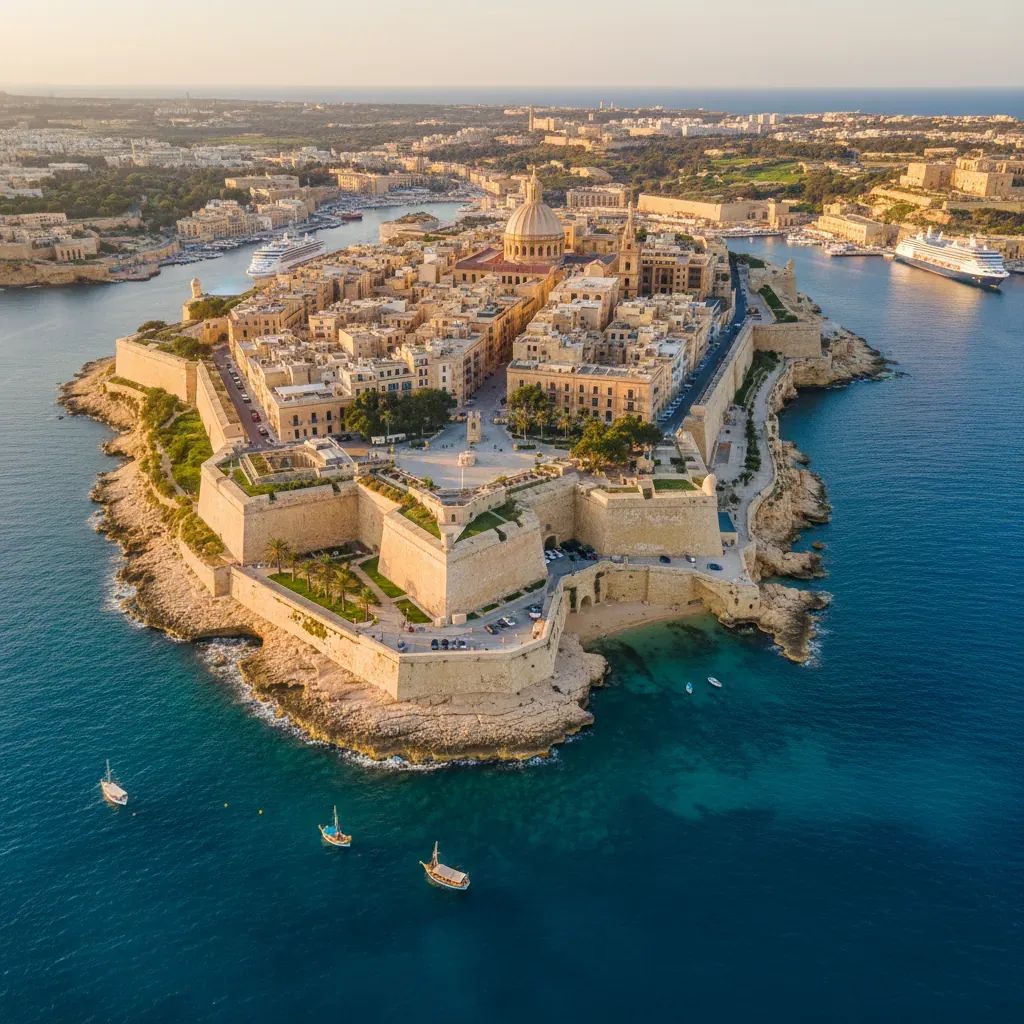
Malta's Planning Authority has cleared the way for 30 padel courts on Manoel Island, transforming what was supposed to become a national park into a partially privatized sports facility. The approval sanctions 20 courts built without permission and authorizes 10 additional courts, covering roughly 6,700 square meters of public land.
Manoel Island, located between Gżira and Valletta, is one of the last undeveloped waterfront sites in Malta's densely populated harbor area, where public green space per capita is among the lowest in Europe.
Why This Matters
• Public promise reversed: The government spent €43M to reclaim Manoel Island and pledged a non-commercial national park; padel courts undercut that vision.
• Legal action pending: Environmental groups Moviment Graffitti, Flimkien Għal Ambjent Aħjar, and Din l-Art Ħelwa are filing appeals and demanding a National Audit Office investigation.
• UNESCO buffer zone at risk: The island sits within Valletta's World Heritage buffer zone, yet no Heritage Impact Assessment was conducted before approval.
• Enforcement penalty minimal: The developer was fined just €25,000 for building illegally—roughly €1,250 per unauthorized court, a nominal penalty that sets a concerning precedent for future violations.
The Vote That Sparked Outrage
The Planning Authority board approved the application with an 11-to-1 vote, drawing immediate condemnation from activists who had gathered outside the hearing. Protesters accused officials of prioritizing developer interests over a parliamentary petition that collected more than 29,000 signatures demanding the island's preservation as open green space.
Gżira United FC, on whose behalf the application was filed, argues the padel courts are essential to the club's survival after losing monthly revenue when the MIDI consortium concession was terminated. The club intends to operate the facility as a members-only venue with commercial rental rates for non-members, a model that critics say introduces profit-driven infrastructure onto land earmarked for public use.
The Planning Authority and government officials have not responded to requests for comment on the environmental groups' concerns regarding the decision.
What Was Promised vs. What Was Delivered
When the government announced the island's recovery, its administration described Manoel Island as Malta's future "central green lung"—a place governed by minimalist, preservation, and conservation principles. The commitment included:
• Full public access with no commercial development
• Afforestation and protection of natural coastline
• Consultation-led design reflecting public wishes
• Local plan amendments to prevent further speculation
The "Manoel Island: Post Għalina" campaign, which mobilized thousands of residents, envisioned adaptive reuse of heritage buildings for community centers, art studios, and non-profit social clubs—not private sports complexes. The campaign explicitly rejected any profit-making ventures and called for community guardianship with enforcement authority.
Now, less than three months after the government finalized its €43M buyback, the island hosts a commercial sports operation that environmental groups say violates every foundational principle of the national park pledge.
Legal and Heritage Concerns
Din l-Art Ħelwa and Flimkien Għal Ambjent Aħjar have both confirmed they will lodge formal appeals with the Environment and Planning Review Tribunal. Their legal strategy hinges on two arguments: the absence of a Heritage Impact Assessment in a UNESCO buffer zone, and the precedent set by rewarding illegal construction with retroactive permits.
"This decision has perverse implications for the entire harbor area," said representatives from FAA. "If you can build first, pay a nominal fine later, and receive approval retroactively, enforcement becomes meaningless."
Momentum, a political party that has aligned with the activists, has formally requested the National Audit Office investigate how public land was allocated to the club and whether proper procurement procedures were followed. The request also questions whether the €25,000 penalty aligned with standard enforcement guidelines for unauthorized construction.
What This Means for Residents
For anyone who signed the parliamentary petition or participated in public consultations, the approval represents a material breach of trust. The island was supposed to offer a car-free, pedestrian-priority green space with indigenous gardens, meditation areas, and restored heritage sites open to all. Instead, a significant portion of the site will function as a members-only sports club with commercial rental fees.
The decision also raises questions about the island's accessibility and operational transparency. The "Post Għalina" vision called for improved public transport links, including new sea connections, and limited vehicular access for mobility services only. Current details on when the courts will become operational, visiting hours for public areas, and whether non-members can access other parts of the island remain unclear. The Planning Authority's approval did not include a traffic impact study, leaving residents uncertain about parking demand, vehicular access, or security restrictions that may affect public movement around the site.
For Gżira residents specifically, the courts may offer local employment and sports facilities. However, comparable padel facilities in Sliema and St. Julian's charge between €20 and €35 per hour, potentially placing them beyond reach for many residents. Activists argue this benefit is outweighed by the loss of a once-in-a-generation opportunity to reclaim a non-commercial public park in one of Malta's most congested urban areas.
The Financial Calculus Behind the Courts
Gżira United FC lost substantial revenue when the MIDI concession ended, and club officials say the padel courts are necessary to keep the organization solvent. The club previously operated a football pitch on the site and argues it has a legitimate claim to continued use of the land.
However, the club's financial difficulties do not, in the view of environmental groups, justify privatizing public land that was purchased with taxpayer funds explicitly for conservation. Critics point out that the government could have subsidized the club directly or offered alternative municipal facilities rather than compromising the national park commitment.
The courts are expected to generate revenue through commercial hourly rentals, a business model common across Malta's private sports clubs. Pricing details have not been officially disclosed.
What Happens Next
Activists held a demonstration on Friday, where speakers accused the government of using the public's support to justify the MIDI buyback, only to abandon the park vision once control was secured. Moviment Graffitti has vowed to pursue legal challenges to their fullest extent, indicating potential appeals to higher courts if the tribunal upholds the Planning Authority's decision.
Environmental groups are also demanding a transparent master plan for the entire island, with binding timelines and enforceable restrictions on commercial activity. They want the government to honor its original commitments by publishing a detailed conservation strategy that includes:
• Ecological management plans for indigenous flora and fauna
• Heritage restoration schedules for Fort Manoel, the Lazzaretto, and other structures
• Public transport upgrades, including ferry links to Valletta and Gżira
• Community governance mechanisms to prevent future commercial encroachment
For now, the padel courts stand as a test case for whether Malta's planning system can resist developer pressure when public land and heritage are at stake—or whether sanctioned illegality and nominal fines have become the cost of doing business.